
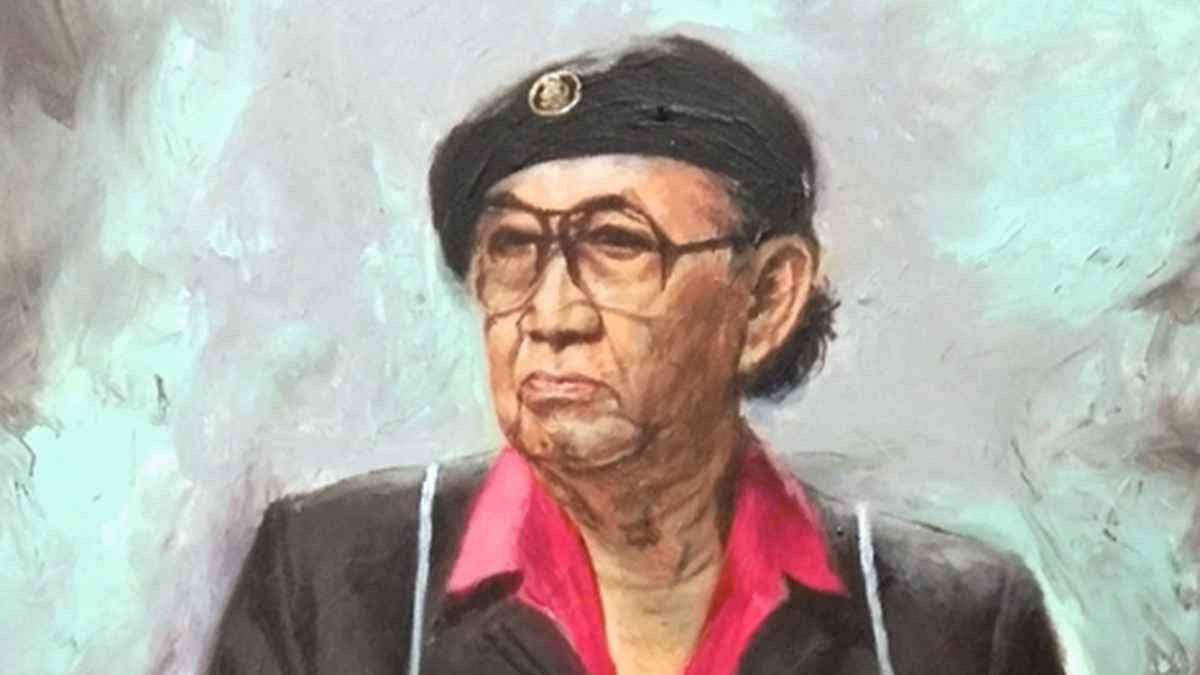


YOGYAKARTA - Basuki Abdullah is one of the Indonesian painting masters whose name is very influential in the history of national fine art. He is widely known through realistic and naturalistic paintings that display visual beauty as well as depth of meaning.
Basuki Abdullah's extensive experience and high mastery of painting techniques make his works seem real and alive. He not only imitates forms, but also captures the values of life contained within them. This is what makes Basuki Abdullah's paintings have a distinctive and classy character. Here are 5 Basuki Abdullah paintings that are most famous and widely discussed.
Diponegoro Leads the BattleLukisa Diponegoro Leads the Battle
The painting "Diponegoro Leading the Battle" features Prince Diponegoro as the main subject riding a black horse. The figure of Diponegoro is depicted wearing a white robe with a background of burning fire. This composition creates a heroic and enthusiastic atmosphere of resistance.
This work was made when Basuki Abdullah was studying art in the Netherlands. Meanwhile, at that time the Netherlands was still colonizing Indonesia. This painting is nothing more than a form of resistance against the Dutch. This shows Basuki Abdullah's love for his people.
SoekarnoSoekarno's painting
The painting "Soekarno" depicts the figure of the proclaimer and the first President of the Republic of Indonesia. Basuki Abdullah managed to capture Soekarno's character and charisma through a firm and dignified facial expression.
Through this painting, Basuki Abdullah not only made a physical portrait. He also conveyed the spirit of struggle and the leadership of Soekarno. Every brush stroke seemed to record the determination of the leader of the nation.
Nyi Roro KidulNyi Roro Kidul's painting has a spiritual background in Basuki Abdullah's life journey. Since the age of 18, he often visited Parangtritis Beach to meditate and pray. From this inner experience, the impulse to paint the figure of the southern sea queen emerged.
Basuki Abdullah is known to have created six versions of the Nyi Roro Kidul painting. One of them was collected by President Soekarno and stored at the Presidential Palace of the Republic of Indonesia.
Basuki Abdullah believed that Nyi Roro Kidul was a compassionate and graceful figure. He then painted the queen's beautiful face with a subtle realism approach. The mystical aura and calmness are the main characteristics of this painting.
Little Boy Riding BuffaloPainting of a Little Boy Riding a Water Buffalo
The painting "Little Boy Riding Buffalo" presents a simple and peaceful Indonesian rural atmosphere. Basuki Abdullah depicts a small child with a simple expression on a buffalo. The calm natural background reinforces the impression of harmony in this painting.
This work shows Basuki Abdullah's concern for the lives of small people. Through natural colors and simple compositions, he presents rural reality with warmth. This painting feels close to the daily life of the Indonesian people.
The meaning contained in this painting is very strong socially. Basuki Abdullah seems to want to capture happiness in simplicity. This painting is a symbol of the relationship between humans, nature, and local traditions.
The Battle of Gatotkaca and AntasenaPainting of the Battle of Gatotkaca and Antasena
The painting "Battle of Gatotkaca and Antasena" is one of Basuki Abdullah's early works that brought his name widely known. This work was exhibited in 1933 at the Jaarbeurs Bandung.
This painting is inspired by the Javanese puppet story in the Mahabharata story. The scene of the battle between Gatotkaca and Antasena is depicted expressively showing the two characters fighting with their powers. Realism style is used to highlight the strength and emotions of the characters.
This work invites the admiration of many exhibition visitors. Basuki Abdullah shows his ability to process lighting and mature color combinations.
So much for the discussion of Basuki Abdullah's five most famous paintings. Basuki Abdullah's artistic legacy continues to be valued and an important part of the identity of Indonesian fine art.
In addition to the discussion above, follow other interesting articles at VOI.ID. So as not to miss the latest news, follow and monitor our social media accounts!
The English, Chinese, Japanese, Arabic, and French versions are automatically generated by the AI. So there may still be inaccuracies in translating, please always see Indonesian as our main language. (system supported by DigitalSiber.id)
