
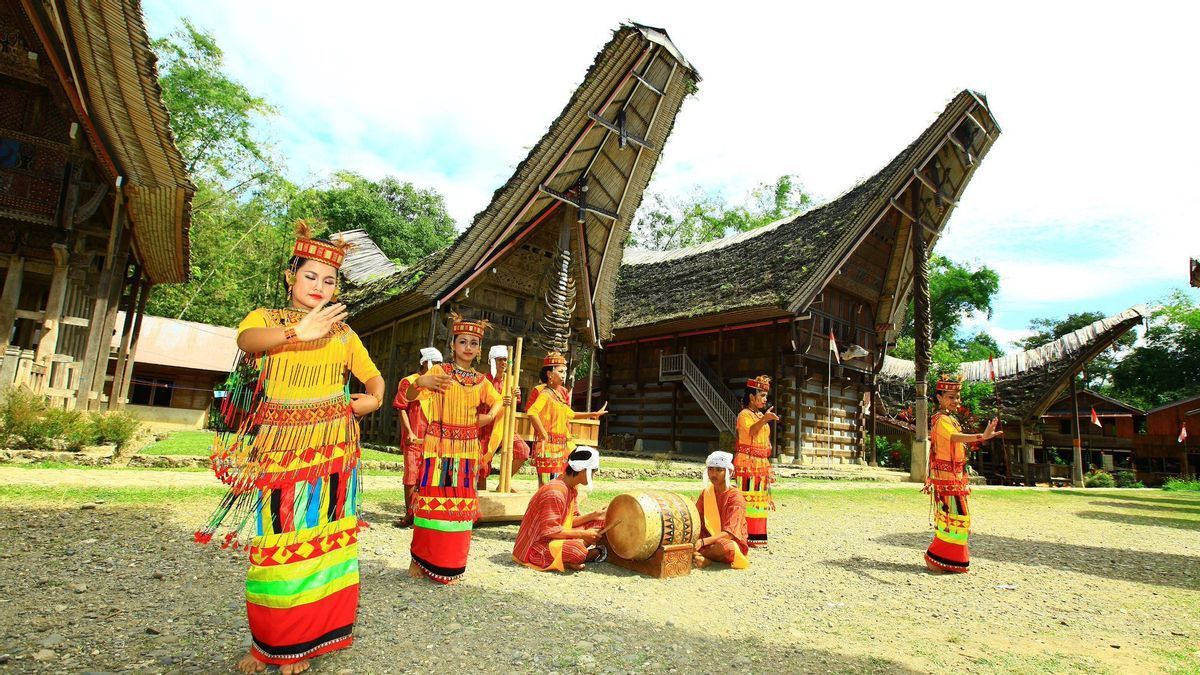


YOGYAKARTA - The dances of South Sulawesi are very diverse and still sustainable to this day. These dances are still often performed at special events, or studied in schools.
South Sulawesi's regional dances depict a variety, typical of both the social aspects of society, cultural tribes, religion, worship, and economy.
So, what are the names of South Sulawesi's regional dances? Summarized from various sources, see the complete information below.
Variety of Regional Dance of South SulawesiThe following are some of the dances of South Sulawesi that are still sustainable, complete with their meanings and philosophies:
Ma’randing DanceThe first South Sulawesi regional dance is the Ma'randing Dance. This traditional dance is usually performed at the Rambu Solo ceremony, which is a Toraja community's customary food ceremony. The Ma'randing Dance performance is a form of respect for the deceased noble men.
In his performance, the dancers wear traditional war clothes and weapons. Ma'randing dance is basically a patriotic dance or war dance.
According to the RRI Intellectual Property Directorate General's Kikomunal website, the term ma'randing comes from the word randing which means "noble when passing by". This traditional dance shows the ability to use traditional weapons of South Sulawesi and shows the determination and strength of a person who died during his life.
Pajoge DancePajoge dance is part of the dance of South Sulawesi. This dance is included in the traditional art of the Bugis tribe who inhabit the Bone, Wajo, Suppeng, and Baru regions.
Pajoge dance is performed by girls with a background from the common people. Each dancer performs the dance alone while singing and then looking for a partner from the audience. Later, the girl will give betel leaves to the chosen man. Then, the man will dance with the girl.
In Bugis customs, the term Pajoge has three meanings at once. Starting from joge which means dance, the word pa'joge is used to refer to dancers, as well as a performance.
Pakarena Fan DanceAnother South Sulawesi regional dance is the Kipas Pakarena Dance. This traditional dance is often staged in South Sulawesi regional tourism promotion events and has become one of the province's cultural icons.
Menyadur laman Peta Budaya Belajar Kemdikbud, di masa lalu, pertunjukan Tari Kipas Pakarena merupakan salah satu media pemujaan kepada para dewa.
Pakarena Fan Dance is played by 4 dancers and accompanied by instruments in the form of gandrang and puik-puik. The movements in this dance reflect the personality of Gowa women who are loyal and obedient to their husbands and men.
Tari Pa’bitte PassapuTari Pa'bitte Passapu is a dance from South Sulawesi that has been registered as a UNESCO Intangible Cultural Heritage.
According to the official website of the Ministry of Education and Culture, Tari Pa'bitte Passapu is the traditional dance of Ammatoa Kajang, Bulukumba Regency, South Sulawesi. This dance is usually performed to pick up traditional guests or at a wedding ceremony.
The history of the Pa'bitte Passapu dance comes from the habit of the Makassar nobility in the past who liked to fatten chickens. At that time, cockfighting was used as an expression of courage as well as an arena for betting.
When the influence of Islam began to enter this region, the culture of cockfighting was eliminated and replaced with this dance.
Tari SalonrengTari Salonreng is also one of the dances of South Sulawesi. This dance can be found in various areas inhabited by the Makassar ethnic group or tribe, such as in Gowa Regency, Takalar, Jeneponto, and so on.
Quoting the website of the Directorate General of Intellectual Property of the Republic of Indonesia, the term Salonreng is a combination of the word "Sa" which means a moving person (a moving person) and "Lonre" (ma'lonre-lonre) which means a group.
In other words, Tari Salonreng is a traditional dance that is performed in groups.
The origin of this dance is believed to come from a myth in the era of the Gowa Kingdom (18th century). At that time, people still adhered to animism and dynamism. This dance is a form of worship to Batara (god) the ruler of earth and sky, as well as worship to the spirits of ancestors.
This dance is usually performed by adult women. In the performance, the dancers use the properties of scarves, bodo clothes, and silk sarongs. Salonreng dance is accompanied by drums, serunai, and gongs.
That's the information about the dance of South Sulawesi. Get updates on other featured news only at VOI.ID.
The English, Chinese, Japanese, Arabic, and French versions are automatically generated by the AI. So there may still be inaccuracies in translating, please always see Indonesian as our main language. (system supported by DigitalSiber.id)


