
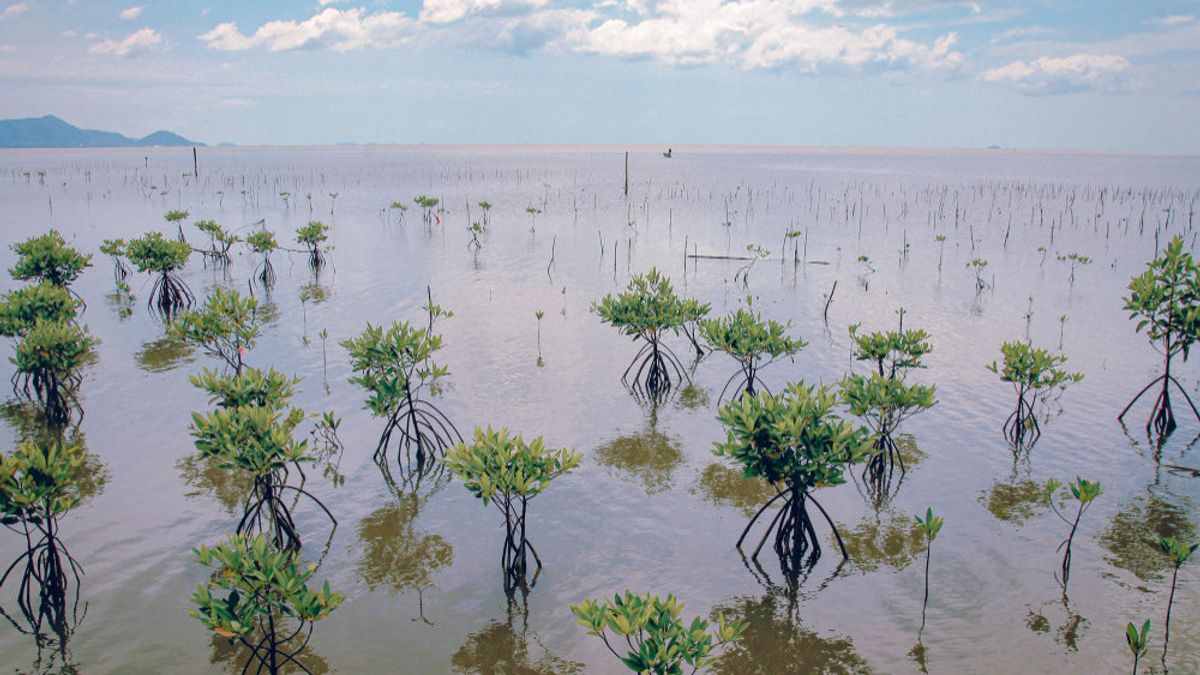


YOGYAKARTA - Many people see mangroves only as trees on the beach. In fact, the ecological function of mangrove forests is crucial for our planet and coastal life.
Secretly, this forest acts as a hero because its role is vital, ranging from overcoming global climate change to protecting the coastline from abrasion and natural disasters.
Reporting from the American Museum of Natural History page, in ancient times mangrove forests were often considered useless swampland. However, planners, scientists, and coastal residents are now starting to appreciate it as a very diverse and important ecosystem.
This ecosystem, together with seagrass and coral reefs, works as a single system that keeps coastal zones healthy.
In addition, mangroves provide an important habitat for thousands of species, stabilize coastlines to prevent erosion, and protect land from waves and storms.
Mangroves, seagrass, and coral reefs are often found to work in harmony. Mangrove trees themselves function to trap sediments and pollutants that should flow into the sea.
Then the seagrass provides further barriers to mud and sediment that can choke coral reefs. Instead, coral reefs protect seagrass and mangroves from strong sea waves. Thus, without mangroves, this very productive ecosystem will be destroyed.
Mangroves provide ideal breeding grounds for most fish, shrimp, crabs, and shells in the world.
Many fish species, such as baryda and besar, took refuge among mangrove roots when they were young. After growing up, they looked for food in the sea, then moved to the high seas as they grew up.
It is estimated that 75% of fish caught commercially spend part of their time in mangroves or depend on food chains that can be traced back into this coastal forest.
Mangrove forests are habitat for thousands of species at all levels of the seafood and forest food chain, from bacteria to Bengal tigers.
Mangroves protect various types of insects, which then attract birds. This coastal forest is a nest site and a major resting place for hundreds of coastal birds and bird species of migrants.
In addition, some species are threatened with extinction, such as scales turtles and dugongs, as well as looking for food in a fertile mangrove environment.
Also read the article discussing 4 Mangrove Forest Ecological Functions: Protecting Coastal Areas To Rescue Climate Change
You should know, millions of tons of leaves that fall from mangrove forests every year becomes the basis of a very productive food chain. Decaying leaves provide nutrients for invertebrates and alga.
The leaves are then eaten by small organisms such as shrimp, worms, and young fish. The tide also distributes nutrients to the mudlands, estuarines, and coral reefs, thus feeding species such asements on the seabed.
Mangroves protect the salt water and freshwater ecosystems in the vicinity. The complex mangrove storage system filters nitrates and phosphates brought by rivers into the sea. They also prevent sea water from penetrating into land waters.
Mangrove roots collect ups and sediments that are carried ups and downs as well as rivers. By holding the soil in place, mangrove trees stabilize the coastline against erosion.
Selain itu, semai yang berisur di gumuk sandak membantu menstabilkan gumuk sandar dari waktu ke waktu dan bahkan dapat menciptakan pulau-pulau kecil.
The mangrove clumps that support upstream mudlands provide a buffer zone that protects land from damage from wind and wave damage. Areas where mangroves have been cut down for shrimp ponds are much more susceptible to cyclones and destructive tidal waves.
In addition to the various functions above, mangrove forests also provide many resources needed by coastal communities to survive and earn a living.
As the water recedes, people can walk across the ups and downs to collect shells, moluska, and shrimp.
Then at the time of high tide, the fish move in to find food between mangrove root protection, converting swampland into a rich fishing ground.
Mangrove trees also provide fuel, medicines, tannins, and wood to build houses and boats for coastal communities.
In addition to discussing the ecological function of mangrove forests, follow other interesting articles on VOI, to get updated news, don't forget to follow and monitor all of our social media accounts!
The English, Chinese, Japanese, Arabic, and French versions are automatically generated by the AI. So there may still be inaccuracies in translating, please always see Indonesian as our main language. (system supported by DigitalSiber.id)


