
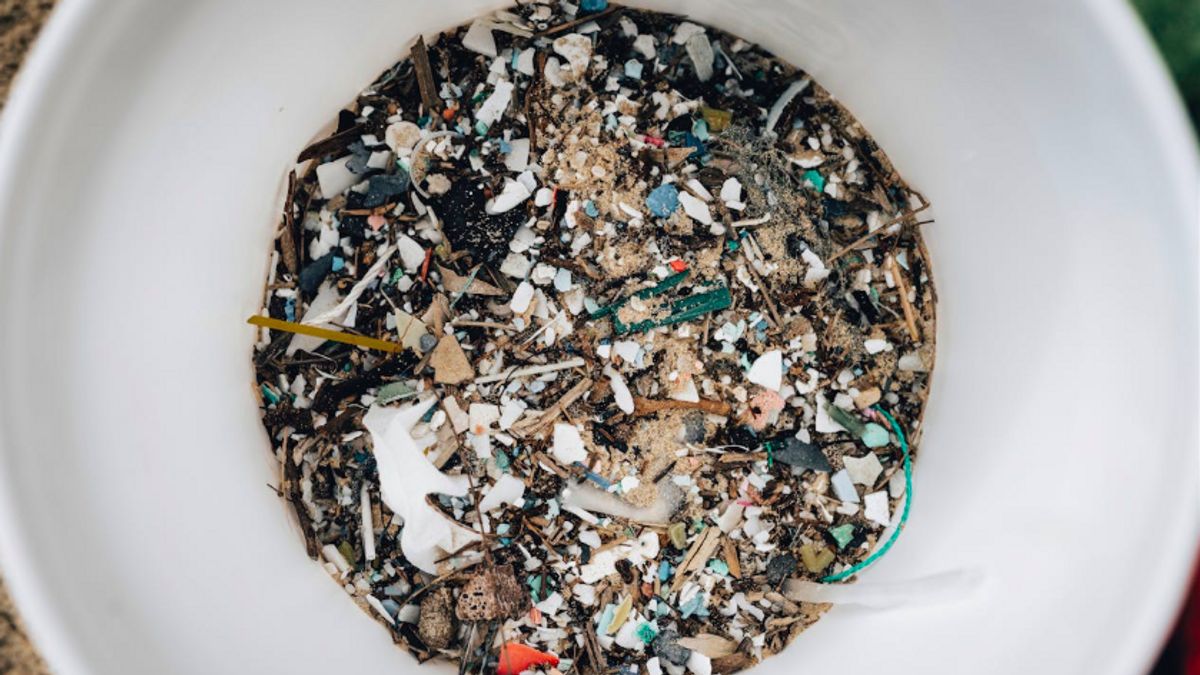


JAKARTA - Microplastics are particles less than 5 mm in size, which come from products such as cosmetics and synthetic clothing, to plastic shards that are decomposed due to exposure to sunlight. Microplastics can pollute the environment and endanger health, so they must be watched out for.
Microplastic exposure can occur in the surrounding environment in daily life, such as from water, soil, and atmosphere. The exposure can also enter the body through food or drinks, and be inhaled from the respiratory tract, to through the skin.
Microplastic particles by settling in the body later can cause digestive tract disorders, breathing, and other organs in the body, because they cannot be digested or fully absorbed.
Therefore, everyone needs to take precautions so that microplastic exposure can be avoided. Here are some ways to prevent microplastic exposure that you can apply in everyday life, quoted from Healthline, on Tuesday, October 28, 2025.
1. Reduce the use of single-use plastic
Microplastics generally come from plastic waste. Thus, avoid using single-use plastic, such as straws, plastic bottles, plastic bags, and plastic utensils to avoid exposure.
You can replace food containers and bottles drinking plastic with glass or stainless steel which tends to be more safe for health than plastic ones.
SEE ALSO:
-
 | LIFESTYLE
Demi Hasil Maksimal, Ini Waktu yang Tepat untuk Minum Suplemen Kolagen
16 Juli 2025, 13:25




2. Consumption of fresh food
Consumption of fresh food every day will help you prevent more microplastic exposure into the body. On the other hand, the habit of eating processed foods in plastic and canned packaging can expose the body to microplastics, such as BPA and flatat.
In addition, processed foods are also low in nutrition and combined with the dangers of microplastics, which can pose a risk of chronic diseases, such as heart disease to cancer.
3. Limit consumption of seafood
The highest microplastic content is commonly found in seafood, especially shells. Studies in the journal Current Opinion In Food Science (2021) predict that people who regularly eat orang can consume 2,602 - 16,288 microplastic particles each year.
Therefore, you should limit the consumption of seafood to avoid exposure to microplastics. If you want to keep eating seafood, choose those with high quality and know clearly where the source comes from.
The English, Chinese, Japanese, Arabic, and French versions are automatically generated by the AI. So there may still be inaccuracies in translating, please always see Indonesian as our main language. (system supported by DigitalSiber.id)
Popular


