

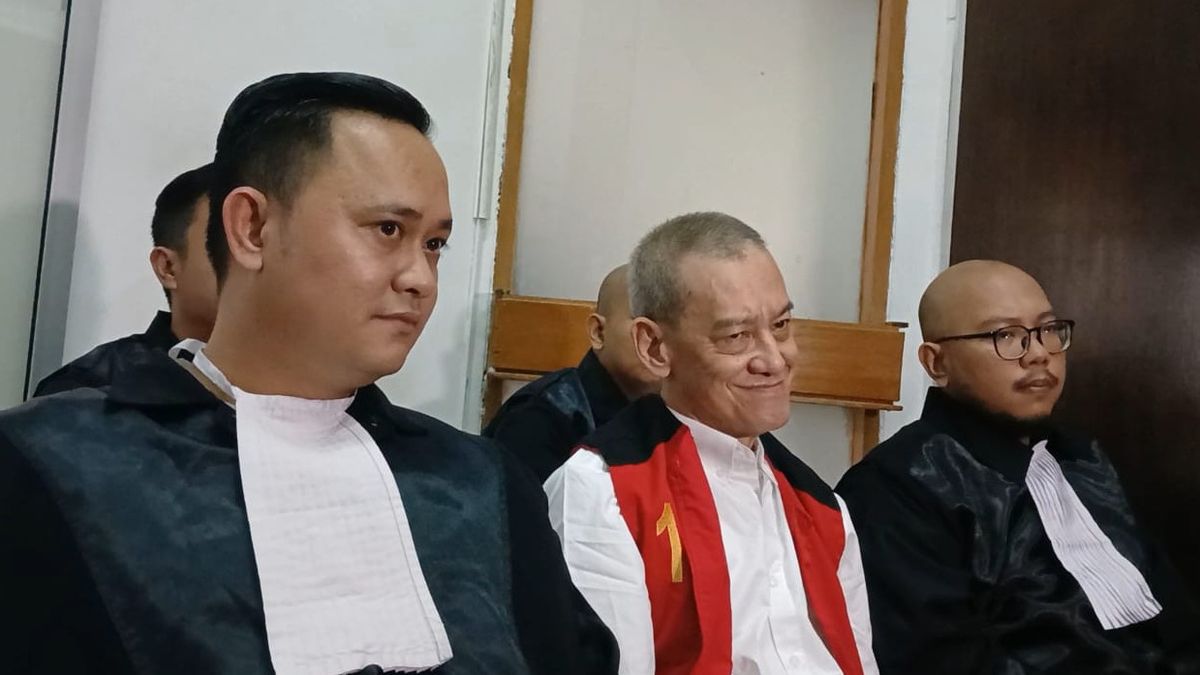


JAKARTA - The former head of the National Narcotics Agency (BNN), Anang Iskandar, testified at the Fariz RM trial regarding the importance of rehabilitation for narcotics abusers.
In his testimony, Anang emphasized that rehabilitation is a medical step that cannot be ignored and relies heavily on the condition of the individual concerned.
"Rehabilitation is a medical process so it depends on the condition concerned. Therefore, the person concerned must be assessed to find out the level of addiction to determine the condition of dependence (before being rehabilitated)," he said before the panel of judges.
Anang also explained the fundamental difference between abusers and narcotics dealers who are often polemics in the legal process.
According to him, users have the right to legal protection in the form of rehabilitation, while dealers must be eradicated.
"The perpetrator is guaranteed by the state to get rehabilitation, if the dealer must be eradicated. That's why it is distinguished (based on) grammar, under many names the user is above the names of the dealers," explained Anang.
Furthermore, he underlined that narcotics addiction is recurrence and cannot be cured just once with rehabilitation.
The process must be sustainable and comprehensive so that addicts can truly recover and return to society.
"The narcotics addict has relapsed, he can once recover, it could be more than that depending on the rehabilitation process. If the rehabilitation process is complete, the person concerned can recover completely. So that the person concerned can return to the community again and this requires effective rehabilitation," he added.
SEE ALSO:
-
 | INFO SEHAT
Rekomendasi Makanan yang Baik untuk Mengembalikan Keseimbangan Hormon
09 Juli 2025, 11:55



Not only that, Anang emphasized that if the defendant is proven to be a user or narcotics addict through a valid assessment, then the judge has an obligation to decide on rehabilitation.
"If he is proven to be a abuser, especially if an assessment is carried out and proven to be an addict, the judge must decide who is undergoing rehabilitation," he said.
In fact, if in the trial process the defendant is not proven to have committed a narcotics crime, the rehabilitation decision must still be imposed for the sake of recovery.
"If the defendant is not proven to have committed a narcotics crime, the judge must determine the person concerned to carry out rehabilitation," said Anang.
The English, Chinese, Japanese, Arabic, and French versions are automatically generated by the AI. So there may still be inaccuracies in translating, please always see Indonesian as our main language. (system supported by DigitalSiber.id)
Most Popular Tags
#Prabowo Subianto #donald trump #2026 World Cup #Febrie Adriansyah #8791Popular


