

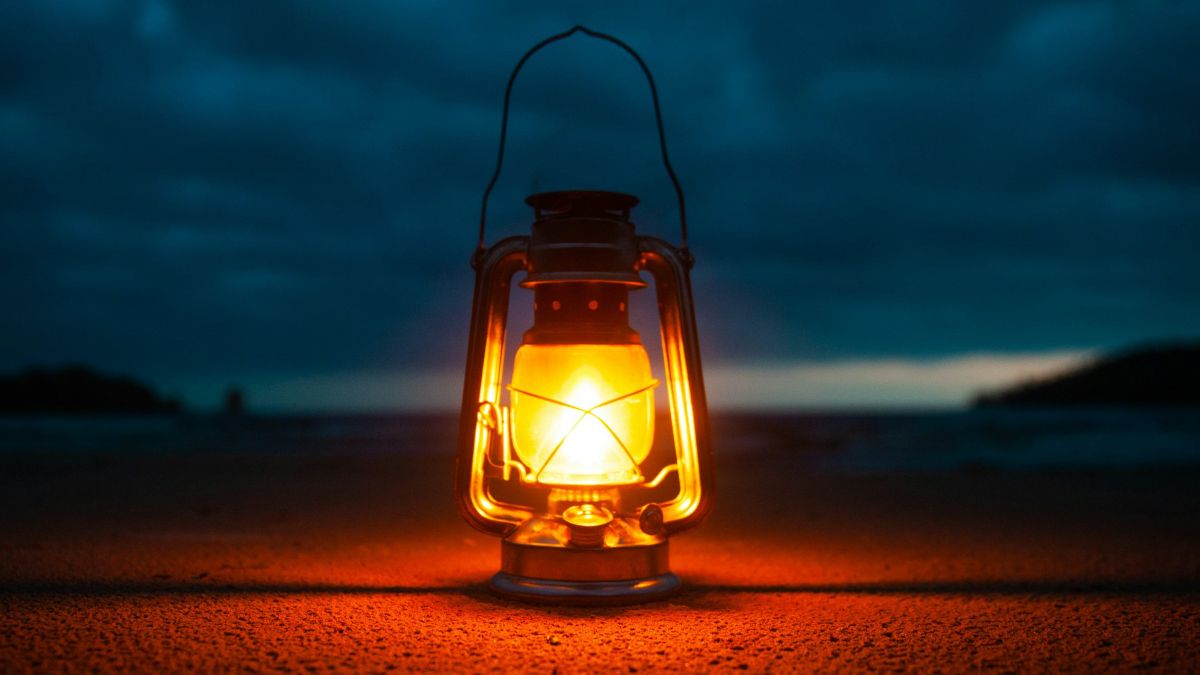


YOGYAKARTA Did you know that light points can be seen with your eyes from a very far distance? For example, reflections of light from the star and moon can be seen with the naked eye from the earth at night. The same thing also happens in lights that are able to illuminate a large area. This condition then raises questions about how the light propagates to be able to illuminate the objects around it.
Simply put, light can be understood as a ray that makes the eye able to capture the image of a reflected object. Light can come from various sources, one of which is the lamp. Light can produce light that can propagate directly to illuminate the object in front of it.
In physics, light is an invisible electromagnetic radiation. Light propagates as electromagnetic waves produced by, for example, the lights as a source of waves.
Interestingly, even though it is a wave, the propagation of light does not require a medium such as sound waves that require air. Light can still propagate in a vacuum or without other medium.
Although it does not require a medium, the light wave can get weaker. The further the propagation of light from the source, the weaker the waves.
Light has special properties that can be observed as well as scientifically proven. Here are some properties of light that can be scientifically proven.
The propagation of light occurs directly in all directions. The direction of light cannot be influenced by anything such as gravity, wind, sound, and so on. The light wave will only spread towards the source. For example, the flashlight when turned on, the light wave will spread to the surrounding environment according to the direction where the flashlight is directed.
Another trait of light is that it can be bifurcated. This means that although light propagates straight, refraction or decomposition can occur. This habit can occur when the waves cross the boundary between the two mediums and different densities.
The contoh of the refraction of light is when you see the light from behind a clear glass filled with clear water. When you look at the light, it appears to be turning from the source.
SEE ALSO:
-
 | TEKNOLOGI
Dubai Segera Luncurkan Restoran dengan Koki AI Pertama, "Chef Aiman"
11 Juli 2025, 06:05


Light can penetrate clear objects that are not hindered by anything, including color pigments. For example, sunlight can penetrate the glass of a clear window so that it can enter the room of the house. But light cannot penetrate the door. Instead, light will produce a shadow door.
That's information about how light spreads to the lights. Visit VOI.id to get other interesting information.
The English, Chinese, Japanese, Arabic, and French versions are automatically generated by the AI. So there may still be inaccuracies in translating, please always see Indonesian as our main language. (system supported by DigitalSiber.id)
Popular


