
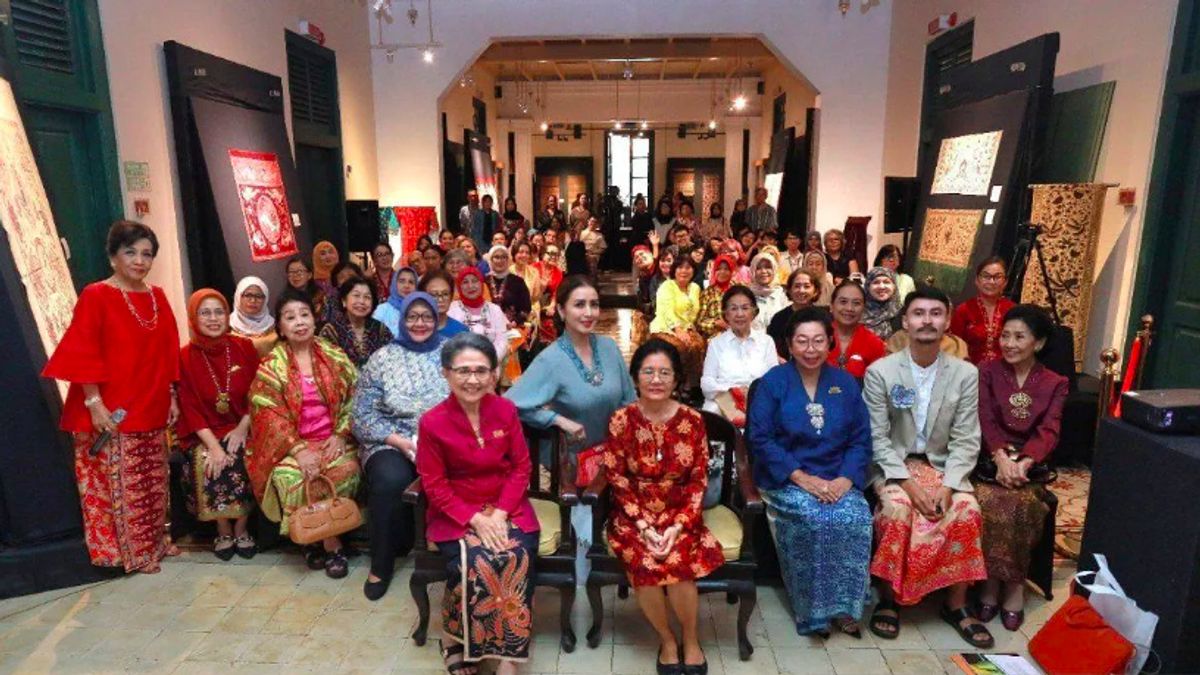


JAKARTA - Traditional Indonesian Wastra not only functions as a body cover or a marker of social status, but also keeps a long story about cross-cultural interactions.
Each strand of cloth contains symbols, colors, and motifs that reflect the acculturation process, including between local culture and Chinese culture that has occurred since the past.
Batik cloth with dragon motifs, woven with peoni flower ornaments, to the use of red and gold, is clear evidence that foreign culture is not just present, but also integrated into Indonesian cultural identity.
According to academics from the University of Indonesia, traces of cultural interaction between Indonesia and China have existed for centuries. This is influenced by Indonesia's strategic position as an international trade route that brings together various nations and cultures, such as the Netherlands, Arabia, India, and China.
Prof. Dr. AM. Hermina Sutami, M. Hum., Lecturer of the Chinese Study Program, Faculty of Cultural Sciences UI, stated that the results of the cultural combination were clearly evident in the cloth of the wastra, where symbols from various ethnicities mingled to form aesthetics and a distinctive philosophy.
He gave an example of the influence of Chinese in Indonesian wastra not only occurring in one region, but also spread across various regions, giving birth to a unique cultural roleization.
SEE ALSO:
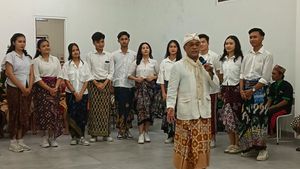
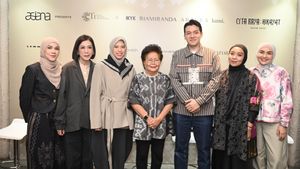
One of the most obvious elements of the influence of Chinese culture is the use of dragon motifs on traditional fabrics. If in dragon Western culture it is depicted as a threatening creature, in Chinese tradition it is actually inspired as a symbol of strength, health, and luck. Dragons are believed to have control over natural elements, such as rain, and are considered great creatures who bring blessings.
Color is also an important element in acculturation. The red color that is attached to Chinese culture is adopted in many Indonesian wastra because it is believed to have many meanings.
"In Chinese culture, red also plays a role in repelling evil spirits while providing positive energy. Meanwhile, the red color combined with gold provides the meaning of wealth and prosperity," he explained, as quoted by ANTARA.
The General Chairperson of the Wastraprema Association, Neneng Iskandar, added that the influence of Chinese in the archipelago wastra was not only seen from dragon motifs, but also from the presence of lotus flowers, peonies, hong birds, and kilins. These motifs are often found in batik or weaving fabrics, which are inspired by Chinese ceramic designs that enter the archipelago and are adapted by local craftsmen.
According to him, this acculturation process does not erase the identity of Indonesian culture, but rather enriches cultural heritage through the diversity of motives, colors, manufacturing techniques, to the philosophical values that accompany it.
The English, Chinese, Japanese, Arabic, and French versions are automatically generated by the AI. So there may still be inaccuracies in translating, please always see Indonesian as our main language. (system supported by DigitalSiber.id)


