
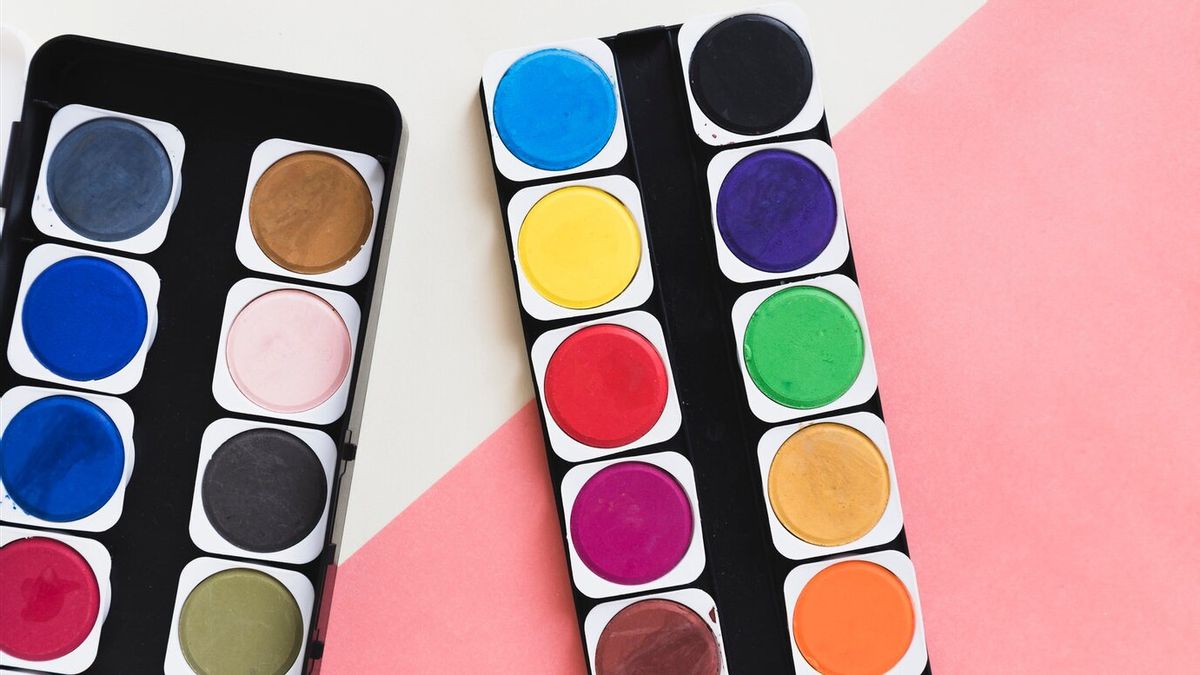


YOGYAKARTA - In a world of rich and unlimited art, understanding of color is a crucial foundation for every artist, both beginner and professional. For this reason, understanding intermediate color is important to do.
Unfortunately, this material is often missed in basic recognition, these colors actually play an important role in creating visual harmony, depth, and richness of expression in a work of art.
This article comes as an essential first step for anyone who wants to dive further into the color world, in particular understanding the concept of intermediate color and how its mastery can open the door to a deeper understanding of art.
Reporting from the Color Meaning page, intermediate colors allow you to create unique color combinations and different types of rona.
To understand how to create intermediate colors, you first need to know how they are in the color wheels and their relationship with primary and secondary colors.
In short, you can create intermediate colors by mixing the primary color and secondary color adjacent to them on the color wheels. Before we discuss more in intermediate color theory, here is a brief overview:
Mixing primary (red, yellow, and blue) colors with other primary colors in the same proportion produces secondary colors. There are three secondary colors: purple, orange, and green.
Also read the article that discusses Knowing What 2 Dimension Fine Arts Are: Understanding, Elements, And Examples
Intermediate colors are created by mixing primary colors with secondary colors. For example, you can mix yellow and orange to produce yellow-orange intermediate colors.
In addition, you can mix red and purple together to get a red-ungu intermediate color.
Well then, you may be wondering how to remember the combinatorial naming sequence. If you can remember the primary colors, that's much easier.
Red, blue, and yellow primary colors are always mentioned first, followed by secondary colors mixed to produce intermediate ronas. Then, simply separate the two with a connecting sign and you will get the right color combination.
For example, if you have 12 parts of the color wheel, the intermediate color lies in the middle between primary and secondary colors. Of course, this becomes more complicated as more patterns appear on the color chart.
However, using 12-part colored wheels that only cover primary, secondary, and intermediate colors is the best way to understand this important color group relationship.
In 12 parts of the color wheels, various types of colors are usually notated. Otherwise, it's easy to mark it yourself.
The six-part colored wheel will not contain intermediate colors. Comparing the 6-part color wheels with the 12-part colored wheels can help you clearly see the difference between primary, secondary, and intermediate colors.
Different wavelengths form electromagnetic spectra. Technically, the visible colors are defined as light waves between 400 nm to 700 nm. One nanometer (nm) is equal to one per billion meters.
There are two theories to reproduce color, namely additive and subtractive color mixing. It is important to understand the difference between additive and subtractive colors. Intermediate colors are additive.
To get it, you combine colors. In subtractive color theory, adding two subtractive primary colors together create an additive primary color.
SEE ALSO:
-
 | LIFESTYLE
Pertemukan Fashion dan Estetika, Indonesia Fashion Aesthetics 2025 Tampilkan 17 Desainer
11 Februari 2025, 10:25 -
 | LIFESTYLE
Gaya Makeup Pernikahan: Pilihan Tampilan Memesona di Hari Bahagia
15 Februari 2025, 22:10



Although red, yellow, and blue are the basic primary colors for RYB, the human eye cares more about red, green, and blue (RGB), the primary color of sight and light.
Mixing three additive primary colors produces an additive secondary color, but it is also the primary color of subtractive cyan, magenta, and yellow (CMY), namely:
Now you have a secondary color of light. After putting on secondary colors, you can create intermediate colors.
In addition to understanding the color of the intermediate, follow other interesting articles too. Want to know other interesting information? Don't miss it, keep an eye on the updated news from VOI and follow all the social media accounts!
The English, Chinese, Japanese, Arabic, and French versions are automatically generated by the AI. So there may still be inaccuracies in translating, please always see Indonesian as our main language. (system supported by DigitalSiber.id)
Most Popular Tags
#Prabowo Subianto #donald trump #firearm #8791 #giias 2026Popular


