


JAKARTA - Innovations in the field of health continue to develop to answer the challenges of early detection of various diseases, including in newborns.
One of the concerns is congenital hypothyroidism, a condition that is often difficult to recognize from the beginning because it has few symptoms, but has a major impact on child development if it is not handled in time.
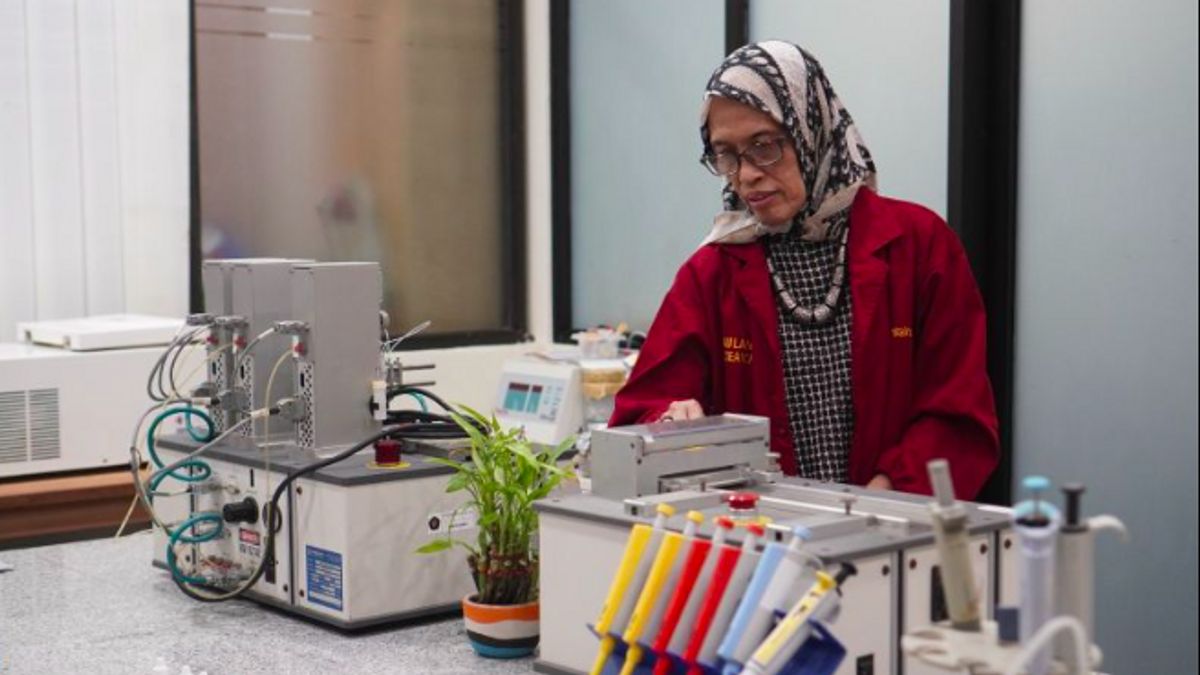
A team of researchers from Universitas Brawijaya (UB) led by Prof. Dr. Aulanni'am developed an early detection tool for hypothyroidism in infants based on the Enzyme Linked Immunosorbent Assay (ELISA) method.
This technology is designed to improve the accuracy, sensitivity, and efficiency in the diagnosis process from the early stages of life.
Prof. Aulanni'am explained that this tool utilizes polyclonal antibodies produced through the induction of recombinant human Thyroid Stimulating Hormone (hTSH).
"Technically, this tool works by utilizing polyclonal antibodies produced through the induction of recombinant human Thyroid Stimulating Hormone (hTSH) protein. The recombinant protein acts as an antigen that is specifically designed to stimulate the immune system to produce antibodies with high affinity to thyroid hormone biomarkers," he said.
He explained that the quality of antibodies is the main factor in determining the accuracy of detection. The resulting polyclonal antibodies are able to recognize various parts of the antigen, thereby increasing the likelihood of interaction with the target biomarker in the sample.
In its use, this system is integrated with the ELISA method, which is an analysis technique based on the reaction between antigen and antibody which is equipped with an enzymatic indicator.
When the baby's blood sample is tested, the antibodies will bind to certain thyroid hormone biomarkers. The reaction then triggers a color change due to enzyme activity, which is then measured optically. The intensity of the color that appears reflects the biomarker levels, thus allowing for standardized quantitative analysis.
"Congenital hypothyroidism is an endocrine disorder that must be detected as early as possible, because it has a major impact on child growth and development. Through this innovation, we are trying to present a more precise detection method to support the baby health screening program in Indonesia," said Prof. Aul.
According to him, the main advantage of this tool lies in its high sensitivity, so that it is able to detect hormone levels in very low amounts, even before clinical symptoms appear.
In addition, the level of specificity is also better because the antibodies are specifically designed to recognize specific biomarker targets. This makes the tool superior to conventional methods that have limitations in detecting cases in the early stages.
In terms of development, this tool is designed in the form of a prototype of a practical diagnostic kit and has the potential to be mass-produced. The use of domestically researched materials, including recombinant proteins and antibodies, is an added value in cost efficiency.
Thus, this tool is expected to be a more affordable alternative compared to imported products, as well as expanding early detection access at various health facilities, including in areas with limited resources.
Prof Aul also mentioned that this technology has the opportunity to be developed more widely as a diagnostic platform for various other diseases.
"This antibody-based technology and ELISA method are flexible, so it can be developed to detect various other diseases just by adjusting the target antigen," he explained.
He hopes that this innovation can accelerate the screening process for newborns with more accurate and efficient results, as well as strengthen the role of national research in presenting health technologies that are applicable and have a direct impact on the community.
"This tool has not been marketed, but the development of this tool has received attention from the industry, including PT Bio Farma (Persero) to be developed on an industrial scale, so that it can be commercialized and used by the community," he concluded.
The English, Chinese, Japanese, Arabic, and French versions are automatically generated by the AI. So there may still be inaccuracies in translating, please always see Indonesian as our main language. (system supported by DigitalSiber.id)


