
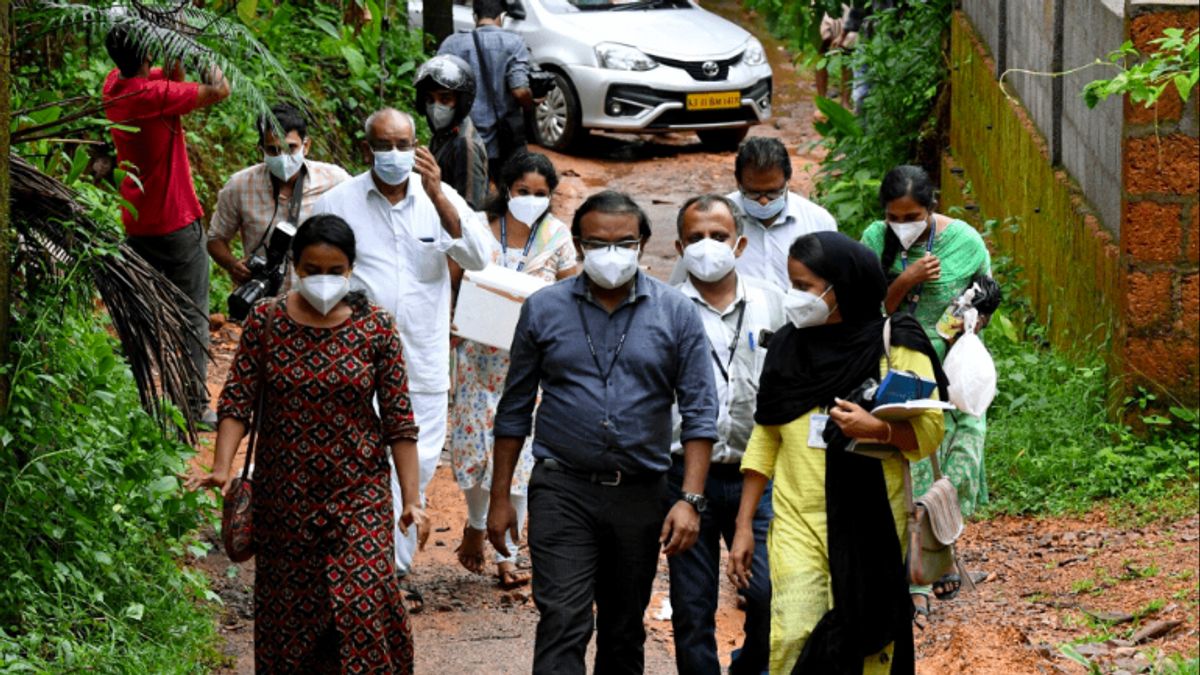


JAKARTA - Vigilance against infectious diseases is once again a global concern as new reports of nipah virus infections in India emerge. This virus, known to have a high fatality rate, has been detected again in West Bengal, triggering a monitoring response from the World Health Organization (WHO).
Through the publication of Disease Outbreak News (DONs), WHO recorded the incidence of nipah virus infection on January 30, 2026. This report contains a number of important findings that need to be considered as part of efforts to control and prevent the spread of the disease.
Adjunct Professor of Griffith University in Australia, Prof. Tjandra Yoga Aditama, explained that the WHO summarized at least seven main points related to the case. "The occurrence of nipah virus infection in West Bengal has been included in the WHO DONs, and there are several important things that are explained to understand the situation and its management," said Tjandra in Jakarta, Monday.
He revealed that the two cases that were in the spotlight involved a male nurse and a female nurse aged between 20 and 30 years old. Both of them work at a private hospital in the Barasat area, West Bengal.
Severe symptoms were reported to have started appearing at the end of December 2025, so the two had to undergo treatment at the hospital in early January 2026. After further examination, on January 13, 2026, both were confirmed to be infected with the nipah virus through RT-PCR and ELISA tests at the India National Institute of Virology (NIV) in Pune.
Tjandra added that the institution has a good reputation in handling infectious diseases. "When I was still serving as the Director of Communicable Diseases of the WHO Southeast Asia, the quality of the Indian National Institute of Virology was indeed very well recognized. It would be very good if Indonesia also had an institution with similar capacity," he said.
Both nurses underwent treatment until January 21, 2026. The female nurse was reported to be still in critical condition and was being treated in an intensive care unit with the help of a ventilator. Meanwhile, the male nurse suffered from severe neurological disorders due to the infection, but his condition was reported to continue to show improvement.
Until the WHO report was released, the source of transmission of the nipah virus in these two cases was still not known for sure. According to Tjandra, this condition is a challenge in its own right in the effort to control. "Because the source of transmission has not been identified, the handling of this incident cannot be said to be completely complete," he explained.
However, the Indian health authorities have reported positive developments. The Indian National Centre for Disease Control on January 27, 2026 announced that no further confirmed cases related to the incident in Barasat were found.
The WHO also assessed that the public health risk from this incident was at a moderate level at the subnational level in India. However, the risk is categorized as low for regional and global levels.
Furthermore, Tjandra reminded that the nipah virus has long been on the WHO's priority pathogen list. This virus is the focus of efforts to accelerate the development of detection tools and medical countermeasures as part of preparedness for potential future epidemics and pandemics.
The English, Chinese, Japanese, Arabic, and French versions are automatically generated by the AI. So there may still be inaccuracies in translating, please always see Indonesian as our main language. (system supported by DigitalSiber.id)
Most Popular Tags
#Prabowo Subianto #donald trump #Febrie Adriansyah #8791 #giias 2026Popular


