
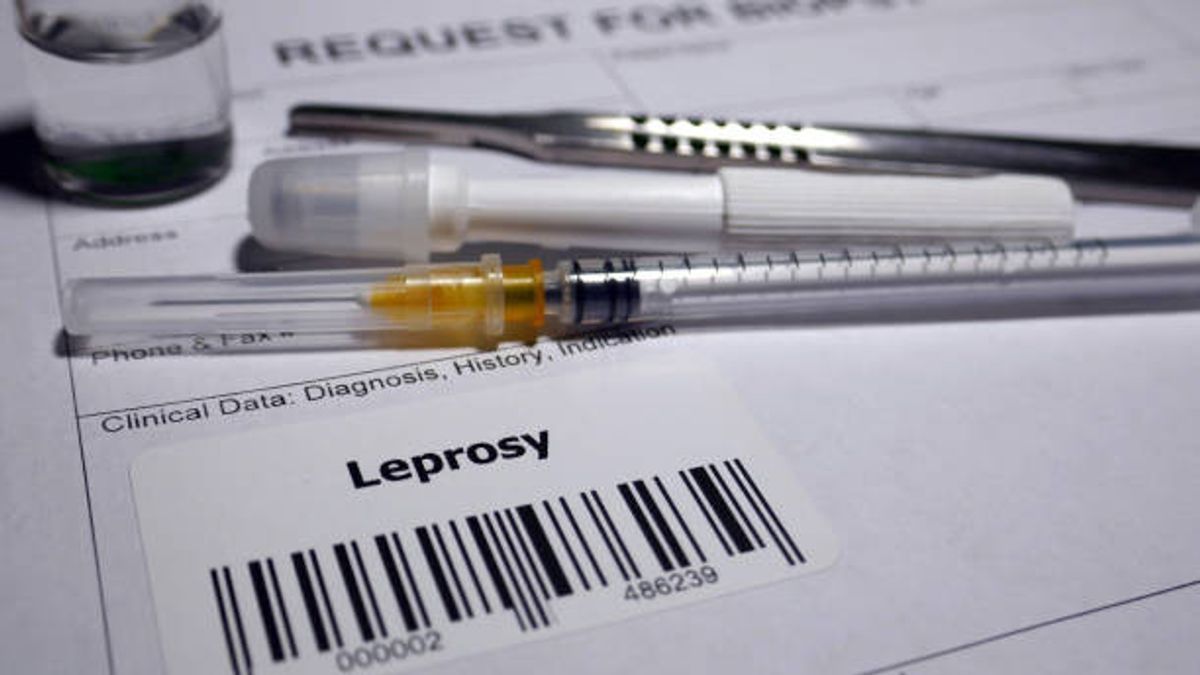


JAKARTA - Leprosy disease has recently attracted the world's attention, with its reappearance in Romania after 44 years. The disease was identified in two Indonesian citizens (WNI) who worked at one of the spas in Romania.
The Indonesian Ministry of Health has coordinated with the relevant national health authorities to repatriate the two Indonesian citizens to undergo further treatment in Indonesia.
This case made leprosy disease garner attention, and unfortunately, misconceptions about leprosy are still widespread. Leprosy or leprosy is still misunderstood as a very contagious disease.
In fact, the World Health Organization (WHO) has confirmed that leprosy is not easily contagious and can be cured completely if treated properly early on. The following are the things that need to be known about leprosy.
1. The process of leprosy transmission
Leprosy is a chronic infectious disease caused by the bacterium Mycobacterium leprae, which attacks the skin, peripheral nerves, eyes, and respiratory tract. The disease is characterized by dead spots on the skin that do not feel painful or itchy.
According to the WHO on its official website, leprosy is transmitted through droplets or splashes of saliva from the nose and mouth of untreated leprosy sufferers, which contain the bacterium Mycobacterium leprae.
This transmission occurs after close and prolonged contact, for example living together or intense interaction for a long time.
Thus, it is emphasized that leprosy is not transmitted through casual contact such as shaking hands, hugging, eating together, sitting close together, or using public transportation.
2. Diagnosis of leprosy
Diagnosis of leprosy is generally done clinically, based on a doctor's examination. Laboratory tests are needed in certain cases that are difficult to explain.
The WHO says that leprosy is usually characterized by skin abnormalities and peripheral nerve disorders. Diagnosis is established if at least one of the following signs is found.
- Loss of sensation in pale or reddish skin patches. - Thickening or enlargement of the peripheral nerves, accompanied by sensory disturbances or muscle weakness. - The presence of leprosy bacilli on skin scrapings.
3. Leprosy treatment
In the treatment of leprosy with therapeutic needs, WHO classifies leprosy into two types. Paucibacillary (PB) for leprosy with 1 to 5 skin lesions, without bacteria detected on the skin abscess.
Then multibacillary (MB) for leprosy with more than 5 skin lesions, or accompanied by nerve involvement, or bacteria detected, regardless of the number of lesions.
In leprosy treatment, the standard treatment is multi-drug therapy (MDT) consisting of dapsone, rifampicin, and clozafimine. The duration of treatment is usually carried out for 6 months for PB cases, and 12 months for MB cases.
The English, Chinese, Japanese, Arabic, and French versions are automatically generated by the AI. So there may still be inaccuracies in translating, please always see Indonesian as our main language. (system supported by DigitalSiber.id)


