


JAKARTA - Disease prevention efforts are increasingly relying on medical imaging technology that can detect abnormalities from the earliest stages, before symptoms develop further.
One of the technologies that play an important role in the preventive strategy is CT Scan, which allows medical personnel to identify the risk of non-communicable diseases such as cancer, heart disorders, and vascular disorders more quickly and accurately.
Wide access to CT scans is key in strengthening the national health system which is oriented towards early detection and prevention.
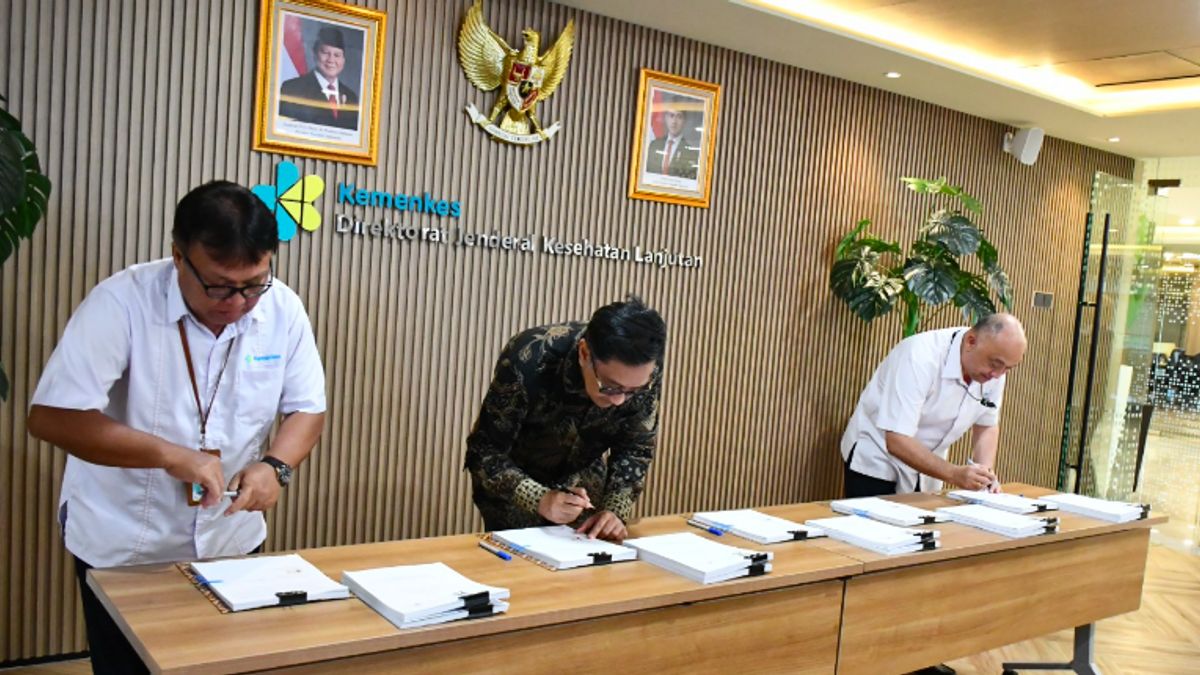
In line with these needs, the Ministry of Health of the Republic of Indonesia announced an increase in access to diagnostic imaging services through the Strengthening Indonesia's Healthcare Referral Network (SIHREN) program.
The program is designed to bring more equitable access to high-quality health care to more than 280 million Indonesians. In a long-term contract obtained through a competitive tender process, GE HealthCare is appointed to provide more than 300 units of advanced technology CT Scan to public hospitals in 38 provinces, covering urban areas to remote areas.
The procurement of CT Scan was carried out through an open international auction in accordance with the procurement regulations of the Islamic Development Bank (IsDB). The selection process was carried out strictly, both in terms of technical and price, to ensure the principles of transparency, accountability, and maximum value of benefits for the government and the people of Indonesia.
The SIHREN program itself is one of the largest health infrastructure investments ever made in Indonesia, as well as a global-scale multilateral health project.
This initiative aims to strengthen the national referral system by expanding access to diagnostic and therapeutic services, especially for the treatment of non-communicable diseases, improving maternal and child health, and preparing for potential future pandemics.
In modern clinical practice, CT Scan holds an important role thanks to its ability to produce two- and three-dimensional images quickly and in detail. This technology utilizes X-rays and advanced computing systems to visualize internal organs, bones, blood vessels, and soft tissues. CT Scan helps doctors make an earlier diagnosis, assess the severity of the disease, monitor the response to therapies such as chemotherapy or radiotherapy, and guide invasive medical procedures such as biopsies.
President & CEO of GE HealthCare International, Elie Chaillot, said that the company was proud to support the health transformation agenda launched by the Ministry of Health of the Republic of Indonesia.
"We support the vision of the Ministry of Health of the Republic of Indonesia, through our continued investment in local manufacturing, health human capital capacity development, and training reflects a commitment to contribute to the resilience of the Indonesian health system and drive local economic growth. Equally important, this initiative ensures that advanced diagnostic technology reaches rural and remote communities, promotes equitable health services and delivers life-saving patient care," said Ellie Chaillot.
He emphasized that the implementation of early detection tools for this disease is not only about the availability of technology, but also includes strengthening human resource capacity, developing local manufacturing, and continuous training.
This initiative is expected to be able to reach people in rural and remote areas, as well as encourage the equalization of health services that have the potential to save lives.
For more than 70 years, GE HealthCare has partnered with the public and private health sectors in Indonesia. In early 2025, the company also won a tender to procure 10 1.5 Tesla MRI units for public hospitals.
High-resolution MRI technology plays an important role in supporting the diagnosis and monitoring of diseases such as cancer, stroke, and cardiovascular disorders without using radiation, making it relevant in the management of non-communicable diseases.
The English, Chinese, Japanese, Arabic, and French versions are automatically generated by the AI. So there may still be inaccuracies in translating, please always see Indonesian as our main language. (system supported by DigitalSiber.id)


