
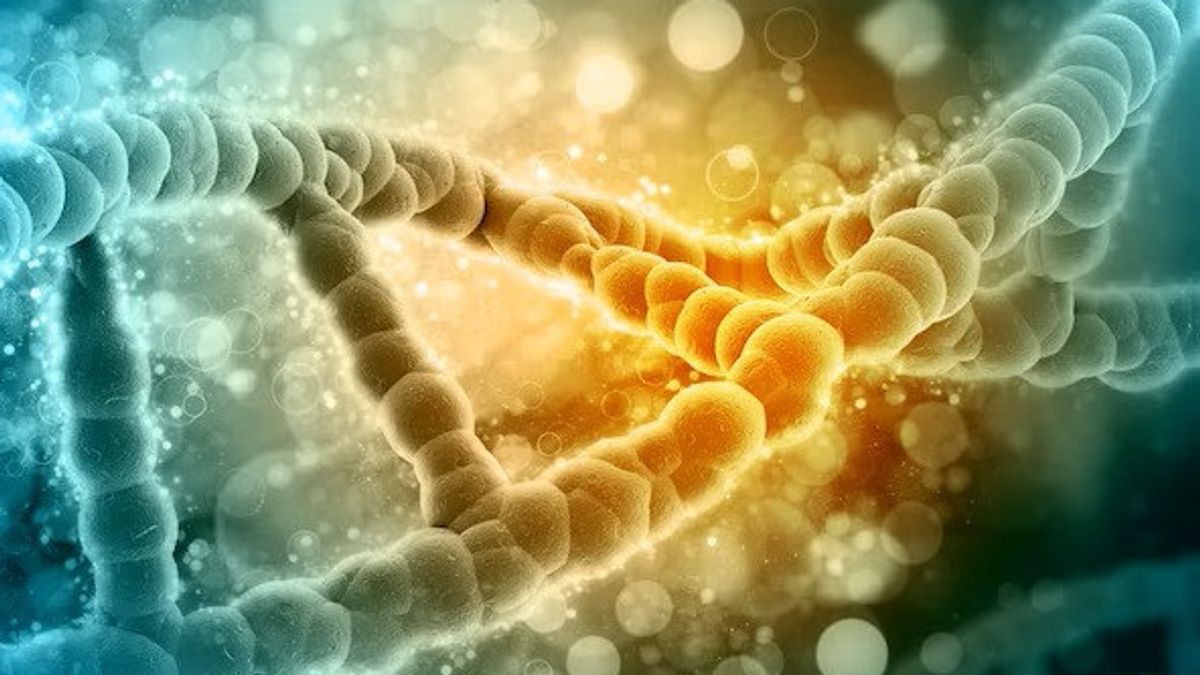


YOGYAKARTA - Did you know that the gender of a baby is determined from the early stages of fertilization? This process takes place due to the role of chromosomes which we call "sex chromosomes." In humans, the chromosomes that determine the sex of the baby are called X and Y chromosomes. These two chromosomes play an important role in determining gender.
Dilansir dari laman Science Direct, setiap manusia mempunyai total 23 pasang kromosom di dalam sel-sel tubuhnya, yang bertugas membawa informasi genetik. Dari keseluruhan kromosom tersebut, sepasang kromosom yang menentukan jenis kelamin disebut kromosom seks, yaitu kromosom X dan Y. Adapun kombinasi antara kromosom X dan Y ini menjadi dasar penentuan jenis kelamin seseorang.
During the initial stage of fertilization, the mother always inherits the X chromosome. Meanwhile, the father can inherit the X or Y chromosome. This combination is what determines the baby's gender:
In a simple explanation, the X and Y chromosomes that determine gender depend on the chromosomes carried by the sperm from the father. Sperm carrying the Y chromosome will produce a boy, while sperm carrying the X chromosome will produce a girl.
The Y chromosome, which is only found in males, contains the SRY (Sex-determining Region Y) gene. This gene is the key in the process of determining male sex, because it has a role in the formation of the testes and the production of certain hormones that are markers of the development of male characteristics. Without the Y chromosome, biologically, the individual will develop as a female.
Genetically, the Y chromosome has a unique function that affects the characteristics of men. Unlike the X chromosome which contains many genes important for various body functions, the Y chromosome has fewer genes. During the course of evolution, the Y chromosome has shrunk in size so that today only a few genes, including the SRY gene, play a major role in determining male sex.
Interestingly, this Y chromosome also has variations that can trace genetic relationships along the male lineage, because it is directly inherited from father to son.
In every pregnancy, the chance of having a boy or girl is generally 50%. This is because every sperm produced has the same chance of carrying an X or Y chromosome. However, some studies conclude that under certain conditions, such as age and sperm health, it can affect the ability of sperm carrying the Y or X chromosome in the process of fertilizing the egg.
Some theories even explain that environmental or paternal health factors can slightly increase the chances of a certain sex, but the influence is not statistically significant.
Reported by Sciencedaily, in addition to the combination of XX and XY, there are several genetic conditions that can affect the structure of the sex chromosomes, including:
This variation suggests that genetics in determining gender can be more complex than just a combination of XX and XY.
That's the review of chromosomes that determine the sex of the baby. Hopefully useful. Visit VOI.id for other interesting information.
The English, Chinese, Japanese, Arabic, and French versions are automatically generated by the AI. So there may still be inaccuracies in translating, please always see Indonesian as our main language. (system supported by DigitalSiber.id)


