


JAKARTA - Dengue Hemorrhagic Fever (DHF) is not a seasonal disease. This disease can attack anytime and anyone, regardless of age or place to live.
Although it has been more than five decades since it was first discovered in Indonesia in 1968, dengue is still a serious threat to public health.
The latest data from the Ministry of Health noted that as of May 16, 2025, 56,269 dengue cases were found in 456 districts/cities throughout Indonesia, with the death toll reaching 250 people in 123 regions. The spike in cases that continue to occur shows that dengue control is still a challenge that requires mutual attention.
In commemoration of ASEAN Dengue Day (ADD) 2025, PT Takeda Innovative Medicines reiterated its commitment to supporting efforts to prevent DHF. Through an official statement, President Director of Takeda, Andreas Gukknecht, emphasized that the impact of dengue is not only seen from the number of cases, but also from the loss of productivity and grief of families who have lost their beloved members.
Behind the numbers, there is a true story that is not recorded in the data. Dengue is not just an ordinary tropical disease This is a real threat every day," he said.
Andreas invites all parties to unite in achieving an ambitious target of zero deaths due to dengue by 2030. He conveyed three main steps that must be strengthened: increasing public awareness about dengue prevention, the discipline of implementing 3M Plus, and being open to innovative approaches such as vaccinations.
"We have to work together. The government, health workers, the community, and the private sector must join hands," he said.
As a tangible form of support for the 2025 ADD commemoration, Takeda collaborated with the West Java Branch of the Indonesian Pediatrician Association (IDAI) in organizing a scientific seminar themed Strengthen the Role of Healthcare Workers: Together We Fight Dengue. This activity was held to strengthen the role of pediatricians in facing dengue challenges in the field.
SEE ALSO:
-
 | INFO SEHAT
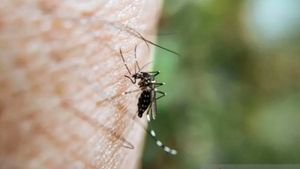
Waspadai Penularan Demam Berdarah Melalui Gigitan Nyamuk Aedes Aegypti
05 Juni 2025, 10:25 -
 | INFO SEHAT
Jus Jambu Biji Belum Terbukti Naikkan Trombosit, Ini Penjelasan Dokter
05 Juni 2025, 04:25 -
 | KESEHATAN
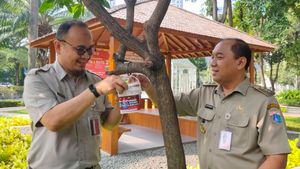
Ribuan Nyamuk Wolbachia Disebar di Jakarta Barat untuk Cegah Demam Berdarah
29 April 2025, 15:25 -
 | BERITA
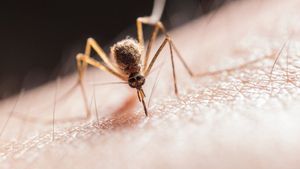
Kemenkes Targetkan 8 Juta Tes Malaria, Harap Temukan 1,1 Juta Kasus pada 2025
25 April 2025, 22:58
The chairman of IDAI West Java, Dr. dr. Anggraini Alam, Sp.A. Subsp.Inf.P.T (K), emphasized that the target of zero dengue death in 2030 has been adopted in the Dengue National Strategy (Stranas). According to him, this strategy prioritizes vector control and the use of new technologies such as Wolbachia and vaccination.
"Dengue is not a disease once hit, it's over. Because there are four virus serotypes, a person can be infected more than once, and the second infection can be much more severe," he said.
He also highlighted the importance of community roles in prevention, through the 3M Plus movement and the 1 Jumantik House 1 (1R1J) program. "We don't know when mosquitoes will bite. So prevention must be comprehensive, from households to public policies," he added.
Another speaker, Dr. dr. Djatnika Setiabudi, Sp.A Subsp.Inf.P.T (K), MCTM (Trop Pid), reviewed the importance of vaccination as part of a long history of preventing infectious diseases. He explained that vaccines have saved millions of lives every year from various diseases, and the same role is now expected from dengue vaccines.
Vaccines are not a guarantee that someone is not infected, but can greatly reduce the risk of severe symptoms and the spread of the virus, "he explained.
Similarly, Prof. Dr. Edi Hartoyo, dr., Sp.A Subsp.Inf.P.T (K), emphasized that Indonesia as the country with the highest dengue cases in Asia faces a huge burden. Based on data from the Ministry of Health 2021 2023, 73% of cases occurred in the 544 year age group, and 49% of deaths occurred in children aged 514 years.
Prevention through vaccination is crucial, especially for vulnerable age groups. But keep in mind, the effectiveness of the vaccine is optimal if given according to the recommended dose," he said.
For information, ASEAN Dengue Day was first announced on June 15, 2011 by ASEAN countries as a follow-up to the commitment of the Ministers of Health in the 10th regional meeting. Since then, every year, Southeast Asian countries including Indonesia have organized various educational and campaign programs to increase public awareness of the dangers of dengue and the importance of sustainable prevention.
The English, Chinese, Japanese, Arabic, and French versions are automatically generated by the AI. So there may still be inaccuracies in translating, please always see Indonesian as our main language. (system supported by DigitalSiber.id)
Most Popular Tags
#Prabowo Subianto #donald trump #2026 World Cup #venezuela #Bhayangkara hut #konflik timur tengahPopular


