


JAKARTA - In an effort to reduce the high mortality rate and defects due to stroke, the Bali Provincial Government is developing a network system between regional hospitals. This initiative is expected to be able to increase the speed and effectiveness of handling stroke patients throughout Bali.
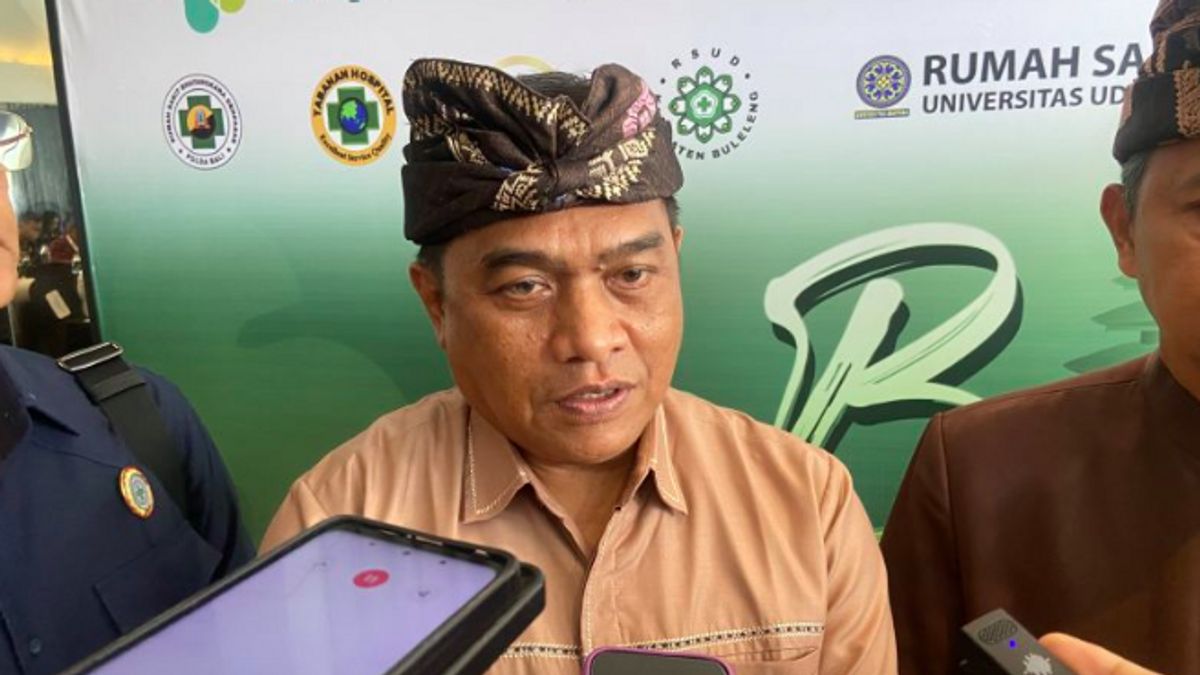
The head of the Bali Provincial Health Office, I Nyoman Gede Anom, stated that local governments, including districts/cities and all government-owned hospitals, fully support the strengthening of the stroke service network. "The main goal is clear, namely reducing the risk of death and defects due to stroke," he said while attending the inauguration of the network system in Badung, as quoted by ANTARA.
A total of 14 hospitals in Bali have officially formed an integrated service network called Bali Stroke Care, which is led by RSUP Prof. Ngoerah. This system includes Bali Mandara Hospital, nine district/city hospitals, as well as vertical hospitals such as Udayana University Hospital, Bhayangkara Hospital, and Army Hospital.
According to Anom, stroke is the second highest cause of death in Bali after heart disease. Based on data from the Global Burden of Disease Study in 2019, there were more than 11,000 stroke cases in Bali, with about 15 percent at risk of death and 65 percent others experiencing long-term defects.
So far, limited hospital capacity has become a major challenge in dealing with stroke cases quickly. However, with the formation of this service network, treatment can be carried out in a coordinated manner between hospitals. If one hospital is unable to handle it, it can be immediately referred to other hospitals that are members of this system," he explained.
SEE ALSO:
-
 | TEKNOLOGI
Pria Ohio Diselamatkan Apple Watch Setelah Alami Stroke Saat Olahraga
02 Mei 2025, 11:05 -
 | KESEHATAN
Partikel Plastik Kecil Ditemukan dalam Arteri Pasien Stroke, Apa Penyebabnya?
25 April 2025, 22:55


He also emphasized that the readiness of medical personnel continues to be improved. Currently, Bali already has more than 150 neuroscientists spread across various hospitals.
RSUP Prof. Ngoerah will function as the final referral center in this system. Initial treatment is still carried out at the nearest hospital to prevent delays. Local governments will also provide data support so that the system can run optimally and reach the community at large.
Anom added that with this system, early detection and stroke handling services can be carried out more quickly, so that the risk of death and disability can be reduced as much as possible.
Previously, support for this integrated system had also been conveyed by the Governor of Bali, Wayan Koster. He assessed that health services that focus on stroke management are strategic steps and need to be developed with a collaborative approach.
"We need to convey to the public that Bali now has a specific health service for stroke. The system must be integrated, including digitally, so that the benefits can be felt widely," said Koster when receiving an audience from the Prof. Hospital. Ngoerah.
The English, Chinese, Japanese, Arabic, and French versions are automatically generated by the AI. So there may still be inaccuracies in translating, please always see Indonesian as our main language. (system supported by DigitalSiber.id)


