
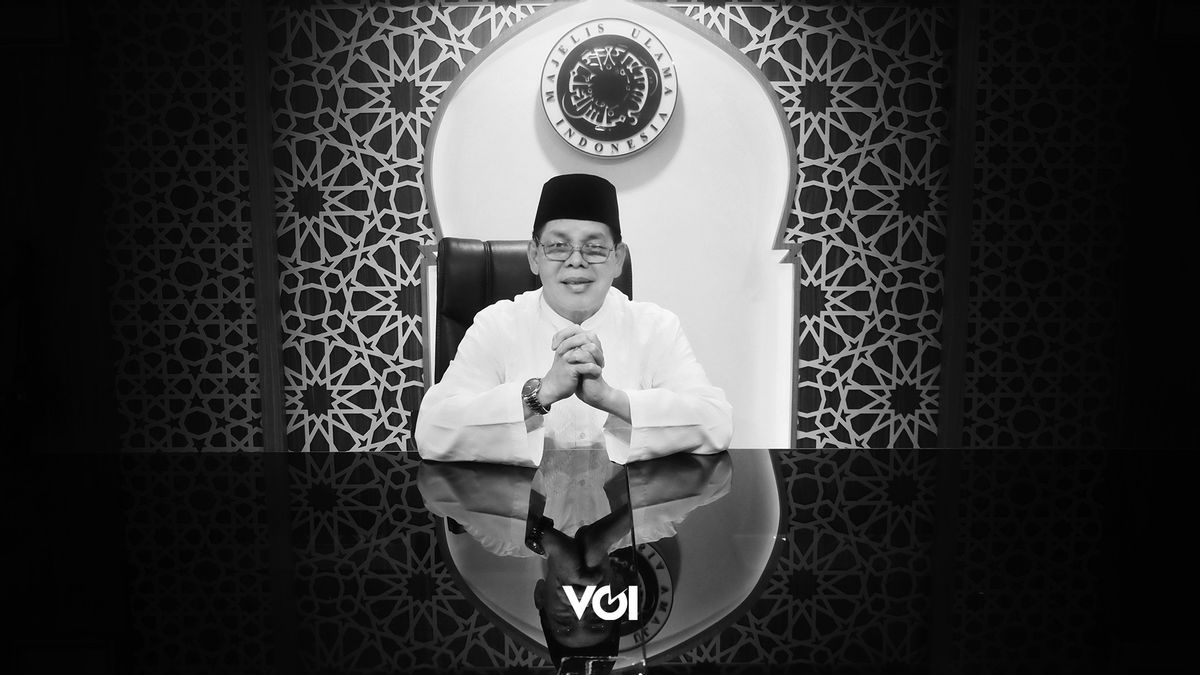


When performing the hajj, there are rules that are violated, whether unintentionally or intentionally. Therefore, said the Secretary General of the Indonesian Ulema Council (MUI) Dr. H. Amirsyah Tambunan, M.A., the congregation must pay dam or fines in the form of animals or fasting. The slaughter of animals is carried out around Mecca and the meat is also distributed there. Currently in Mecca it is difficult to find poor people, so the idea of distributing the meat of the animals to other regions or countries such as Indonesia becomes relevant.
***
In carrying out the Hajj and Umrah, as reported on the baznas.go.id website, there are several prohibitions that must be avoided. However, when the prohibition is carried out, whether intentionally or unintentionally, the Hajj or Umrah must pay dam or fines in the form of goats or camels, and if they are unable to do so, they can fast.
Paying dam as a sanction or compensation of the sharia - because they violated the rules of the prohibition of ihram, left the obligation of Hajj, or performed Tamattu' Hajj (performing Umrah before the Hajj) - is actually a form of ease in carrying out the Islamic sharia. And from the side of the congregation, this is a form of gratitude to the Most Just.
Ulama still have different opinions about where the meat of the slaughtered animals should be distributed. Some ulama argue that it is distributed around Mecca. However, some others suggest distributing it to other regions or countries that need it more. The reason is that it is difficult to find people who are entitled to receive the dam meat there.
Buya Amirsyah Tambunan is one of those who agree that the distribution of dam meat is carried out in other regions or countries that are more in need. "Because there are no poor people around Mecca. So there is no need to argue about this. Because this is a matter of ijtihad, if one is wrong, if it is right, it is two," he told Edy Suherli, Bambang Eros, and Irfan Meidianto from VOI who met him at the MUI Headquarters, Menteng, Jakarta, May 22, 2025.
How does Buya see the readiness for the implementation of the Hajj this year, given the dynamics in and outside the country are very extraordinary?
Questions like this have been asked repeatedly, and we have conveyed this to the Indonesian government, including the government of Saudi Arabia through the embassy in Jakarta. The answer is the same, namely, the implementation of the hajj is safe, smooth, and can produce a mabrur hajj.
The pilgrimage center is also far from the Middle East conflict point, right?
Yes, because of that, various countries, both in the Middle East and in the Western world, have an important role to play in creating a safe and peaceful atmosphere. So, the implementation of the hajj can go as we hope.
This year is also the first time that the Hajj has been carried out by the Ministry of Hajj and Umrah. Previously it was still affiliated with the Ministry of Religion. How does Buya see the transition?
Yes, one of the government's policies is that it has made many changes or transformations. I once wrote about this transformation in an article published in the media. That is, first, structural transformation. The second is spiritual transformation. The third is the transformation of the management of the use of this Hajj.
Well, this transformation and better role change we hope can make this institution or the Ministry of Hajj more focused, and more able to mobilize all institutional lines so that they can carry out the organization of the hajj well. And I see that from the beginning there have been changes made by the Ministry of Hajj.
What do you see?
Among others, yes, structurally it has become leaner. The ministry is focused and its preparations are certainly better.
Yesterday, it was a bit of a fuss about the war ticket, right?
Yes, if the war ticket has not been carried out. Later, it will be discussed whether this is approved or not. It all depends on the government's policy, political decisions, including the DPR and the congregation who have registered to perform the hajj.
So, if the war ticket is the principle of who among the prospective pilgrims who get the ticket faster. Meanwhile, there are already those who are queuing up to 30 years, it does not create an atmosphere of fairness. Unless, if from the beginning there has been a policy like that. For example, what is the policy from the beginning? Starting in 2027, for example, the government will take several steps, so many percent (for war tickets), while those who are already queuing get a portion of so many percent. That's okay, it's called proportional.
Is it possible that the queue system has been replaced with a war ticket?
If everything has to be transferred to war tickets, I think it will cause problems.
Okay. If we look at the impact of the Middle East war, it also affects the price of plane tickets, what is Buya's appeal so that airlines do not raise prices too high?
Well, this again needs a proportional, comprehensive, and integrative study. There is an interesting proposal; if the reason for going on the Hajj is that the ticket is a bit expensive, it can actually be converged with other things.
The way is, the plane returns to Indonesia with a productive scheme. So, the return plane is not empty, which means it will not lose. If the return is arranged with a business scheme, I think it can.
The largest component of the hajj is two: transportation and accommodation. These two elements can reach two-thirds of all components of the hajj. Well, it can be arranged. The scheme can be made more efficient and productive. So, it is necessary to sit together between the stakeholders concerned so that the results can really be productive.
MUI Secretary General Amirsyah Tambunan asked pilgrims to focus on worship, not be disturbed by activities on social media or social media. (Photo: Bambang Eros VOI, DI: Raga Granada VOI)
Regarding the weather, which is predicted to reach 42 degrees Celsius in the Holy Land, does MUI need to issue a fatwa to tighten the requirements for the ability (istitha'ah) for prospective pilgrims?
The fatwa on istitha'ah has been around since Buya Hamka became the General Chairman of MUI. In general, istitha'ah refers to explaining physical, mental, spiritual abilities, including financing. The weather is indeed a small part of the situation faced. Well, because of that, guidance is needed for daily pilgrims. Friends from Muhammadiyah, NU, and MUI already have (representatives/guardians) there.
Last year when I was a member of Amirul Haj, there was a rule: pilgrims are not allowed to leave the hotel after 10.00 pm until 04.00 am.
Even if the reason is to pray at night?
Yes, it is not allowed. It is well guarded. Why? This is to regulate the physical so that it is really in good condition. And it happens a lot, when the congregation is exhausted, it can drop. So, I ask the Hajj officers, do not give permission for pilgrims to wander for things that are not important. And pilgrims must also be aware and take care of themselves.
"Our haji waiting list is very long, what breakthrough should the government do to be able to cut it?"
"The government and the DPR must make arrangements early. Why do we need to regulate early? So as to create a sense of fairness among the congregation. For example, the Indonesian quota is 221,000 people a year. How do we regulate it so that it is proportional? Because we see such a long queue, if suddenly the rules are changed, it will later cause problems. That's what we have to avoid.
So, stakeholders must be invited to discuss, dialogue with MUI and Islamic organizations such as NU, Muhammadiyah, Al-Jam'iyatul Washliyah, Persis, Al-Ittihadiyah, and others; how do we react to this policy. And the government, as far as I know, will not dare to make a decision without considering the prospective pilgrims.
Do we need to 'hunt' for the remaining quotas of other countries that are not used?
It could be, if the Indonesian government could negotiate with the Saudi government. And it depends very much on whether the negotiations will give birth to an open attitude by the Indonesian government. And I have a note about this: our diplomacy on Hajj needs to be strengthened. Because we are carrying a large number of pilgrims, even the largest in the world. And that has a lot of rupiah potential. Well, because it has to be a strong bargaining position so that we get a proportional quota.
"What about our hajj ecosystem, has it been optimized?
I think it's important. In the future, we have to think about the ecosystem of the development of the financial aspect of the hajj. I once told my friends who were under the management of costs by BPKH, for example. What the hell, we have so many hajj pilgrims, but the rice, meat, fish, and vegetables are from other countries? Why does this happen? Yes, maybe our diplomacy and negotiations are still weak. This needs to be improved. MUI as one of the government stakeholders, I think it is interested in regulating this ecosystem. Because the ecosystem of the financial economy of the hajj is part of the ecosystem of the financial economy of sharia, and can help empower the people, right?
Regarding illegal Hajj, how do you minimize it according to Buya? Is there a need for a fatwa from MUI for those who promote and are involved?
"I want to remind the congregation, that the pilgrimage is noble, one of the pillars of Islam. Well, that's why I invite Muslims to perform the pilgrimage in a respectable and elegant way. Don't do it in a way that is against Islamic law. So, from the intention, the way, and the practice must be good.
The prayers that we often pray when performing the hajj include: Allahummaj'al hajjana hajjan mabruuran (the reward for a good hajj is the world and the hereafter), wa sa'yana sa'yan masykuro (the sai that is truly appreciated/accepted), wa dzambana dzanban maghfuro (our sins are forgiven), then wa tijaratan lan tabur (that is, a business that will not lose). So, people who go on the hajj should not be poor. The prayers he offered for the hereafter and also worldly affairs.
There is also a unique phenomenon today. When performing tawaf, sai, and others, many are using social media, live streaming, and so on. How do you deal with this?
"I remind the pilgrims, the key is yes: from intention to practice must be good. Therefore, do not take selfies, show off, there are already those who have been punished by the Saudi Arabian authorities. So, focus on performing the hajj. If we are not focused (worship can be disturbed). So, I am not banning selfies, just regulate it. And must know the situation and conditions, do not interfere with the practice of the hajj.
What are the signs of a successful hajj?
There are many signs, yes. For example, before he went on the hajj, his prayers were less orderly. After the hajj, it became orderly. If those who were orderly before the hajj, yes, he was more orderly. In social behavior, relations with neighbors are better. So, make the most of this hajj worship momentum, it would be a shame to miss it. Waiting for it has been a long time, the cost spent is not little.
Hajj worship is coupled with the worship of sacrifice, what are the implications?
There are special things about Eid al-Adha compared to Eid al-Fitr that we can take the wisdom from; those who go on the hajj can also perform the sacrifice in the same year and month. Meanwhile, the family in the country guides the family that is sacrificing. In the country, it is sunnah muakad to carry out the Arafah fast while the pilgrims are wukuf in the Arafah Plain on 9 Zulhijah which coincides with May 26, while Iduladha is on May 27.
What is the wisdom of carrying out the sacrifice?
One of the special features of the teachings of Islam is the institution of the slaughter of sacrificial animals. This is a great legacy of the Prophet Ibrahim and the Prophet Ismail. I think it is not excessive if we say that there is no one teaching in this world, except Islam, that teaches (in such a way). The second, every time we pray, we always say salawat to the Prophet Muhammad and the Prophet Ibrahim. That means (their stories) to be an example for us.
Then the social impact is extraordinary. Currently, many of our people are less fortunate, they have never even eaten meat. This is their chance to eat meat. And this does not distinguish religion, non-Muslims can also have a part, without distinguishing religion, tribe, ethnicity, and any region.
Where did Buya sacrifice this year?
"I sacrificed this year in my wife's village, namely Matur, Agam, West Sumatra. People in many areas need our help. For us to eat meat may be simple, but for them, God, it is something that carries extraordinary meaning.
"There are many victims in big cities, does that mean that the distribution of sacrificial meat is even?"
"This is what we do and manage, don't let the sacrificial meat pile up. If in Muhammadiyah, the sacrificial meat is packaged in cans (kornet). It can last up to a year and the distribution can go far. This sacrificial momentum can also be spread to the people of Gaza, Palestine, and other conflict areas. So, they just warm it up and eat it.
Even the meat of the dam animals from our brothers who are on pilgrimage in the Holy Land can be brought to Indonesia to be distributed. The reason is, around Mecca it is difficult to find poor people. So, there is no need to argue about this. Because this is a matter of ijtihad, if it is wrong, one reward, if it is right, two rewards.
Abroad, animals are slaughtered at the Animal Cutting House (RPH), but in Indonesia they are still in the mosque yard or elsewhere. What is Buya's advice for the cleanliness and health of sacrificial meat?
"I appeal to the people of Indonesia, first, if you don't have a place, it's better to slaughter at the RPH. Second, if you have enough land, it's okay, but the cleanliness and hygiene of the meat must be considered.
This sacrifice is important. If someone is able but does not sacrifice, said the Prophet, do not approach our place of prayer (our mosque). The narrative of this hadith is very harsh. Let us sacrifice to get closer to God. Then, this also proves our social concern for the community.
The story of Buya Amirsyah Tambunan in the Holy Land: No matter how great we are, never be arrogantBuya Amirsyah Tambunan has a unique experience in the hajj. And this is really memorable for him. This has become a valuable lesson for him and he hopes it can be a lesson for anyone who is and will perform the hajj.
"I often perform the hajj at the expense of the service, or people usually call it abidin hajj, hehehe," he said.
When he first went on the hajj, Buya - as he was commonly called - was invited by the King of Saudi Arabia. "That happened five years ago. And for me this is an unforgettable experience, even though the next time I have several times performed the hajj in the context of duty," he said.
The unforgettable experience became a whip for him that he should not be arrogant in the Holy Land. "So at that time I was on the night of umrah. After umrah, I met a retired police officer. After umrah, I just turned around not knowing the jungle, while my friends who went on umrah with me were separated from me," he said.
He and the retiree went home by taxi, but strangely did not meet his hotel. Finally, the two were dropped off at a place with a red and white logo and asked to wait until morning. After dawn broke, it turned out that the place was very close to the hotel where he was staying.
"Once I was delivered, it turned out to be very close. This is a very valuable experience for me. At that time, before leaving for umrah, I had thought, 'Ah, I already know the way home, it's not far,' "he continued.
Therefore, to the pilgrims, he advised to record and remember clearly their respective camping or hotel. "My experience can be a lesson. Even though we have often been to the Holy Land and have memorized the intricacies of Mecca and Medina as well as the places that often become places to carry out worship, we must not be arrogant. Always humble, surrender to God, and obey the advice of the guide is the best way," he advised.
Drink a lot of water.Because the weather in the Holy Land is considered extremely hot, he advised not to drink less water. "This is important, because when the weather is hot, we sweat. The sweat that flows must be replaced immediately with drinking water. If we are late, dehydration or fluid deficiency can occur. If you are dehydrated, the impact can be fatal," he said.
According to Buya, it is better to prevent than to treat. "So it is better to avoid dehydration by drinking plenty of water before dehydration occurs," he continued.
Equally important when in the holy land, said MUI Secretary General Amirsyah Tambunan, is to maintain a balanced nutritional intake. (Photo: Bambang Eros VOI, DI: Raga Granada VOI)
And last but not least, he suggested, there is no need to leave the hotel when it is hot. If you really have to, use an umbrella or other headgear and only as needed. After that, go back to the campsite.
Even though he is physically strong because he is still young, he still doesn't need to feel great. "It's better to remain humble," he said.
Equally important, said Buya, is to eat nutritious food. "It is very important to eat a balanced diet. Because many activities that require physical fitness must be supported by adequate nutritional intake. If you feel it is necessary, you can also add supplements," he said.
Because the waiting time for the hajj is very long, umrah - or also called a small hajj - can be a solution for those who want to go to the Holy Land. "If you have time and opportunity, go on umrah first. Umrah is the same practice as the hajj, the difference is that in the umrah there is no wukuf in Arafah," said Amirsyah Tambunan.
"I appeal to the Indonesian people, first if you don't have a place, it's better to slaughter at the RPH. Second, if you have enough land, you can, but the cleanliness and hygiene of the meat must be considered,"
Amirsyah Tambunan
The English, Chinese, Japanese, Arabic, and French versions are automatically generated by the AI. So there may still be inaccuracies in translating, please always see Indonesian as our main language. (system supported by DigitalSiber.id)


