
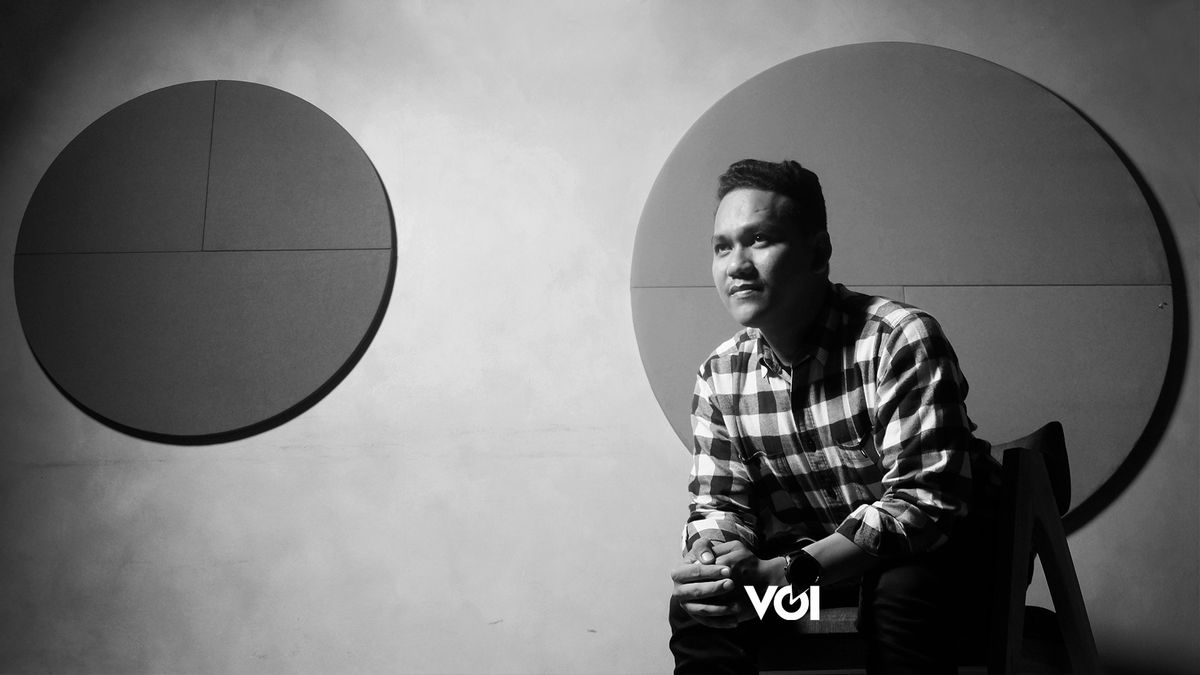


It's not just community organizations, professional organizations, and political parties that are divided in this country; student organizations are also experiencing similar issues. This was acknowledged by the Central Coordinator of the Indonesian Student Executive Board (BEM) for 2025–2026, Muzammil Ihsan. Who is responsible? He wouldn't reveal it. What is clear, he said, is that there are parties who don't want the student movement to unite and become a force for change.
***
One legacy of the Dutch colonial government's centuries-long rule over Indonesia is still felt today: the policy of divide and rule. Community organizations, professional organizations, and even political parties often split. Typically, after a congress or deliberation, the party that fails to win will form a new leadership, resulting in dual leadership within an organization.
So who is behind this divide and rule policy? According to Muzammil Ihsan, the student organization he belongs to, the All-Indonesia Student Executive Board (BEM), also experienced a split. He suspects this situation was deliberately created to stifle the student movement.
"Frankly, I can't say for sure who the perpetrators are. If there are any suspicions, it's because of the infighting among the political elite in this country and the involvement of the authorities. But whether this information is true, I don't know," he said.
Meanwhile, during a demonstration at the end of August, Muzammil Ihsan emphasized that BEM All-Indonesia did not advocate the dissolution of the Indonesian House of Representatives. "The issue of 'dissolving the DPR' is not part of the BEM SI agenda; what we are advocating for is DPR reform. The issue is that those who advocate dissolving the DPR haven't provided any solutions if the DPR is dissolved. There are long-term consequences if the DPR is dissolved, and that's what we need to consider," he said.
Therefore, he continued, they are advocating for DPR reform and the dismissal of problematic DPR members. "Actually, if the narrative is to disband the DPR, it also reflects the people's aspirations for our legislative body. Because many DPR members don't represent the people," he told Edy Suherli, Bambang Eros, and Dandi Juniar during a visit to the VOI office in the Tanah Abang area of Jakarta on Thursday, September 25, 2025.

In your opinion, what are the differences between today's student demonstrations and the student movements of 1966 and 1998?
I see a conceptual difference between today's student demonstrations and those of 1966 and 1998. Today's student movements are more intensely engaged in combat with the media, especially social media. This has significantly influenced today's student movement. The demonstrations at the end of August were truly influenced by the media and social media. What we convey is sometimes easily provoked by social media. As students, we must be able to discern the information we receive before sharing it with others.
In terms of morale, is it different from that of students in previous eras?
Honestly, the spirit of student resistance today has decreased slightly. Perhaps today's students are influenced by social media. In fact, social media has both positive and negative sides. As students, we must be able to use social media wisely. If we're not careful, we can be provoked.
In previous eras, according to our seniors, students gathered before taking action. So, they were more difficult to provoke. Students nowadays don't need to gather physically, making them more vulnerable to provocation. With increasingly sophisticated information technology and artificial intelligence, information spreads rapidly. We easily accept information from one source without listening to the other. Some also react immediately when receiving information, even though it may not be true.
So, is literacy essential?
Yes, it is. So we don't fall into the trap of spreading misinformation. As students, we can also help the public be wiser in using social media and not quickly spreading information without verifying it. Social media can be beneficial, but it can also backfire if used carelessly.
It turns out that divisions aren't only occurring within mass organizations and political parties, but also within Student Executive Boards (BEM). The UNDIP and UGM Student Executive Boards (BEM) withdrew. What's the chronology of events, and what's your solution to this?
Since the 2021 National Conference in Padang, the All-Indonesian Student Executive Board (BEM) alliance has split in two. At that time, due to a lack of agreement, several BEMs held a rival National Conference. Their planning was meticulous. I don't know who was behind them, whether the government or the authorities. The goal was to split the BEM alliance, and that became a reality.
At the end of July 2025, BEM SI Kerakyatan held a National Conference, also held in Padang, and another split occurred. At that time, the BEMs of UGM, UNDIP, and 17 other universities left BEM SI Kerakyatan.
So, how many organizations were created as a result of this split?
We, BEM SI, split in two. The BEM SI Kerakyatan alliance also split in two. There was also BEM Nusantara, which split in two. In short, the student movement was deeply divided.
So, there was a divide and rule policy. Who was behind it?
Frankly, I can't say for sure who the perpetrators were. There are suspicions that this was due to the struggle between the political elite in this country and the involvement of the authorities. But whether this information is true, I don't know.
Regarding the student demonstrations, what guidance did BEM SI give to the students who took part?
Before the demonstrations, we at BEM SI conducted a study. We divided the issues into 13 categories, such as health, the environment, agrarian issues, and others. Before any action or demonstration, our colleagues asked us to conduct a study first: identify the issues in society, and then formulate these demands.
The first action under my leadership as BEM SI Coordinator was the "Indonesia Anxious" demonstration on July 28, 2025. We also brought local issues to the national level. For example, in Riau, the plan to establish a military court, and in Aceh, the construction of battalions. We criticized these, and to date, the plans have not been implemented. This means we will continue to work until our aspirations are addressed by the government. When we convey our aspirations, we wait for a response from the government, for example, within 3 x 24 hours.
The demonstrations that occurred at the end of August ended in anarchy. Was this the work of BEM and students, or was there someone else behind it?
I believe the August 25, 2025, demonstration was provoked by social media. A few days before, there were intense calls for protests on social media, with one narrative: "Disband the DPR." I see political elites using our demonstrations to advance their own interests. For the August 25 demonstration, we don't know who commanded it. What happened was a fluid mass movement. Demonstrators marched from morning until evening, and after they withdrew, a team entered and committed anarchy. I don't know whether they were given the command to commit anarchy or not. That requires further investigation.
So, the August 25-29 demonstrations in various cities across Indonesia showed how angry the public was about recent events. Representatives who didn't represent the people, and the government issuing arbitrary policies. The public realized that our nation was not in a good state.

Regarding the issue of "dissolving the DPR," was this discussed by our friends at the Student Executive Board (BEM) before the August 25th demonstration?
Frankly, the issue of "dissolving the DPR" is not on the BEM's agenda. What we are advocating for is DPR reform. The problem is, those who advocate dissolving the DPR haven't offered any solutions if the DPR is actually dissolved. The consequences of dissolving the DPR would be far-reaching. Therefore, we are advocating for DPR reform, including the dismissal of problematic DPR members.
In fact, the narrative of dissolving the DPR also reflects the people's aspirations for our legislative institution. Many DPR members do not represent the people.
Several DPR members are considered problematic and have been suspended by their respective parties. What do you think?
When some DPR members respond excessively to the issue of dissolving the DPR, it actually further discredits the public. Ahmad Sahroni even commented that those calling for the DPR to be dissolved are the most stupid people in the world. As a result, public anger is growing. The arrogant reaction of the DPR members is one of the reasons why we are pushing for DPR reform, so that those who sit in parliament truly represent the people.
Another issue that has emerged is the increase in housing allowances and various other benefits received by members of parliament. All of this accumulated, sparking the demonstrations that occurred at the end of August.
The demonstrations on August 25, 26, and 27 were still fluid. It wasn't until August 28 that the demonstrations escalated, resulting in the death of Affan Kurniawan's driver. Public anger remained unabated, even though several officials visited Affan's residence. The unprofessional handling of the authorities resulted in casualties.
Are there any guidelines or advice for students planning to participate in demonstrations to avoid anarchy?
I can understand why demonstrations sometimes turn violent. Sometimes we give speeches, but the officials in charge don't dare meet us. This is what fuels the anger on the ground. There's pushing and shoving, and the authorities are sometimes repressive, ultimately leading to violence. Then we are labeled anarchists.
Was there a directive that students must be orderly during demonstrations and not act anarchically?
There was a directive. Expressing aspirations is guaranteed by law. However, violence and rioting are prohibited.
So were these acts of violence also committed by students?
It was a result of what I mentioned earlier: our aspirations were not responded to properly, compounded by the accumulated situation on the ground.
What about the assumption that someone was exploiting the student demonstrations?
Yesterday's demonstrations were indeed exploited. But these demonstrations also served to spark public awareness that what had been happening was wrong and needed to be corrected.
The masterminds behind these demonstrations must be investigated and prosecuted. If President Prabowo Subianto claims there was attempted treason during yesterday's demonstrations, we urge the president to prove that allegation. If necessary, form an investigative team to investigate.
Is there a correlation between the demonstrations and the looting of the homes of Ahmad Sahroni, Eko Patrio, Uya Kuya, Nafa Urbach, and Sri Mulyani?
We deeply regret these acts of anarchy and looting. This is not a student movement. We never encouraged our friends to loot. Even though we are angry with our representatives, we are still not allowed to loot. All parties must reflect on this case: political elites, politicians, and the public. I assure you that no students participated in the looting of the homes of these representatives and officials.
Our concern is the students still being held at the Jakarta Metropolitan Police. They must be released immediately. Some were arrested for vandalism, while others were arrested for their social media outcry. I believe this is an attempt to suppress the student movement. To quell this, the president must reveal the masterminds behind the riots, not target students or civilians.
Regarding the 17+8 demands, were our students at the Student Executive Board (BEM) also involved in formulating them?
These demands initially came from various groups expressing their aspirations, then crystallized by influencers. This helped to formulate a number of demands clearly.
We also have demands beyond 17+8. During our hearing with the Indonesian House of Representatives (DPR RI), we raised additional issues, including local issues that we brought to the national level. For example, issues related to mining in Papua, health, and the Free Nutritious Meals program. During the working meeting, we will narrow down the issues to be addressed during my term as BEM SI Coordinator for 2025–2026. So, we won't just be addressing populist and viral issues.
Do you think the demands of 17+8 and the local issues you've raised are realistic?
Yes, they are very realistic and a concern for all of us. Before we held the demonstration, we conducted a study. Some of the demands voiced through 17+8 have already been realized, such as the reduction of housing allowances for members of the Indonesian House of Representatives (DPR RI), the inclusion of the Asset Confiscation Bill in the National Legislation Program (Prolegnas), and so on. Things have calmed down somewhat now that the government and members of parliament have listened to the people's aspirations. The next task is to oversee the realization of these demands.
Do you think being an activist is limited to being a student?
Activists certainly voice their aspirations without hindrance. Their idealism persists even after they have worked or become bureaucrats. In reality, activism exists among students whose ideals remain steadfast. However, the time limit is relative, as there are also former activists who, after working, still dare to voice their aspirations loudly.
Many student activists enter politics after graduation or are considered pragmatic and reconciled with those in power. How do you view this phenomenon?
While still students, we can freely express the aspirations of the people. However, after working or joining a political party, the situation is different. Students must voice the aspirations of political parties and the government as servants of the state.
Some consider the current student movement to be more reactive than visionary. How do you respond to this criticism?
Specifically, what we do through BEM SI, before raising an issue, we prepare it through in-depth research. We're not reactive to what's happening. In this era, we're sometimes distracted by something that goes viral. When we raise an important issue but it doesn't go viral, it's not listened to and deemed not to be fighting for the people. What's seen is when we respond to a national issue that does go viral. Therefore, the public perception arises that the current student movement is reactionary.
How does BEM SI maintain the movement's independence from political polarization and elite interests?
When we plan our actions, we are very secretive, preventing leaks. If leaks occur, there will be people who want to infiltrate and exploit the movement. This is what we avoid. To prevent infiltration, before actions, we usually engage in manipulative activities. Many people ask for information, whether it's intelligence or journalists. The actual information was only conveyed during the demonstration.
What can be done when information leaks from within the Student Executive Board (BEM)?
Even within the USU Student Executive Board (BEM) management, I suspect someone in my cabinet is an intelligence agent. The movement was clearly visible: when we were consolidating, he didn't show up, but he did attend public discussions. What we deeply regret is that he sold information to external parties for personal gain.
If the student movement wants to be relevant for the future, what is BEM SI's strategy to become not just a "demonstration machine" but also a center of ideas and solutions?
The issues we voice must truly be what the public wants. And for our issues to be heard, they must be on a large scale.
What is your call to students, both within the same coalition and in other organizations, in fighting for the people's aspirations?
The student demonstrations at the end of August truly united us. The solidarity for the late Affan Kurniawan at the Jakarta Metropolitan Police is a concrete example. There were BEM SI, BEM SI Rakyat, and BEM Nusantara, all mingling. It's certainly not easy to unite all student movements, given their fragmented situation. Let's all student movements voice the people's aspirations together, forgetting our differences and political backgrounds. Let's unite our movements, crystallize the issues, and then convey them to the government, the legislature, and relevant parties.
Never tire of conveying the people's aspirations. We must trust each other, avoid backstabbing, and avoid personal gain. As for individuals infiltrating the movement, that might happen; we just need to close ranks to minimize it.
So, does this infiltration and divisiveness exist?
Yes, that's the reality. It exists, but it's difficult to detect. There are also those who accuse us of doing things that ultimately lead to fewer student participants due to waning trust.
Is there a phenomenon of paid demonstrations? Is this happening among students?
So far, no. None of our demonstrations have been paid. Paid demonstrations are often used to attack something. Usually, the action is quiet, and after it's over, it's only reported. The action is merely a formality for documentation and media coverage. So we can distinguish between paid actions and those that purely convey the aspirations of the people.
Muzammil Ihsan, Between Activity and College Target

Despite being involved in an organization and leading the All-Indonesia Student Executive Board (BEM), Muzammil Ihsan still aims to succeed in his studies. (Photo: Bambang Eros VOI, DI: Raga Granada VOI)
Despite his busy organizational activities and various activities advocating for the welfare of the community, Muzammil Ihsan, the Coordinator of the Indonesian Student Executive Board (BEM), remains mindful of his goals as a student. He must complete his studies at the Faculty of Agriculture, Department of Animal Husbandry, University of North Sumatra (USU), as instructed by his parents.
"I started actively participating in organizations on campus in my fourth semester. I entered college in 2021 when COVID-19 was still raging. At that time, classes were conducted online. After the pandemic was over, I returned to campus and joined organizations," said the man born in Tembung, Deli Serdang Regency, on April 3, 2003.
For Muzammil, both studies and organizations are equally important. It's just a matter of prioritizing which comes first. "For me, studies come first, but organizations come first. So, I'm still a student whose job is to study. Organizational activities are done after class," explained the USU BEM Chair (2024–present).
Muzammil is grateful for the support of his parents for his organizational activities. "Thank God, my parents are supportive. Because I explained to them before becoming active in organizations that the goal is to hone myself outside of classwork. Because behavior, attitude, and leadership can be learned from organizations," he explained, who also serves as the Chair of the Student Executive Board (BEM) of the Faculty of Agriculture, University of North Sumatra (2023–present).
However, when he was about to run for Chair of the BEM, he faced a dilemma. "At that time, my parents gave me an ultimatum: I could be late for classes, but not for more than one semester. After that, my career continued at the national level and I was elected as the BEM SI Coordinator," he said.
Muzammil's biggest concern is not to be expelled from campus. Currently, his parents' tolerance can last up to two semesters. "The main thing I have to do is not to be expelled from campus. Because that's a trust and responsibility from my parents," he stressed.
Final Project

Despite his busy schedule, Muzammil Ihsan still manages to manage his time. He even didn't take a break from studying despite being active in the Faculty Student Executive Board (BEM), the University of Sumatera Utara Student Executive Board (BEM USU), and now the Student Executive Board (BEM SI). "I'm now in my ninth semester. Thank God, I've completed the proposal seminar for my final project. After that, I'll have a results seminar and a thesis defense. Please pray that everything goes smoothly," he said.
Before taking part at the national level as BEM SI Coordinator, Muzammil has already completed one important step. "This is a manifestation of my commitment to my parents. So now I just need to finish my final project," said the winner of the 2024 ISMAPETI Regional Work Meeting Debate Competition.
His goal while leading BEM SI is to complete his final project research and then defend his results before the examining lecturers. "My final project is researching salted eggs with andaliman solution. I tested the protein, fat, water, and antioxidant levels. Andaliman solution has the potential to prevent cancer," he explained.
Muzammil's research will last approximately two weeks. "The old one compiled the research results after the testing was carried out for two weeks," he explained.
Tips in Organization

There are many benefits to being actively involved in organizations, from developing self-confidence and leadership skills to developing communication with elders. Muzammil Ihsan gained all of this through organizations. (Photo: Bambang Eros VOI, DI: Raga Granada VOI)
For Muzammil Ihsan, studying and organizing must be balanced. "My advice is to maintain a balance between the two. Essentially, studying comes first, and organizing comes first," emphasized the 2023 Udayana University Faculty of Animal Husbandry Feed Supplement Innovation Competition runner-up.
Although both are important, at certain times, one needs to be prioritized. However, that doesn't mean the other is neglected; it's just a matter of time management.
For example, when he was about to conduct research for his final project, a large demonstration suddenly broke out at the end of August. "I postponed my research until everything calmed down. Then I started doing it," he said.
He's grateful that being involved in organizations actually gave him more motivation to complete his studies. "Organizations can weaken my studies, but they can also be the opposite. Thank God, for me, it actually made me more motivated to finish my studies. Because my parents had a target," said Muzammil, who has never retaken this course.
He urged students not to be afraid of joining organizations as long as they know the methods and tricks. "Because being involved in organizations can develop self-confidence, leadership skills, and communication skills with elders. All of these are learned through organizations. Extracurricular activities can hone your skills," Muzammil Ihsan emphasized.
"The issue of "dissolving the DPR" is not on the BEM SI agenda. What we're advocating for is DPR reform. The issue is that those who are narrating "disband the DPR" haven't offered any solutions if the DPR is dissolved. There are long-term consequences if the DPR is dissolved, and that's what needs to be considered."
The English, Chinese, Japanese, Arabic, and French versions are automatically generated by the AI. So there may still be inaccuracies in translating, please always see Indonesian as our main language. (system supported by DigitalSiber.id)


