
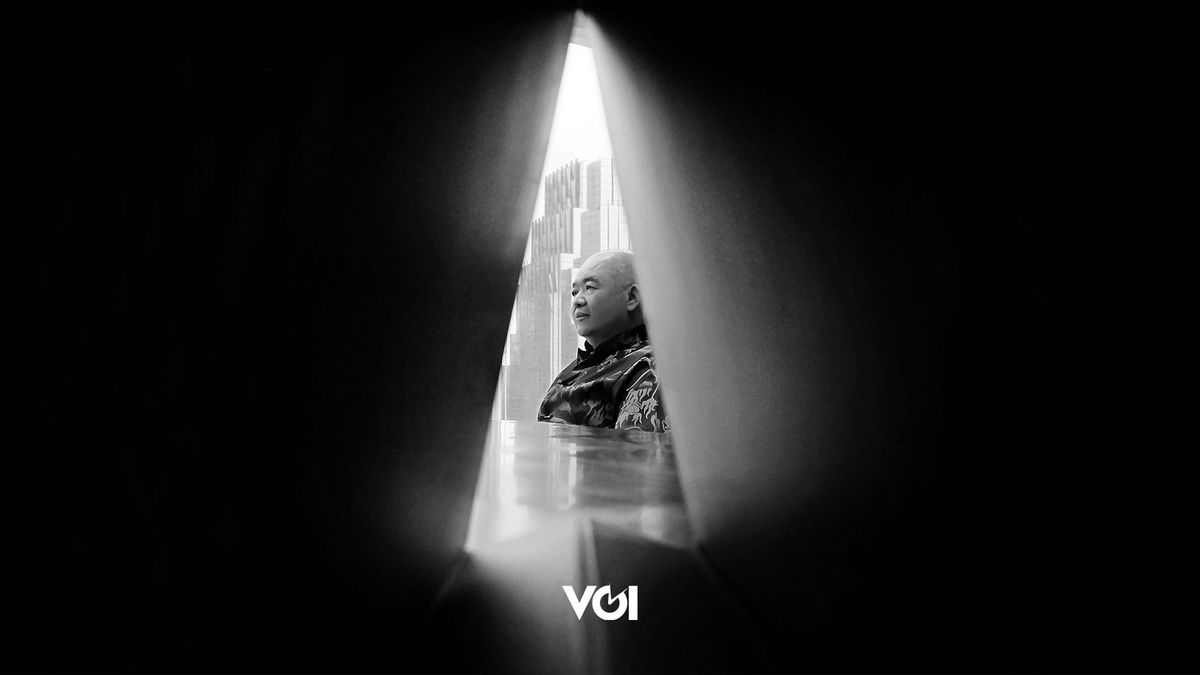


Opportunities, challenges, and hopes lie ahead at the beginning of the Chinese New Year 2576 Kongzili which coincides with January 29, 2025. According to the Daily Chair of the Paguyuban Sosial Marga Tionghoa Indonesia (Indonesian Chinese Social Association, PSMTI), Dr. Djoni Toat Muljadi, SH, MM, facing this year of the Wooden Snake must be done with optimism.
***
Djoni Toat Muljadi explained that in Tionghoa beliefs, snakes symbolize cunning, wisdom, and adaptability. Meanwhile, wood represents growth, renewal, and creativity. The combination of the Wood Snake is believed to bring positive energy to encourage innovation and flexibility in facing increasingly difficult challenges ahead.
"My hope is that we can get through this agile and inspiring Year of the Wood Snake. May this year bring prosperity, especially for all the people and nation of Indonesia, and generally for all people on earth. Furthermore, may we live in harmony and harmony," he said.
PSMTI, known in Mandarin as Yin Hua Bai Jia Xing Xie Hui, envisions that ethnic Tionghoa citizens of the Unitary State of the Republic of Indonesia, along with all components of the nation, have the rights and obligations to build the Unitary State of the Republic of Indonesia (NKRI) towards a just and prosperous society.
This vision is embodied in four missions formulated by the founding fathers of this community organization. First, to raise awareness of community, nation, and statehood in a sustainable and continuous manner. Second, to join the mainstream of the Indonesian nation by actively participating in the development of the Unitary State of the Republic of Indonesia in all aspects of national and state life. Third, to strengthen our identity as one of the ethnic groups within the extended Indonesian family. Fourth, to provide benefits to the nation and state, especially in the social, cultural, educational, and community sectors.
Based on this vision and mission, according to Djoni Toat Muljadi, PSMTI has undertaken and will continue to undertake many initiatives. These include dialogue to build mutual understanding and business training programs that assist MSMEs and community organizations (ormas) that collaborate with the association. Furthermore, regular social actions are also carried out to assist the less fortunate.
"We are collaborating with mass organizations such as GP Ansor and DMI (Indonesian Mosque Council) in providing business training. We also hope to communicate and collaborate with administrators at the provincial and district/city levels so they can do something for the environment," he told Edy Suherli, Bambang Eros, Irfa Meidianto, and Karisa Aurelia Tukan from VOI who met him at the PSMTI Secretariat, Equity Tower, SCBD Jakarta, Wednesday, January 22. Here is the full excerpt.

What is the meaning of the Chinese New Year 2576 Kongzili, and how should we prepare for this year of the Wooden Snake?
This year we enter the Chinese New Year 2576 Kongzili. Snakes are said to be agile, nimble, clever, and adaptable. Meanwhile, the element of wood symbolizes growth, renewal, and creativity. The combination of these two elements is believed to bring positive energy that encourages innovation and flexibility in facing challenges. Therefore, in this Year of the Wooden Snake, we must be agile and nimble to win the competition.
My hope is that we can navigate this agile and inspiring Year of the Wooden Snake. May this year bring prosperity, especially for all the people and nation of Indonesia, and generally for all people on earth. Furthermore, may we live in harmony and harmony so that we can enjoy the fruits of our labor and hard work.
What has PSMTI done and will do to preserve Chinese culture amidst the unstoppable flow of globalization?
PSMTI was founded in 1998, following the racial riots that occurred in Indonesia. The PSMTI organization serves as a social, cultural, and community forum for communication, interaction, and a channel for the aspirations of the Chinese ethnic group in Indonesia, with state institutions, government agencies, organizations, and other community components. We strive to contribute to the Unitary State of the Republic of Indonesia (NKRI) and assist the government in implementing its programs.
Through PSMTI, we promote awareness among the younger generation of Chinese ethnicity, ensuring they remember their ancestral culture, even though it is now intertwined with global culture. We hold Cici Koko (Chinese Women's Day) elections from the regional to the national level. We also produce books on Chinese history for the current generation to read. Furthermore, we establish museums, such as the Indonesian Chinese Cultural Park at TMII. Similar museums have also been established in Sukabumi, Bandung, and other areas. Through these museums, we document and exhibit cultural heritage for the enjoyment of current and future generations.
What is PSMTI doing to foster dialogue and cooperation between Tionghoa Indonesians and local communities, thus creating harmony?
To date, thank God, PSMTI has been established in 37 provinces and is present in 308 regencies/cities in Indonesia. We collaborate with community organizations such as GP Ansor and DMI (Indonesian Mosque Council) to provide business training. We also hope for communication and cooperation with administrators at the provincial and district/city levels so they can contribute to the environment.
Ideally, cultural acculturation should occur between immigrants and local residents. In the context of Chinese Tionghoa, what happens?
When migrating to a place, cultural acculturation usually occurs. A similar phenomenon occurs within the Chinese community. One example of acculturation is the lion dance. Lion dance groups have now collaborated with local arts in various performances.

According to Djoni Toat Muljadi, one of PSMTI's programs is providing business training to community organizations and organizations with which it collaborates. (Photo by Bambang Eros, DI: Raga Granada VOI)
Many Chinese people are skilled in business. What makes this possible?
Initially, from the Dutch colonial era until post-independence, Chinese people were directed to pursue business and trade. Their opportunities to become civil servants, members of the Indonesian National Armed Forces (TNI), and other state officials were very limited. Even entering public schools was difficult. Because the business sector was still open, Chinese children were directed to business schools. However, now everything is open; our children can enter various professions, unlike before. Many have become politicians, and some have even become regional heads.
So, is there a history behind why Chinese people are skilled in business?
Yes, because they were forced by circumstances. Eventually, the Chinese people truly proved their abilities in business. It turns out they can survive and succeed in the business world.
Are there any programs to develop MSMEs to train them in business?
Yes, as I mentioned earlier with the Indonesian Muslim Brotherhood (DMI) and the GP Ansor mass organization. In trading, Chinese people also cannot only trade with each other; We must open ourselves to other ethnic groups to expand our market. We provide training for MSMEs and other organizations that want to collaborate on business training and other things. We also collaborate with city and regional governments in various regions.
There is still a gap between Chinese Indonesians and the local community. What can be done to narrow this gap?
Talking about shortcomings isn't just about the dominance of one ethnic group, or the success of another. I think in every ethnic group, there are those who succeed and those who don't. In Tangerang or Bandung (on Jalan Pagarsih), many Chinese Indonesians live below the poverty line; they also don't own homes. In addition to providing business training, we help distribute social assistance at certain times. We also create networking opportunities in trade, for example.
Last December, we hosted a meeting of Chinese Indonesian clans from across Southeast Asia in Jakarta, hosted by PSMTI. During the meeting, the importance of networking opportunities with the local community was reiterated.
Is there still discrimination against the Chinese Indonesian community today?
Thank God, it has decreased. At PSMTI, we have a dedicated division to handle complaints about discrimination. Almost no one has filed complaints about discrimination or similar issues.
What are your hopes for a better future for Indonesia?
What we emphasize is legal certainty. For those involved in the business world, this is crucial. Without legal certainty, it becomes a hassle. Invested funds could be lost; instead of making a profit, they could actually suffer a loss. I believe international investors also prioritize legal certainty. They will delay their investments if they discover there is no legal certainty. Therefore, this issue must be given serious attention by the government and law enforcement officials. If we want good economic growth and investors to come, legal certainty must be maintained and enforced.
A business permit that has been issued must not be suddenly revoked mid-stream. How much money has been invested in a business, only to have its permit revoked mid-stream? This is what causes trouble.
Can you cite an example of the case you mentioned?
Since I'm also an advocate, I've encountered similar cases in Bandung. There are also cases at the national level, but I can't cite specifics. There are permits at the ministerial level that can be revoked mid-stream. This worries those who have already invested. They're at a disadvantage because of the sudden change in regulations.
The Tangerang sea fence case is currently going viral and attracting media and public attention. Is that what you're referring to?
Oh, no.
Does PSMTI use social media to promote its programs to its members and the public?
Currently, almost everyone uses social media for various purposes, including internal and external program promotion. In addition to social media, we also collaborate with national media outlets that support our activities.
What are your hopes for the Chinese community in Indonesia to help create harmony for Indonesia now and in the future?
I urge all my Chinese friends to be good at interacting with the people in your community, living and running a business. Prioritize your neighbors to your right, left, front, and back. Why neighbors? Because if something happens, they'll be the first to help. Our families may be nearby, but far away. That's why maintaining good relationships with neighbors and the surrounding environment is so important.
Djoni Toat Muljadi Finds "Heaven" Under the Sea

Besides his busy career, political parties, and organizations, Djoni Toat Muljadi also enjoys diving. (Photo by Bambang Eros, DI: Raga Granada VOI)
The beauty of the Earth's surface is unmatched. That's what Djoni Toat Muljadi, and perhaps many other divers, discovered. Beneath the seabed, there's a beautiful "paradise" that's hard to describe. This is what keeps divers coming back for more.
As a maritime nation, Indonesia boasts numerous diving spots recognized worldwide for their beauty. From Weh Island off the western tip of Aceh to Papua on the eastern tip, thousands of dive sites are scattered around to explore. Among the most renowned are Sabang (Aceh), the Seribu Islands (Jakarta), Maratua (East Kalimantan), Wakatobi (Southeast Sulawesi), Bunaken (North Sulawesi), Labuan Bajo (NTT), Morotai (North Maluku), and Raja Ampat (West Papua).
"Thank God, I've dived at the best dive sites in Indonesia," said Djoni, who is also a diving instructor.
Although he has visited these renowned dive spots, he admits he hasn't been able to dive them all. "Every region has so many dive spots. It's impossible for me to dive them all," said Djoni, who serves as Head of the Legal and Human Rights Division of the Indonesian Marine and Fisheries Association (PSTMI) Central Office.
According to Djoni, the natural beauty of the underwater world is difficult to describe in words. "If we often see the beauty of nature on the surface, try occasionally seeing what's beneath the sea surface by diving. Compare for yourself which is more beautiful. After diving, you'll believe there's an underwater paradise," he explained.
"Just looking at an aquarium is exciting, let alone being able to actually dive. The combination of coral reefs, marine plants, and the antics of fish and other marine life create a truly beautiful sight. I don't want to go home unless I remember my diving time is almost up, hehehe," said the man born in Bandung on January 28, 1964.
Unique Diving Experience

Djoni Toat Muljadi has had many unique experiences exploring dive sites throughout Indonesia and even abroad. (Photo by Karisa Aurelia Tukan, DI: Raga Granada VOI)
For Djoni Toat Muljadi, taking his diving club, which can number dozens of people at a time, is the most worrisome experience. "Some are diving for the first time, and sometimes they panic a little. That's normal. That's why they need to be accompanied and reassured. Thank God, there haven't been any unusual incidents while I've been taking my friends diving," said the advisor to the Indonesian Advocates Association (AAI) Bandung branch.
Once in the sea, all I can feel is awe at the beauty of God's creation. It's so beautiful and enchanting. "Seeing countless fish of various shapes and sizes, as well as other marine life, makes me endlessly grateful and in awe of God's creation," said Djoni, who also serves as the Chair of the Indonesian Lion Dance Sports Federation (FOBI) West Java for the 2021-2025 period.
In addition to visiting dive spots domestically, Djoni has also dived in the Maldives. "I've dived in the Maldives four times. The most exciting thing there is the docile nurse sharks. While diving, they bump into us. The stingrays, even though they no longer have their barbs, enjoy interacting with divers," he said.
School and Network Building

Djoni Toat Muljadi emphasized to young people the importance of diligently pursuing knowledge and building networks to achieve success in life. (Photo by Bambang Eros, DI: Raga Granada VOI)
Despite his busy schedule, from professional organizations as a lawyer and politician to social activities like PSMTI, Djoni still dedicates his time to his family. "My family understands my various activities. When I have time, I spend time with them," said Djoni, who is following in the footsteps of his father, a Chinese convert to Islam who is heavily involved in social organizations.
He advised the younger generation to prioritize education. "While you still have the opportunity to go to school, keep going. With an adequate education, you can advance into the world of work and the professional world," said the man who is active in the UNPAD alumni association.
However, that's not enough. Networking is also essential. "Networking is crucial. This is my personal experience. So, in addition to education, seek out as wide a network as possible. Through this network, your work or profession will be smoother. Socialize as widely as possible, regardless of ethnicity, nation, race, or religion. If you have many friends, rest assured that your life will not be difficult," said Djoni Toat Muljadi, concluding the conversation.
"I urge all my Chinese friends to be smart about socializing with the people in your community, where you live, and where you run your businesses. Prioritize your neighbors to your right, left, front, and back. Why neighbors? Because if anything happens, they'll be the first to help."
The English, Chinese, Japanese, Arabic, and French versions are automatically generated by the AI. So there may still be inaccuracies in translating, please always see Indonesian as our main language. (system supported by DigitalSiber.id)
Most Popular Tags
#Prabowo Subianto #donald trump #firearm #8791 #giias 2026Popular


