
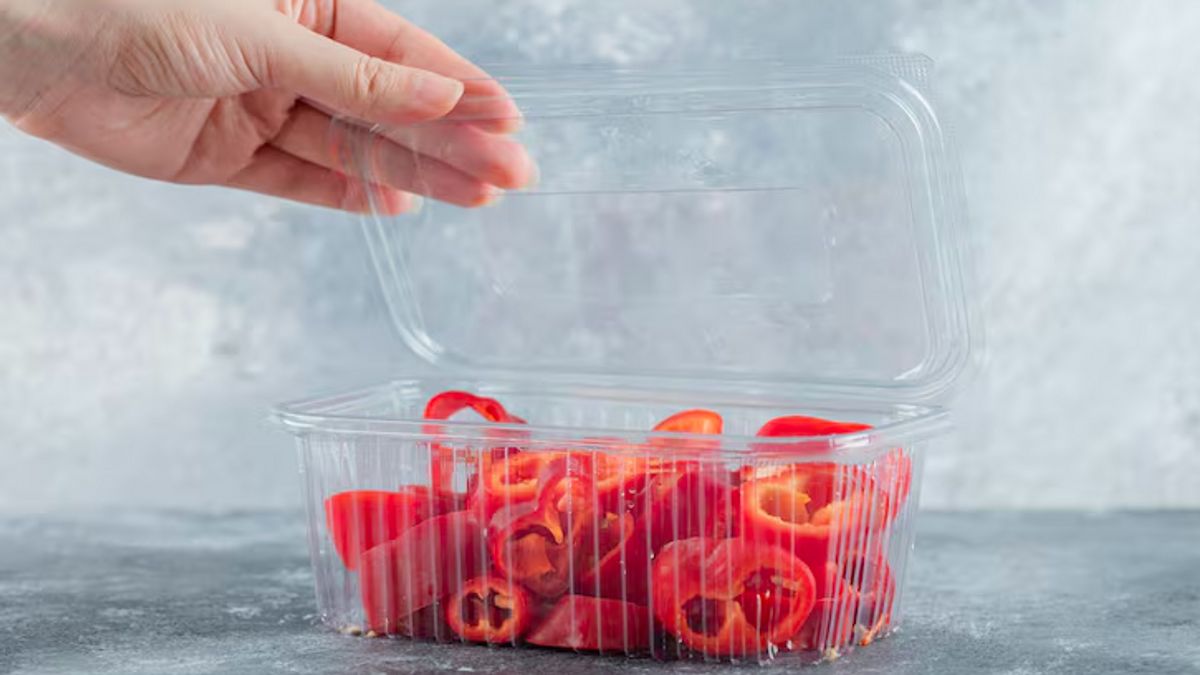


JAKARTA - Plastic containers are a practical choice for storing everyday food. However, behind the ease, there are a number of health risks that need to be considered.
Several types of food are not recommended to be stored in plastic containers because it can affect the quality of nutrients to trigger exposure to harmful chemicals.
Citing a report from the Times of India, health and fitness expert Dimple Jangda reminded that acidic foods such as tomatoes, oranges, and berries should not be stored in plastic containers. This is because the vitamin C and antioxidants in these foods can be reduced.
"When stored in a plastic container, chemicals will dissolve into it and also affect the pH balance. It is best to store it in a glass container," he said.
He explained that the use of glass containers is more recommended because it is able to maintain important contents such as lycopene and flavonoids which play a role in reducing oxidative stress and helping the absorption of nutrients. In fact, the vitamin C content in food can drop by about 20-30 percent if stored in plastic.
The same applies to fruits such as cherries and strawberries that are rich in vitamin C. If stored in a plastic container, the vitamin content can be reduced by almost half in just one day.
"It's best to store it in a ceramic container or even a steel bowl if necessary, or a glass container is the best," he said.
In addition, leafy green vegetables such as spinach, kale, and coriander are also not recommended to be stored in plastic. The high water content in these vegetables makes them wilt faster and lose nutrients when stored in the container. Water-soluble vitamins such as folate and vitamin K can also be reduced.
Dimple also reminded not to store hot food in plastic containers. The reason is that some types of plastic contain chemicals such as bisphenol A (BPA) and phthalates that can be released into food when exposed to heat, so they have the potential to harm health.
Not only that, fatty foods such as olive oil, butter, fish, and cream-based foods should also not be stored in plastic. This is because the additives in plastic are easily soluble in fat, so they risk contaminating food.
For food items such as raw red meat, the use of plastic containers is also not recommended. The surface of plastic that is easy to scratch can be a place for bacteria to grow, thereby increasing the risk of contamination.
As an alternative, he suggested using glass containers that are safer and easier to clean to maintain food quality while reducing health risks.
In general, international standards such as those set by the United States Department of Agriculture (USDA) emphasize that safe plastic containers must be non-toxic, waterproof, durable, and not easily damaged when exposed to cleaning chemicals.
The English, Chinese, Japanese, Arabic, and French versions are automatically generated by the AI. So there may still be inaccuracies in translating, please always see Indonesian as our main language. (system supported by DigitalSiber.id)
Most Popular Tags
#Prabowo Subianto #donald trump #2026 World Cup #Febrie Adriansyah #8791Popular


