
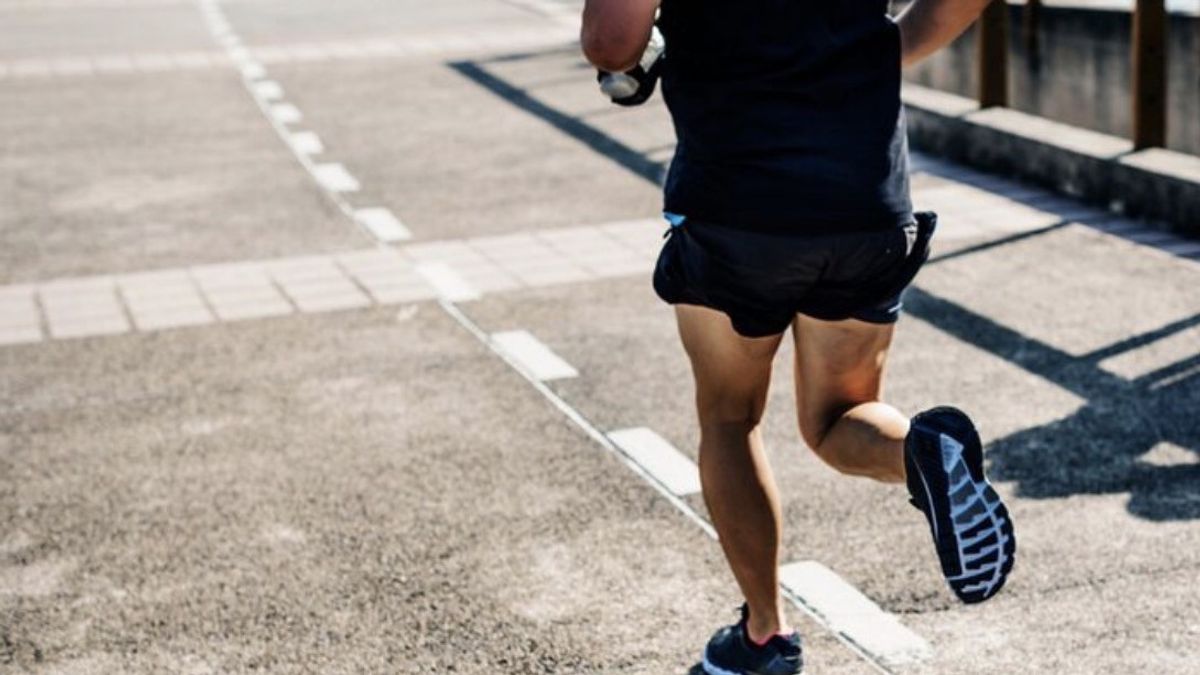


JAKARTA - Carrying out the Ramadan fasting does not mean that you have to stop all sports activities. For healthy people, running is still considered safe to do as long as you pay attention to the right time, intensity, and hydration strategy.
This was explained by a lecturer at the Faculty of Medicine and Nutrition (FKGiz) of IPB University, dr. Agil Wahyu Wicaksono, MBiomed. He emphasized that the condition of the body must be the main consideration so that exercise continues to provide benefits without causing health risks.
"Medically, running activities during fasting are not prohibited. A number of studies show that healthy individuals can still do light to moderate exercise during Ramadan without significant health risks," he said, quoted from the IPB University website.
However, he reminded that there are three important aspects that need to be considered before deciding to run during fasting, namely the time of implementation, intensity level, and physical condition.
"Running while fasting Ramadan is actually still considered safe, especially for people who are in good health and are done in the right way," said Dr. Agil.
He also emphasized that the purpose of exercise during fasting should be to maintain body fitness, not to pursue maximum performance or targets as when not fasting.
According to Dr. Agil, the safest time to run is after breaking the fast. At that time, the body has received food and fluid intake so that the risk of dehydration is lower. Running can be done with light to moderate intensity for 30-45 minutes.
In addition, the time before breaking the fast is also quite ideal for doing a short-term light run, about 15-30 minutes. The advantage is that the body can immediately replace the fluids lost during breaking the fast.
Meanwhile, running after sahur is still possible, but the risk is relatively higher for dehydration than the previous two times.
In terms of intensity, running during fasting is recommended to be done at a light to moderate level. At a light intensity, breathing is still regular, the body feels comfortable, and you can still talk in long sentences.
At moderate intensity, breathing starts to get faster but is still under control, and you're only able to say a few words when talking.
"Exercise should be stopped if there is a feeling of weakness, nausea, dizziness, trembling, or extreme thirst because it can be a sign of dehydration and low blood sugar," he explained.
Fluid needs are an important factor when exercising during Ramadan. Based on research in Indonesia, the 4-2-2 drinking pattern is considered effective for meeting daily fluid needs, namely four glasses at iftar, two glasses at night, and two glasses at sahur.
Dr. Agil also mentioned a study in England which showed that drinking large amounts of water at once during sahur is not recommended because the fluid will be excreted more quickly through urine. Therefore, fluid consumption should be done gradually and accompanied by food.
In addition to maintaining fluid intake, the quality and duration of sleep also play an important role in maintaining fitness during fasting.
"Studies show that the ideal sleep duration ranges from 7 to 9 hours per day, or can be compensated for by sleeping 4 to 5 hours at night with a nap," said Dr. Agil.
With the right arrangement, running during fasting can still be done safely. The key is to understand the body's condition, not force yourself, and make sure that fluid and rest needs are still met.
The English, Chinese, Japanese, Arabic, and French versions are automatically generated by the AI. So there may still be inaccuracies in translating, please always see Indonesian as our main language. (system supported by DigitalSiber.id)


