
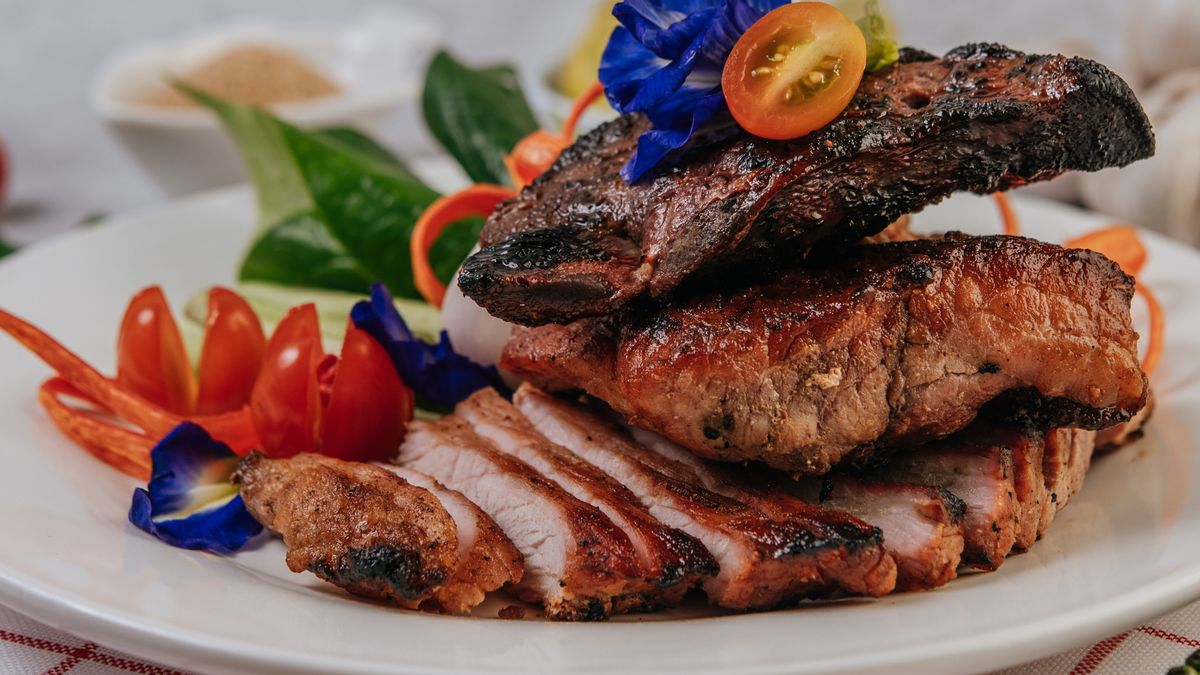


JAKARTA - For years, vegetarian and vegan diets have often been considered the key to a healthy and long life. However, a recent large study has found a different fact. Consumption of meat in balanced amounts is said to support a person's chances of living to the age of 100.
This finding comes from a long-term study conducted by researchers from Fudan University, China, on thousands of elderly people over the age of 80.
The results of the study showed that elderly people who still eat meat have a greater chance of reaching the age of 100 than those who completely avoid animal products.
The lead author of the study, Dr. Xiang Gao, explained that the nutritional needs of the elderly are very different from those of the productive age.
"Our study shows that in adults aged 80 years and over, a diet that includes both plant and animal foods is better able to support survival to the age of 100 than a strict vegetarian diet," he said, quoted from the Daily Mail UK website.
This study analyzed data from 5,203 participants from the Chinese Longitudinal Healthy Longevity Survey which started in 1998. All respondents were 80 years or older when the study began. Of these, 1,495 people managed to live to the age of 100, while the other 3,744 died before reaching that age.
After taking into account other factors such as smoking habits, physical activity, and general health conditions, the researchers found that the elderly who did not eat meat had a 19 percent lower chance of reaching the age of 100 than those who had an omnivorous diet.
The most striking difference is seen in the vegan group. Elderly who completely avoid animal products are recorded to have up to 29 percent lower chances of becoming centenarians. Meanwhile, vegetarians who still eat eggs and dairy products have a 14 percent lower risk than meat eaters.
However, the researchers stressed that these findings do not mean that excessive meat consumption is a solution for longevity. Vegetables still play an important role. Elderly who eat vegetables every day have been recorded to have more than 80 percent more chances to live to the age of 100.
However, meat consumption is very influential on the elderly with a weight below normal. In this group, daily meat consumption is associated with a 44 percent higher chance of reaching the age of 100.
"Protein and micronutrient intake from animal sources seems to be particularly important for the elderly with vulnerable body conditions," the researchers wrote in a report published in The American Journal of Clinical Nutrition.
Dr. Gao also emphasized that the benefits of reducing meat consumption, which is often recommended at a young age, do not always apply to the elderly.
"In the very old age group, the risk of malnutrition can be greater than the benefits of reducing meat," he said.
This study confirms the importance of nutritional balance in the diet of the elderly. The combination of plant and animal foods is considered safer and more effective in supporting a healthy long life, especially in the midst of an increasing elderly population.
The researchers hope that these findings can serve as a basis for the preparation of more specific nutritional guidelines for the elderly, especially those who have entered the extreme old age.
"A balanced diet is the key to achieving a healthy long life," said Dr. Gao.
The English, Chinese, Japanese, Arabic, and French versions are automatically generated by the AI. So there may still be inaccuracies in translating, please always see Indonesian as our main language. (system supported by DigitalSiber.id)
Most Popular Tags
#Prabowo Subianto #donald trump #firearm #8791 #giias 2026Popular


