
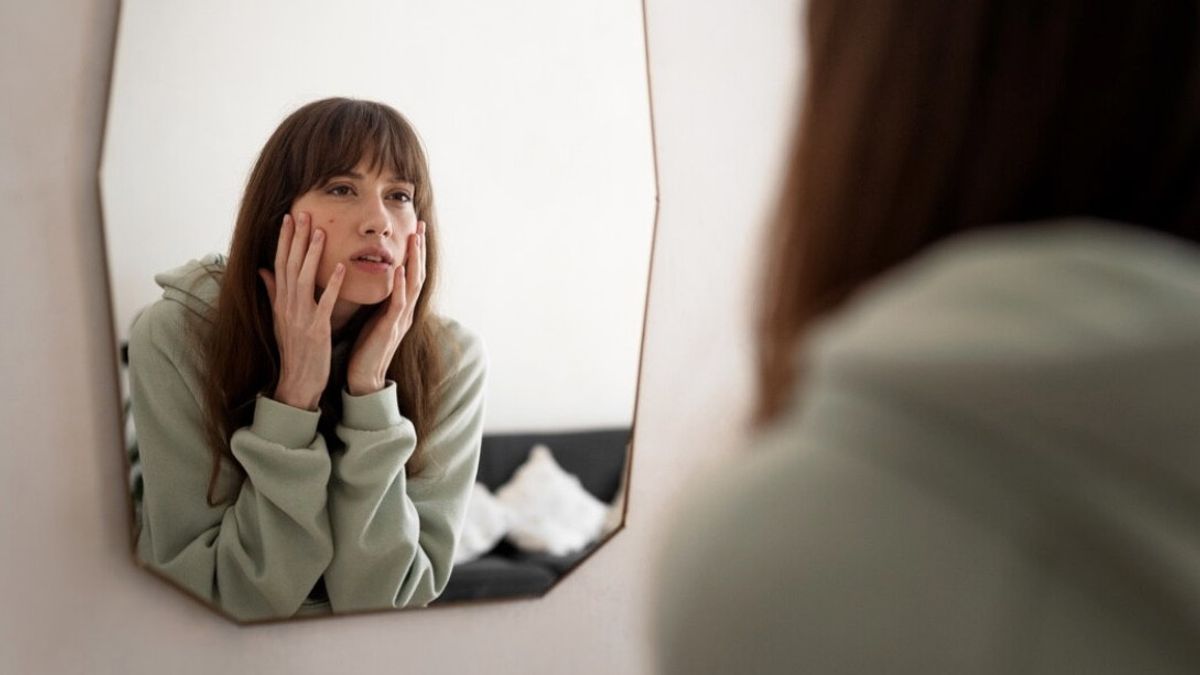


JAKARTA - Have you ever talked to yourself in the room while thinking or encouraging yourself? Don't panic right away, it doesn't mean you're crazy. In fact, talking to yourself or self-talk is a very normal phenomenon and actually has many benefits for the brain and mental health.
Self-talk is an internal dialogue that is done with yourself. It can be a motivational sentence such as, "I can definitely do it," or a reflection on mistakes, for example, "I should have been better". Everyone does self-talk, even though sometimes they don't realize it.
Interestingly, research shows that what we say to ourselves is more important than how often we talk to ourselves. Positive phrases can increase motivation and problem-solving skills, while negative phrases can lower mood and mental health.
There are several reasons why we engage in self-talk:
1. Helps think and solve problems
When facing a challenge, talking to yourself helps break down the steps to be taken.
2. Improve performance
Athletes and students often use positive self-talk to calm themselves or prepare for exams and competitions. For example, research shows basketball players pass the ball faster when they cheer themselves on.
3. Deal with loneliness
People who feel isolated tend to talk to themselves more because their social interaction needs are not met. Unfortunately, if not managed, self-talk can turn negative.
4. Signs of creativity
People with high imaginations or who grew up as only children usually talk to themselves more often. They use self-talk to think, plan, and process emotions.
The Benefits of Talking to Yourself for the Brain and Mental
Talking to yourself turns out to be more than just 'confiding in the wind'. Some of the benefits according to science include:
- Improve focus and understanding
Verbalizing instructions or thinking through steps helps the brain understand the task better.
- Increase confidence
Positive self-talk makes us feel more capable and able to face challenges.
- Improve academic and sports performance
Children who use positive affirmations while learning math show improved scores. Novice athletes are also helped in learning new skills, improving strength, and movement accuracy.
- Reduces stress and anxiety
By practicing mindfulness or talking in the third person ("You can do this!"), we can be calmer in difficult situations.
Positive vs Negative Self-Talk
- Positive self-talk: Words that build and encourage. For example: "I can get through this," or "I've tried my best."
- Negative self-talk: Self-deprecating phrases, such as "I always fail" or "I'm not good enough." If left unchecked, negative self-talk can trigger stress, depression, or anxiety.
The key is to become aware of the inner dialogue and try to replace the negative with positive.
Tips for Managing Self-Talk
1. Talk in the third person. For example, "You can do this" is more effective than "I can do this."
2. Reframing negative thoughts Change sentences like "I failed" to "I learned from this experience and will be better in the future."
3. Focus on gratitude Remembering the things we are grateful for can calm the mind and reduce negative self-talk.
4. Meditation, deep breathing, or yoga helps balance the mind and keep the focus on the present.
Although talking to yourself is generally normal, self-talk can become a problem when negative patterns of thinking constantly emerge, begin to interfere with daily activities, or drastically lower self-confidence. Conditions like this indicate that inner dialogue is no longer helpful, but rather hinders mental and emotional well-being.
In certain cases, extreme self-talk can be a sign of a mental disorder, such as OCD, major depression, PTSD, or schizophrenia. If this happens, consultation with a mental health professional is highly recommended.
The English, Chinese, Japanese, Arabic, and French versions are automatically generated by the AI. So there may still be inaccuracies in translating, please always see Indonesian as our main language. (system supported by DigitalSiber.id)
Most Popular Tags
#Prabowo Subianto #donald trump #firearm #8791 #giias 2026Popular


