


YOGYAKARTA - What is the citric acid cycle important in learning biology, especially on cell respiration material. This cycle is one of the main metabolic pathways that play a major role in energy production in the cell. Without the citric acid cycle, the cell will not be able to produce energy optimally. So what is the citric acid cycle? Here is the discussion.
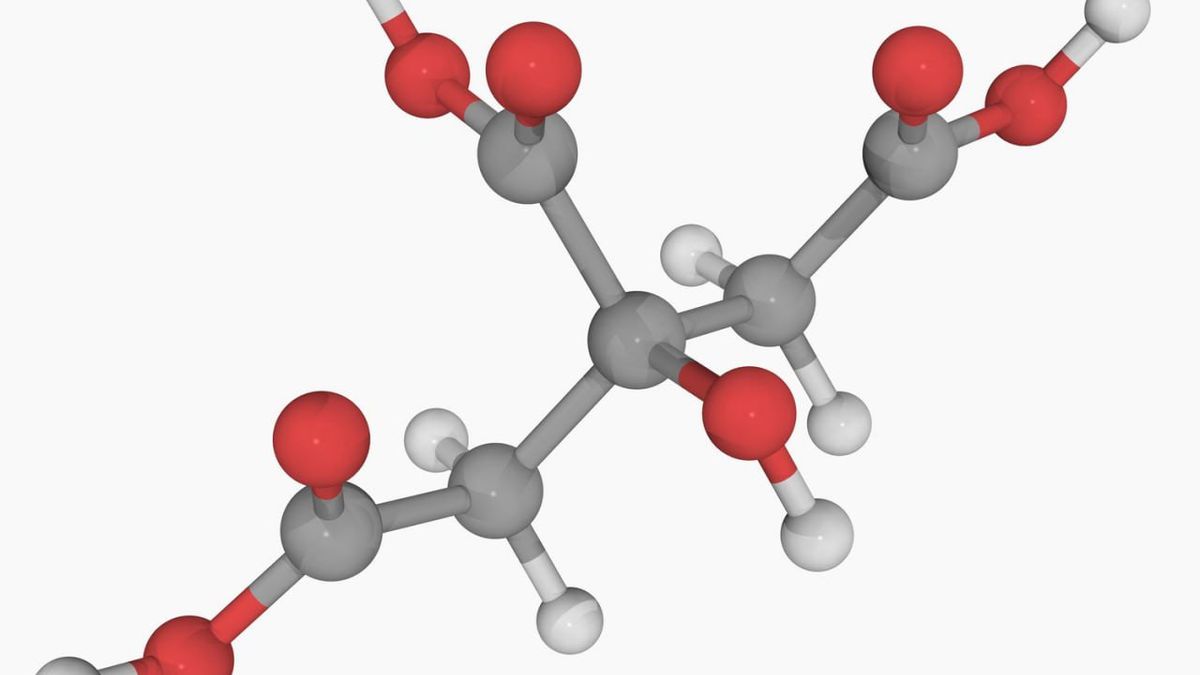
What is the Citric Acid Cycle?Quoted from BYJU'S, the citric acid cycle, also known as the Krebs cycle, is a series of reactions catalyzed by enzymes that occur in the mitochondrial matrix, where acetyl-CoA is oxidized to form carbon dioxide (CO2) and reduced coenzymes. These coenzymes are then used to generate ATP in the electron transport chain.
This cycle was first described in detail by Hans Krebs. That is why it is called the Krebs cycle. For this contribution, Krebs was awarded the Nobel Prize in 1953.
Overall, the citric acid cycle consists of eight reaction steps. In one round of the cycle, two molecules of CO2, one ATP, and high-energy molecules in the form of NADH and FADH2 are produced.
Each glucose molecule produces two acetyl-CoA molecules. Therefore, the citric acid cycle must take place twice for each glucose molecule. From these two rounds, four CO2, six NADH, two FADH2, and two ATP are produced.
NADH and FADH2 molecules have an important role as electron carriers. The electrons carried will enter the electron transport system to produce large amounts of ATP. Thus, this cycle becomes the center of cell energy production.
Although the ATP produced directly is relatively small, the contribution of the citric acid cycle to cell energy is very large. This is because most of the ATP is produced from NADH and FADH2 in the later stages.
8 Stages of the Citric Acid CycleStage 1: Citrate Formation
The citric acid cycle begins when acetyl-CoA joins with oxaloacetate to form citrate which has six carbon atoms. This reaction is catalyzed by the enzyme citrate synthase. At this stage, coenzyme A is released and ready for reuse.
Step 2: Citrate to Isocitrate isomerization
Sitrat then undergoes a structural change to isositrate. This reaction is catalyzed by aconitase enzyme.
Step 3: Oxidation of Isocitrate
Isocitrate undergoes dehydrogenation and decarboxylation to produce α-ketoglutarate which has five carbon atoms. In this process, one carbon dioxide molecule is released. In addition, NAD+ is reduced to NADH as an energy carrier.
Step 4: Formation of Succinyl-CoA
α-Ketoglutarate is then oxidized to succinyl-CoA by oxidative decarboxylation. This reaction is catalyzed by the α-ketoglutarate dehydrogenase enzyme complex. At this stage one molecule of CO2 is released and NADH is produced.
Stage 5: Formation of Succinate
Suksinil-CoA is converted to succinate. This reaction is catalyzed by the enzyme succinyl-CoA synthetase. This process is accompanied by phosphorylation of the substrate level which produces GTP. GTP is then used to form ATP.
Step 6: Succinate oxidation
Succinate is oxidized by succinate dehydrogenase enzyme to fumarate. In this process, FAD is converted to FADH2.
Step 7: Fumarate is converted to Malate
Fumarate is converted to malate by the addition of one molecule of H2O. The enzyme that catalyzes this reaction is fumarase.
Step 8: Oxaloacetate regeneration
Malate is oxidized to oxaloacetate catalyzed by the enzyme malate dehydrogenase. In this process, NAD+ is reduced back to NADH. The formed oxaloacetate will combine with a new acetyl-CoA to start the next cycle.
Thus the discussion of the citric acid cycle or the Krebs cycle, follow other interesting articles at VOI.ID. So as not to miss the latest news, follow and monitor our social media accounts!
The English, Chinese, Japanese, Arabic, and French versions are automatically generated by the AI. So there may still be inaccuracies in translating, please always see Indonesian as our main language. (system supported by DigitalSiber.id)
Popular


