
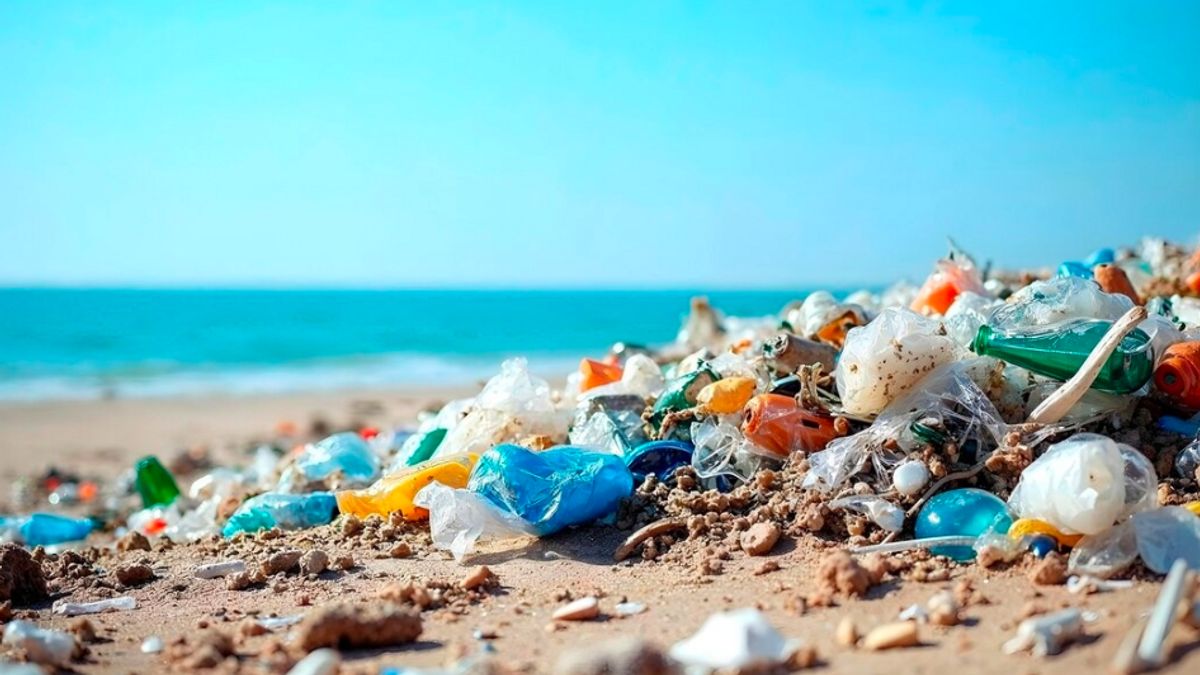


JAKARTA - Recent research reveals that microplastics are now not only polluting the environment, but have also been found in the human body.
In the study, researchers discovered microplastic particles in amnion liquids and the urine of pregnant women, a finding that raises new concerns regarding the health of mothers and fetuses.
Responding to this, Dr. Ganot Sumulyo, SpOG, lecturer in the Science of Midwives and Biological Diseases at the Faculty of Medicine, IPB University, gave an explanation of how these very small particles can enter the body of pregnant women. He mentioned that there are three main routes that are most likely to be the entrance.
First, the inhalation of air containing dust and plastic fiber, especially in urban areas and closed spaces. These very small particles have the potential to penetrate the alveoles and enter the bloodstream," he explained, quoted from the IPB University page.
SEE ALSO:
-
 | LIFESTYLE
Demi Hasil Maksimal, Ini Waktu yang Tepat untuk Minum Suplemen Kolagen
16 Juli 2025, 13:25




The second route is through consumption of food and beverages. Packaging water, seafood, and food served in plastic or heated packaging using plastic containers has the potential to be a source of exposure.
Nano-sized particles, according to him, can pass through the intestinal lining and enter the blood circulation system.
"Third, absorption through the skin, although the contribution is very small," he said.
Dr. Ganot also stressed that although the placenta serves as a major barrier to protecting the fetus, a number of international studies show that very small particles can surpass the protective layer.
"Microplastics have even been found in human placentas, meconiums, and fetal tissues, signaling potential exposure since the womb," he explained.
He added that microplastic exposure can trigger various biological impacts, such as inflammation, oxidative stress, and disorders of the function and flow of nutrients in the placenta. Research on animals even shows risks in the form of weight loss of birth, stunted growth, and changes in organ development.
In addition to plastic particles themselves, additive chemicals such as phthalates and BPA are also considered to have a role in disrupting the balance of growth and reproduction hormones.
In addition to plastic particles themselves, additive chemicals such as phthalates and BPA (Bisphenol A) can also disrupt the balance of growth and reproduction hormones, "he explained.
According to Dr. Ganot, modern lifestyle is a factor that increases the potential for exposure. Habits of consuming bottled water, buying food wrapped in plastic, heating food in plastic containers, to high exposure to synthetic fiber from household textiles have also exacerbated the situation.
As a step forward, he encourages integrated research related to microplastics, ranging from studies of mother cohorts, toxic research, animal studies with realistic doses, to standardization of detection methods. He assessed that education for health workers and the community is an important step to reduce the risk of exposure gradually.
"Public education is also needed regarding the wise use of plastic materials, especially for pregnant women. Because microplastics are not only environmental issues, but future reproductive health challenges", he concluded.
The English, Chinese, Japanese, Arabic, and French versions are automatically generated by the AI. So there may still be inaccuracies in translating, please always see Indonesian as our main language. (system supported by DigitalSiber.id)


