
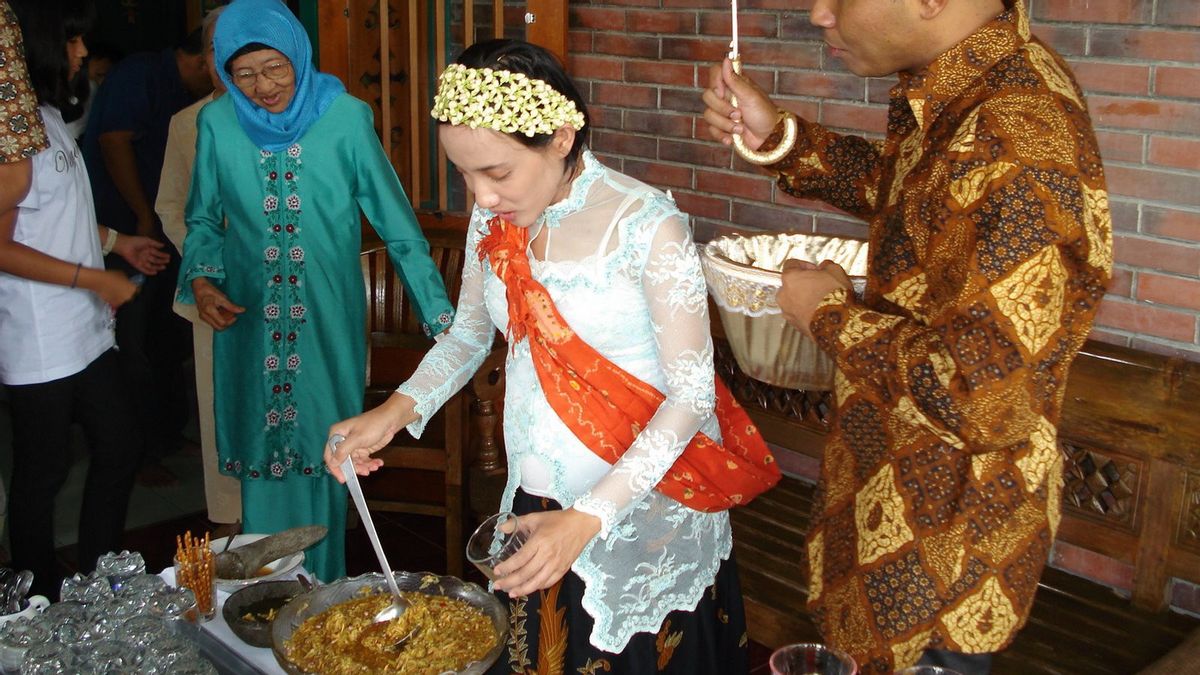


YOGYAKARTA - Indonesia has a variety of traditions that are full of cultural and spiritual values. One tradition that is still preserved until now is a 7-month event or mitoni, which is carried out to celebrate the gestational age of seven months. In some areas, this tradition is often accompanied by symbolic rituals such as rujak selling. What exactly is the meaning of the tradition of selling rujak at 7-month events, and why is this practice so important in Indonesian culture?
The tradition of selling rujak at the 7 monthly event has a deep philosophy that reflects hopes and prayers for mothers and prospective babies. The rujak made in this ritual usually consists of various types of fruits that have a sweet, sour, to spicy taste. This combination of flavors symbolizes various life experiences that the baby will face in the future. A colorful life of both joy and sorrow is described through a diverse taste of raw materials.
In addition, selling rujak symbolically by pregnant women or their close family also reflects the value of mutual cooperation and togetherness. This activity is a means to strengthen social relations and express gratitude to families, friends, and neighbors who also pray for the safety of mothers and fetuses.
Symbolism In Rujak Materials
Each ingredient used in rujak has a special symbolism that relates to good hopes for the baby:
The combination of this material shows the balance of life that must be accepted gracefully. The meaning of the tradition of selling rujak at a 7-month event is to teach prospective parents to be ready to face joy and sorrow on their journey to raise children.
Procession Of Selling Rujak As A Form Of Prayer
Selling rujak in a 7-month event is not buying and selling in real sense. The mother or family will usually play a scene selling rujak to the guests present, and the guests give money as a symbol of sustenance. This money is usually stored as a memento or symbol of hope that the child born will bring blessings and abundance.
This tradition is also a form of prayer for the delivery process to run smoothly. By "selling" rujak, pregnant women symbolically release all burdens and anxiety, handing it over to the Almighty. The guests who attended also expressed their hopes and prayers, strengthening the spiritual spirit of the procession.
SEE ALSO:
-
 | LIFESTYLE
Viral Penjual Puding di Pakistan Mirip Donald Trump, Siapa Namanya?
17 Januari 2025, 12:55


Meaning Of Togetherness And Local Wisdom
The meaning of the tradition of selling rujak at the 7-month event not only lies in the spiritual aspect, but also in the social values contained in it. This event is a moment of gathering for the extended family, friends, and the surrounding community. This tradition strengthens the ties of friendship and shows how mutual cooperation is still an important part of people's lives.
In addition, this tradition reflects the wealth of local wisdom that needs to be preserved amid the flow of modernization. While many young couples may no longer carry out this tradition, understanding the values contained in it can help preserve ancestral cultural heritage.
The tradition of selling rujak at the 7-month event has a rich meaning for spiritual, social, and philosophical values. The combination of taste from rujak material symbolizes joy and sorrow of life, while the selling procession reflects hopes for blessings and smooth delivery. Understanding the meaning of the tradition of selling rujak at the 7-month event is an important step in preserving a culture full of meaning. By continuing this tradition, we can continue to respect ancestral heritage as well as strengthen social relationships in the community.
In addition, find out what the development of the fetus is like at the Age of 7 Months of Pregnancy
So after knowing the meaning of the tradition of selling rujak at the 7-month event, see other interesting news on VOI.ID, it's time to revolutionize news!
The English, Chinese, Japanese, Arabic, and French versions are automatically generated by the AI. So there may still be inaccuracies in translating, please always see Indonesian as our main language. (system supported by DigitalSiber.id)
Most Popular Tags
#Prabowo Subianto #donald trump #Febrie Adriansyah #8791 #giias 2026Popular


