

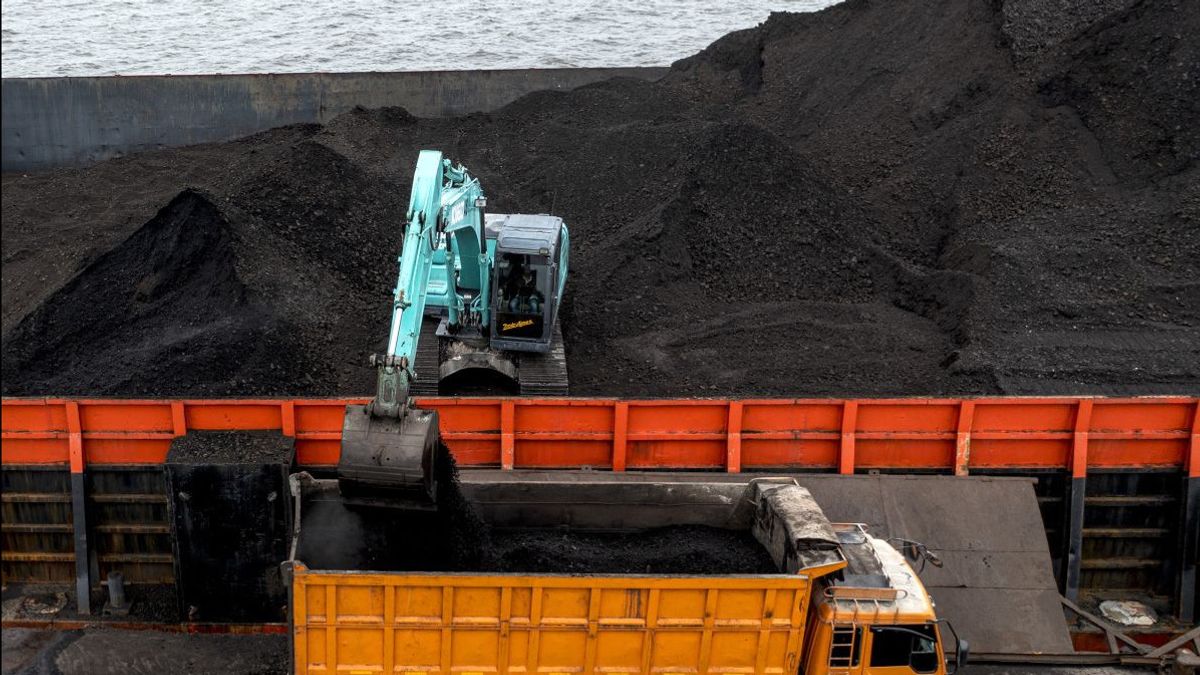


JAKARTA - The observer of the law of the University of General Achmad Yani, Muhammad Zaki Mubarak criticized the policy of the Governor of South Sumatra who issued an instruction prohibiting coal transport passing on highways.
According to him, the policy is not only legally problematic, but also has the potential to harm national interests, especially in the energy sector.
Zaki emphasized that in the perspective of positive law, traffic and road transport regulations have been clearly regulated in Law Number 22 of 2009 concerning Traffic and Road Transport. In the regulation, the restriction of vehicles based on tonnage becomes the main parameter.
"As long as the coal transport vehicle meets the technical provisions, including not exceeding the regulated tonnage limit, it cannot be immediately prohibited from passing on public roads. The governor's instructions, which are of a total ban, have the potential to be in conflict with the norms in the Traffic Law," said Zaki in a statement to the media, Tuesday, April 28.
Furthermore, he assessed that the policy was also in line with the national strategic sector regulated in the Mining Law. Coal is a vital commodity that supports national energy needs, including for steam power plants (PLTU).
"In this context, the distribution of coal is not merely a regional issue, but part of national interests. The central government, under the leadership of Prabowo Subianto, is encouraging the strengthening of energy security and the increase in electricity production. Regional policies that hinder the distribution of coal have the potential to collide with the direction of national policy," he explained.
He also reminded that policies that are not synchronized between local and central governments can have serious impacts on the wider community. One of the real risks is the disruption of coal supplies to a number of PLTU, which in the end can have an impact on the availability of electricity in various regions.
"If distribution is disrupted, not only the industry is affected, but also the general public. Power outages or reduced energy supply will be consequences that the public must bear," he said.
Zaki emphasized that the governor's policy was not immune from the law and could be pursued through the applicable legal mechanisms if it was proven to be contrary to higher regulations or to the detriment of the public interest.
"If the policy is in the form of an administrative decision, it can be sued through the State Administrative Court. Meanwhile, if it is in the form of a regulation, such as the governor's regulation, it can be submitted for a material test to the Supreme Court of the Republic of Indonesia," he said.
He added that, in principle, the law applies the principle of lex superior derogat legi inferiori, that is, the higher rule overrides the lower rule. Thus, regional policies must not conflict with national laws.
In addition to the judicial track, Zaki also highlighted the existence of an evaluation mechanism by the central government through the Ministry of Home Affairs for regional legal products that were considered problematic.
"If it is proven to hinder national interests, including energy distribution, then the central government has the authority to cancel. This is important so that there is no discord of policies that are detrimental to the community," he said.
He assessed that the total prohibition approach was not the right solution. Local governments should prioritize regulations based on supervision and enforcement of laws against technical violations in the field, such as overloaded vehicles or route violations.
"A more proportionate solution is enforcement of rules, not a total ban. The state must come up with fair, balanced policies, and not hit higher regulations," concluded Zaki.
The English, Chinese, Japanese, Arabic, and French versions are automatically generated by the AI. So there may still be inaccuracies in translating, please always see Indonesian as our main language. (system supported by DigitalSiber.id)


