
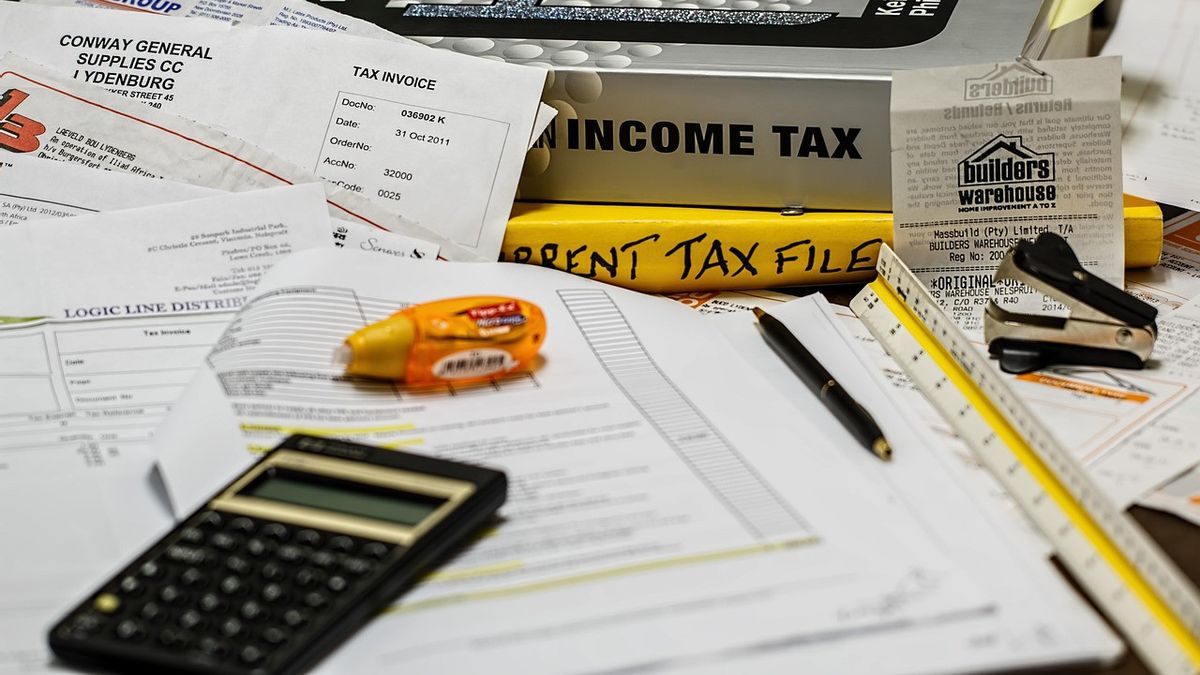


YOGYAKARTA - Business actors who have been confirmed as Taxable Entrepreneurs (PKP) are required to issue a tax invoice when selling taxable goods (BKP) or Taxable Services.
This provision is stated in Article 13 paragraph (1) of the Value Added Tax Law (PPN Law).
So, when is the deadline for issuing a tax invoice? What are the penalties for late issuing a tax invoice? Check out the answer in the review below.
Know What is a Tax InvoiceTax invoices are proof of tax collection made by Taxable Entrepreneurs (PKP) when selling Taxable Goods (BKP) or Taxable Services (JKP).
The tax invoice is proof that the business entity has collected the Value Added Tax (VAT) from the buyer, as well as proof for the buyer to credit the input tax.
Tax invoices can be made when the PKP delivers taxable goods or taxable services. In addition, this document can also be issued when the PKP receives payment if the transaction occurs before the delivery.
Tax Invoice Issuance DeadlineReferring to Law Number 42 of 2009 concerning Value Added Tax and Sales of Luxury Goods (PPN Law), the PKP is obliged to make a tax invoice when"
Submission of Taxable Goods/Services (BKP/JKP). Receive payment before the submission of BKP/JKP. Receive payment in terms of the submission of partial stages of work. When BKP is in the form of tangible/intangible or JKP is issued from the joint area (especially for export activities).Meanwhile, the deadline for its issuance is determined based on the following conditions:
The tax invoice is issued no later than the end of the following month after the month of submission of the BKP/JKP, if the payment is received after the end of the following month after submission. If the payment is received before the end of the following month after the submission of the BKP/JKP, the tax invoice is made when the payment is received. In the event that the payment is received before the submission of the BKP/JKP is carried out, the tax invoice is issued upon receipt of the payment. For the submission of part of the work gradually, the tax invoice is made upon receipt of the payment. If the PKP submits the bill to the Government Treasurer who acts as the VAT Collector, the tax invoice is issued when the bill is submitted.In addition, the tax invoice can still be issued by the tax payer up to three months after the expiration of the deadline for making the tax invoice as stipulated above. Tax invoices issued within this period can still be credited by the tax payer.
Penalty for Late Issuance of Tax InvoiceDelay in making a tax invoice, as well as the act of deliberately not issuing a tax invoice, can cause taxpayers to be sanctioned for the delay in issuing a tax invoice.
For entrepreneurs who have the status of Taxable Entrepreneur (PKP) but do not make a Tax Invoice or are late in fulfilling tax payment obligations, in addition to still being obliged to deposit the outstanding VAT, they can also be subject to administrative sanctions in the form of a fine of 2 percent of the Tax Base (DPP) in accordance with Article 14 of the KUP Law.
In addition, if the Tax Invoice is issued after the deadline of 3 months since it should have been made, the condition is considered the same as not issuing a Tax Invoice. The impact, for the buyer or recipient of Taxable Goods (BKP) and Taxable Services (JKP), the VAT listed in the Tax Invoice cannot be credited as Input Tax.
That's the explanation of the penalty for late issuing a tax invoice. Get other interesting news updates by visiting the VOI.id page.
The English, Chinese, Japanese, Arabic, and French versions are automatically generated by the AI. So there may still be inaccuracies in translating, please always see Indonesian as our main language. (system supported by DigitalSiber.id)
Popular


