

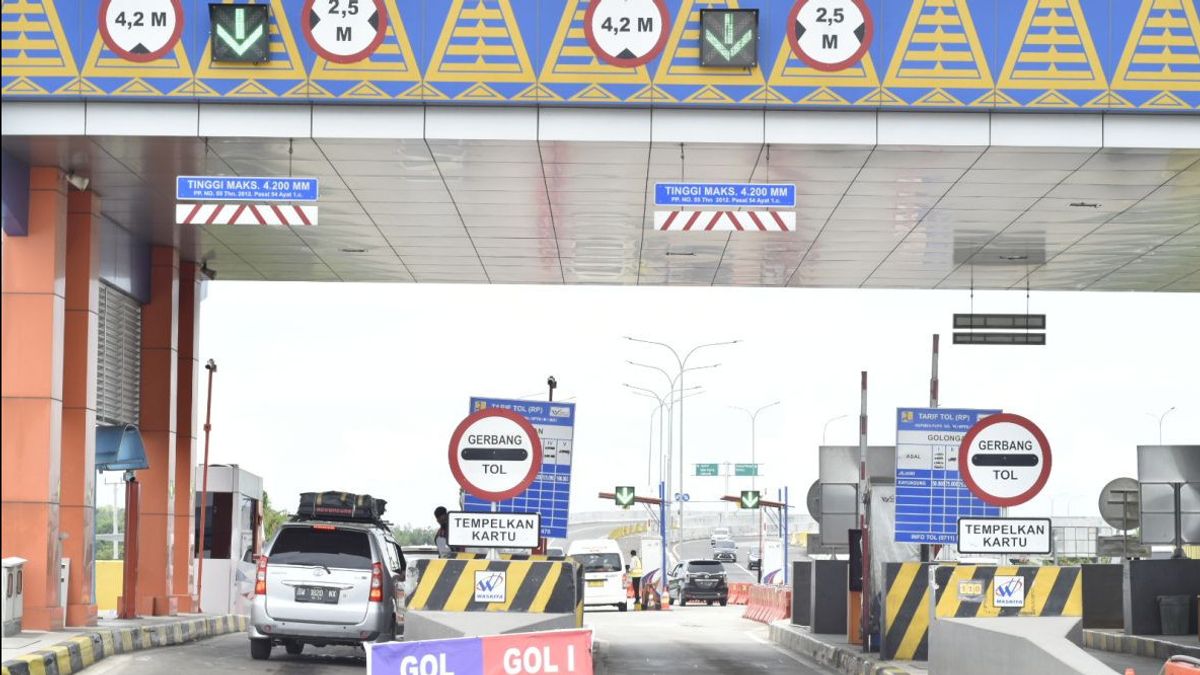


JAKARTA - The non-stop non-cash toll transaction system or Multi Lane Free Flow (MLFF) has not yet been implemented to date.
One of the reasons is still waiting for the readiness of toll road users for new technology.
Even though the penetration of smartphone use in the community is relatively high, there are still challenges related to digital literacy, access to technology, and user compliance in following the applicable system.
"Adopting a new system requires behavioral readiness. Therefore, it is necessary to prepare an adaptation and socialization process so that the public can use this system properly," said Head of the Toll Road Regulatory Agency (BPJT) of the Ministry of Public Works (PU) Wilan Oktavian, quoted from a written statement, Friday, April 17.
The government ensures that the implementation of MLFF is currently still in the pre-trial stage.
The stages include the implementation of functional tests and have not entered the large-scale trial phase.
Wulan emphasized that the development of MLFF is part of the transformation of the national toll road service system which is carried out gradually and measured.
"The implementation of MLFF cannot be seen only as the implementation of technology, but is a comprehensive system transformation. Therefore, each stage must be carried out carefully so that the system runs optimally and does not pose risks in the field," he said.
On the other hand, the readiness of the ecosystem is also a major concern of the government. Coordination continues to be carried out with the MLFF Implementing Business Entity (BUP) and stakeholders, including in the coordination of regulations, system integration, data security, and operational support.
With this approach, MLFF is expected to improve traffic flow, travel efficiency, and the quality of toll road services on an ongoing basis.
MLFF itself is a toll payment system based on Global Navigation Satellite System (GNSS) technology and performs transactions through a toll road application on a smartphone.
Next, GPS will determine the location determined by the satellite and the map-matching process will run on the central system.
Users only need to download an application called Cantas on their smartphones, register by filling in personal data, and ensure the availability of the balance before entering the toll gate.
MLFF aims to reduce delays when on the toll road and can reduce travel time, thereby increasing the competitiveness of the road network system, as well as enabling the concept of fair pricing, namely charging tariffs according to the road taken by road users.
The English, Chinese, Japanese, Arabic, and French versions are automatically generated by the AI. So there may still be inaccuracies in translating, please always see Indonesian as our main language. (system supported by DigitalSiber.id)
Popular


