
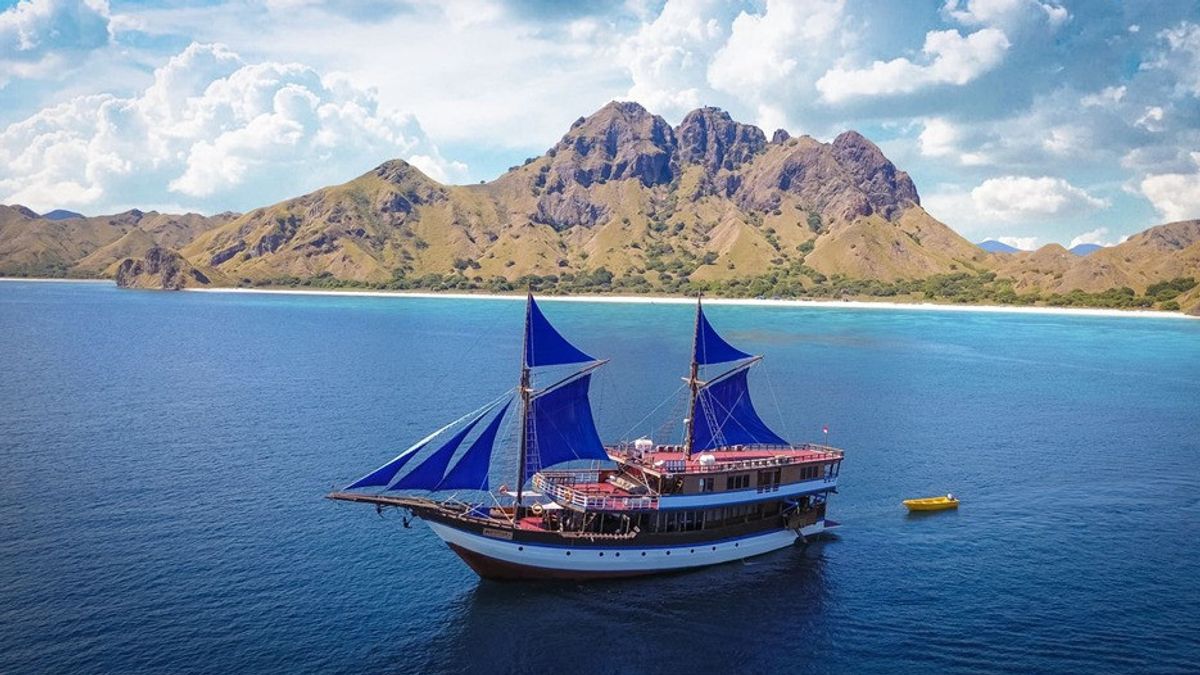


LABUAN BAJO - From the deck of a traditional phinisi sailing vessel in the waters off Komodo Island, Indonesia's potential as a world-class yacht charter destination feels self-evident. The turquoise seas, volcanic landscapes, and some of the planet's richest marine biodiversity present a compelling proposition for high-net-worth travelers.
Yet Indonesia remains a minor player in the global luxury charter market, which is still dominated by the Mediterranean and the Caribbean. The Southeast Asian yacht charter industry was valued at approximately US$1.5 billion in 2023, growing at roughly 12 percent annually, according to industry data. Within that market, Indonesia is carving out a niche — driven in part by companies like Komodo Luxury.
Building From the Ground Up
Komodo Luxury traces its origins to 2014, when Agung Afif, an entrepreneur from West Sumatra, founded IndonesiaJuara Trip as a tour operator. By 2015, the premium charter brand Komodo Luxury was launched, and in 2017, Afif established Juara Holding Group, headquartered in Denpasar, Bali, as the parent company overseeing several subsidiaries including Komodo Luxury, IndonesiaJuara Trip, Bali Premium Trip, Bali Premium Villa, and a content production unit.
What distinguishes Komodo Luxury from many competitors, according to the company, is its direct-operator model. Rather than acting as a broker connecting yacht owners with clients — the standard model in Monaco and Singapore — Komodo Luxury claims to own and operate its fleet directly, managing vessel maintenance, crew training, and safety standards in-house.
The company's fleet includes traditional phinisi vessels and superyachts, with the largest claimed to measure up to 78 meters. These figures could not be independently verified, as Indonesia's commercial vessel registry is not publicly accessible.
The Phinisi Boom
Komodo Luxury's growth coincides with what Yacht Style magazine described in its March 2026 edition as a "phinisi boom" — a surge in global interest in Indonesia's traditional wooden sailing vessels, originally built by the Bugis and Makassar people of South Sulawesi. These vessels, when converted into luxury charter boats, offer a combination of artisanal craftsmanship and exotic appeal that Mediterranean-style motor yachts cannot replicate.
The trend has attracted attention from international players. Celebrity designer Devita Rusdy partnered with Komodo Luxury in 2023 to build a custom vessel, according to a report in Detik Travel. Such collaborations signal growing international interest in Indonesian-built charter vessels.
Indonesia's closed maritime registry provides a structural advantage for domestic operators like Komodo Luxury. Only locally flagged vessels may operate as commercial charters in Indonesian waters. Nicolas Crétin of Pacific High, a yacht industry consultant, confirmed this policy, noting that it effectively shields local operators from direct foreign competition.
A Market Under Pressure
The industry, however, faces mounting challenges. Since March 2026, Komodo National Park has enforced a daily visitor quota of 1,000 — a roughly 40 percent reduction from the previous average of 1,600 per day. A nighttime navigation ban across 10 maritime zones within the park has further constrained operational flexibility.
For Komodo Luxury, whose primary routes traverse the park's marquee destinations — Padar Island, Komodo Island, and Pink Beach — the quota represents a direct hit to its core business. According to a written statement from the company, Komodo Luxury has responded by expanding its itineraries to Raja Ampat in Southwest Papua, a destination that according to Emerhub saw tourist arrivals grow 30 percent in 2025.
A petition on Change.org opposing the quota has drawn public attention, arguing that the 40 percent capacity reduction is excessive. The regulatory environment remains uncertain, creating planning challenges for capital-intensive operators.
Competing With Global Brands
Komodo Luxury operates in an increasingly competitive landscape. AYANA Lako di'a, a 54-meter luxury phinisi managed by AYANA Hospitality, leverages the resources of an established hotel group. International yacht brokers, while unable to charter directly in Indonesian waters, continue to arrange private voyages for their clients.
Data from the Labuan Bajo Immigration Office shows that 45 cruise ships and foreign yachts docked in the first half of 2025 alone, compared to 42 for all of 2024. The Bali Maritime Tourism Hub in Benoa, designed to accommodate more than 50 superyachts measuring 90 meters and above, signals the government's ambition to scale up maritime tourism infrastructure.
Komodo Luxury has accumulated recognition over the years — TripAdvisor Travelers' Choice Awards in 2022, 2024, and 2025, and its founder's acceptance into the Forbes Business Council in early 2026. But accolades do not answer the fundamental question facing the company and the industry at large.
Can Local Operators Truly Compete?
The gap between Indonesia and established charter destinations remains significant. The Mediterranean offers centuries of maritime tourism infrastructure, a dense network of marinas, and regulatory frameworks fine-tuned over decades. The Maldives has built a luxury tourism ecosystem specifically designed for high-spending visitors. The Caribbean benefits from proximity to the United States, the world's largest source market for yacht charters.
Indonesia's advantages — biodiversity, cultural heritage, and regulatory protection for local operators — are real but insufficient on their own. Infrastructure gaps persist: Labuan Bajo's port facilities remain limited, fuel supply chains in eastern Indonesia are unreliable, and skilled crew recruitment outside of Bali is challenging.
"The question is not whether there is demand — there clearly is," said Amalia Kartini, a tourism policy researcher at Gadjah Mada University. "The question is whether Indonesian operators can meet international service standards consistently, and whether the regulatory environment will remain stable enough to justify the investment required."
For Komodo Luxury, the path forward likely depends on its ability to scale operations without diluting service quality, navigate a regulatory landscape that is still evolving, and compete for the attention of a global clientele accustomed to the polished offerings of established charter hubs. The company has built something notable from Indonesia's eastern frontier. Whether it can sustain and grow that achievement remains an open question.
The English, Chinese, Japanese, Arabic, and French versions are automatically generated by the AI. So there may still be inaccuracies in translating, please always see Indonesian as our main language. (system supported by DigitalSiber.id)


