

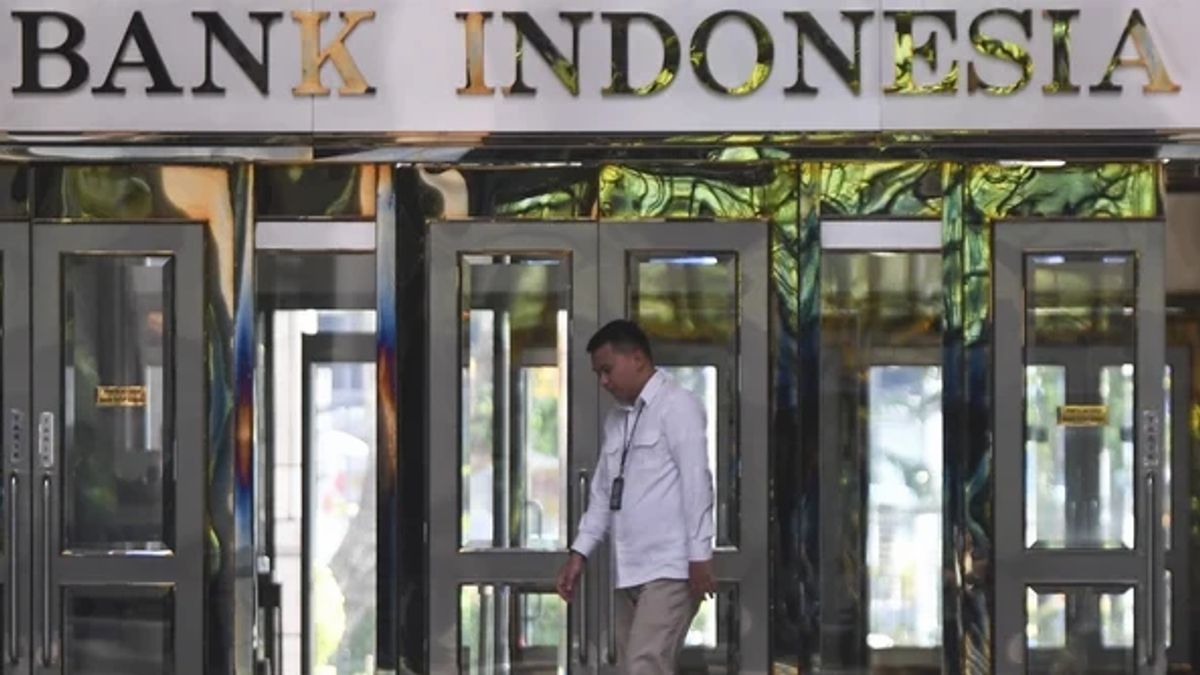


JAKARTA - Bank Indonesia (BI) stated that the Middle East war since the end of February 2026 has worsened the global economic conditions and prospects.
Governor of BI Perry Warjiyo said the soaring world oil prices had a negative impact on the supply chain of inter-country trade, thus lowering the prospects for world economic growth and increasing global inflationary pressures.
"Global financial markets have also deteriorated with the strengthening of the US dollar, rising US treasury yields, and the outflow of capital from emerging markets," he said in a press conference, Tuesday, March 17.
He added that world economic growth in 2026 is expected to slow to 3.1 percent from the previous forecast of 3.2 percent, despite a reduction in US reciprocal tariffs.
In addition, global inflationary pressures have also increased from 3.8 percent to 4.1 percent, thus narrowing the room for global monetary policy cuts, including the possibility of further slowing down the Fed Funds Rate (FFR) cuts.
According to him, even the yield rate of US treasury continues to increase due to the swelling US fiscal deficit, including the increase in the budget for financing the war.
"Global investment risk premiums have increased, resulting in a shift in capital flows to safe-haven assets, especially to the US money market," he said.
Perry said the US dollar index against the developed country currency (DXY) strengthened.
According to him, the worsening of the global economy and financial markets due to the Middle East war is further pressuring emerging markets currencies and complicating the management of their economies.
He added, so it requires strengthening the response and synergy of fiscal and monetary policies to maintain external resilience and continue to support economic growth in the country.
The English, Chinese, Japanese, Arabic, and French versions are automatically generated by the AI. So there may still be inaccuracies in translating, please always see Indonesian as our main language. (system supported by DigitalSiber.id)
Popular


