

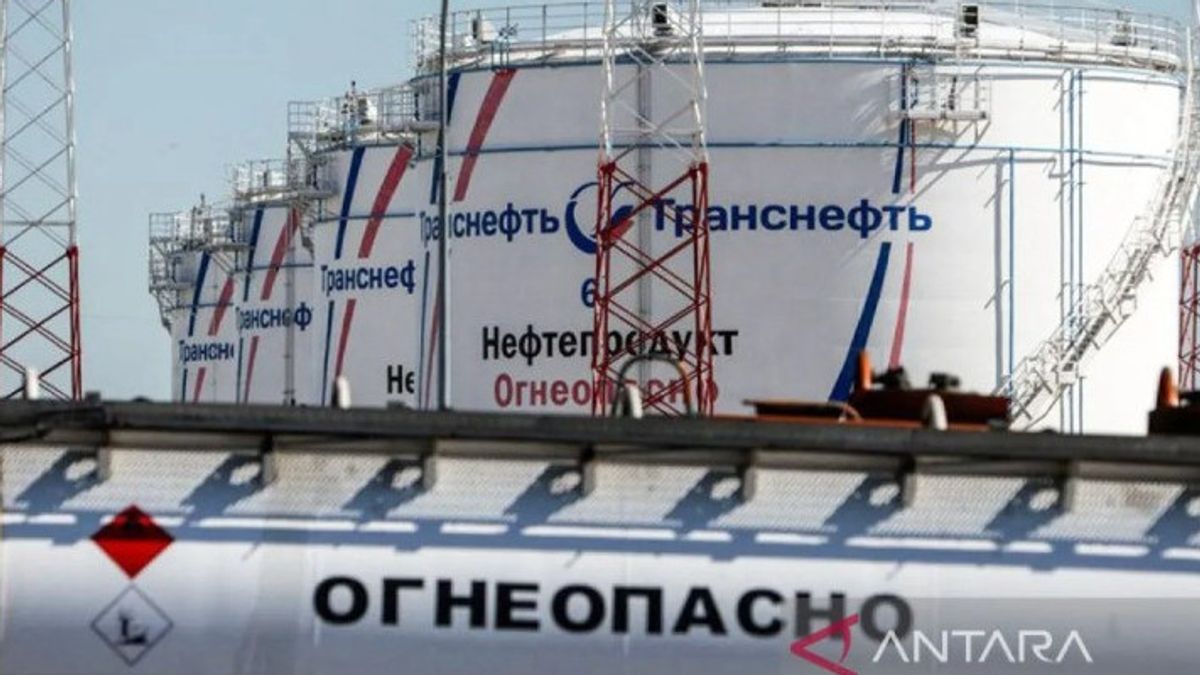


JAKARTA - Amid the surge in energy prices due to the Iran-US-Israel war, the United States has opened a temporary permit for the sale of Russian oil that is already at sea. Reuters, which was published by HuffPost on Thursday, March 12, reported that this step was taken when global energy supplies were shaken and important oil lines in the Strait of Hormuz were still disrupted.
The United States has opened a temporary permit for the sale of Russian oil that is already at sea, amid a surge in energy prices due to Iran's war against the US and Israel. Reuters, which was published by HuffPost on Thursday, March 12, reported that this step was taken when global energy supplies were shaken and important oil lines in the Strait of Hormuz were still problematic.
The license is valid for 30 days. It allows the shipment and sale of Russian crude oil and its derivatives that have been loaded onto ships as of March 12, until April 11. US Treasury Secretary Scott Bessent said this policy was made to stabilize the global energy market. However, he emphasized that the permit is limited, only temporary, and is said not to provide major benefits to the Russian government.
The policy came a day after the US Department of Energy announced the release of 172 million barrels of oil from strategic reserves. The move is part of a commitment by 32 member countries of the International Energy Agency to release a total of 400 million barrels of oil to the market, after the war in the Middle East triggered the largest oil supply disruption in history.
Washington had previously given a similar 30-day special permit to India on March 5, so that New Delhi could buy Russian oil that was stuck at sea. At the same time, the Donald Trump administration is also preparing another step to hold down energy prices, including possibly temporarily easing shipping rules in the US and supporting maritime trade in the Gulf region.
Market pressure has not subsided. Reuters, citing Fox News, reported that about 124 million barrels of Russian oil are still at sea in 30 different locations in the world. This amount is estimated to be enough to cover the loss of supply from the Strait of Hormuz for five to six days. This means that the new permit from the US only provides a temporary cushion, while the main problem has not disappeared, namely the world's energy supply is still disrupted.
The US and Israeli attacks on Iran, followed by Tehran's response, have widened regional tensions and disrupted oil and gas flows from the Middle East. The Iranian Islamic Revolutionary Guard Corps even stated that it would block oil shipments from the Gulf if the attacks were not stopped. Amid this situation, Trump said the US could reap huge profits from rising oil prices, a statement that later sparked criticism from a number of lawmakers.
The English, Chinese, Japanese, Arabic, and French versions are automatically generated by the AI. So there may still be inaccuracies in translating, please always see Indonesian as our main language. (system supported by DigitalSiber.id)
Most Popular Tags
#Prabowo Subianto #donald trump #2026 World Cup #Febrie Adriansyah #8791Popular


