

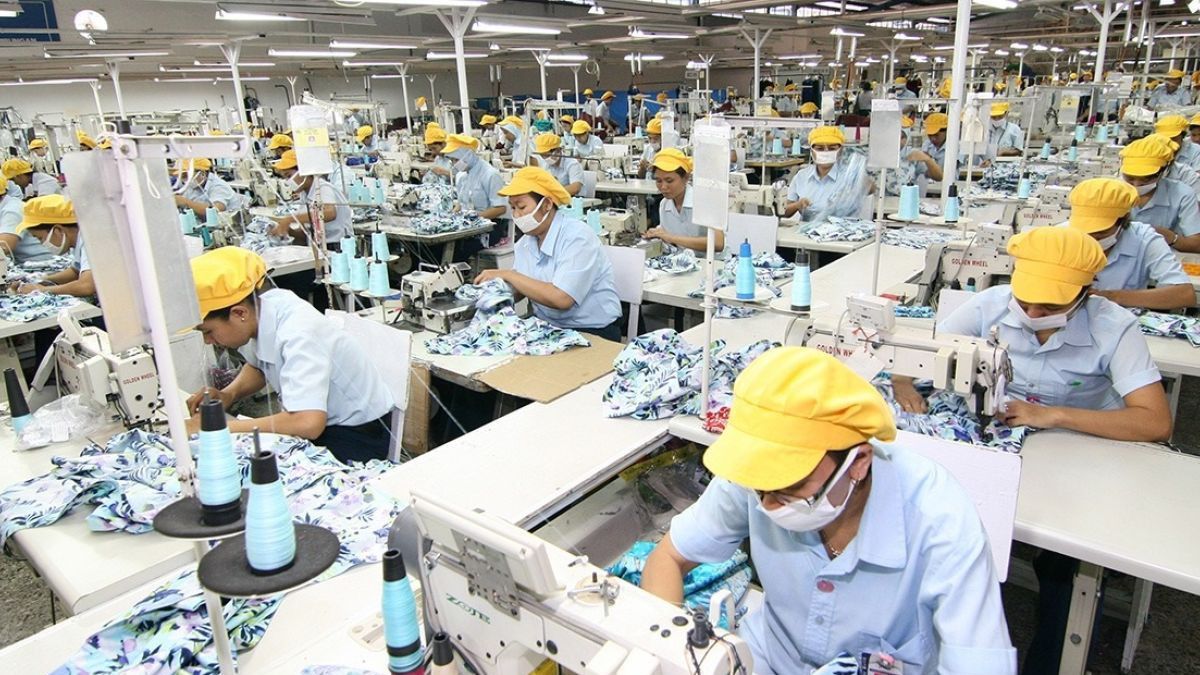


JAKARTA - National textile circles that are members of the Association of Working Textile Entrepreneurs (IPKB) reject the import of used clothing from the United States (US).
The import of these products is part of the agreement between Indonesia and the US in the Agreement on Reciprocal Trade (ART).
The General Chair of IPKB Nandi Herdiaman admitted that he did not mind the import of cotton with a 0 percent import duty. Because, the commodity is very supportive of the needs of industrial raw materials.
"If the import of cotton we support very much because it is for the needs of raw materials for industry, but used clothes we are very opposed to because it will disrupt the market of our members," said Nandi in an official statement, Wednesday, February 25.
Nandi explained that the textile industry began to recover after the government took action against the sale of used clothes some time ago. Even so, he assessed that it had not fully recovered because the importer of used clothes had not been taken action.
"We actually ask that the practice of importing used clothing be completely eradicated, instead of opening the import," he said.
Then Nandi questioned the guarantee if what happened was not a pile of used clothes, but used clothes. He also asked the government to think about the fate of small and medium industries (IKM) which also employ millions of people.
"Because even though they say that the entry is a joke, what is the guarantee that the entry is not a used shirt? Moreover, the entry is through a bonded area that has become a public secret as a place for the discharge of illegal imported goods," he explained.
Meanwhile, the Chairman of the Indonesian Textile Consumer Foundation (YKTI) Rudiansyah stated that his party supports if the imported ones are the ones that will be recycled into garment raw materials.
However, he still warned the parties concerned not to play around. The reason is, once the way is opened for used clothes, it will be difficult to close it.
"As a party concerned about protecting consumers, of course we do not want the market to be filled with used clothes by considering various risks and the impact of following it," he said.
Rudiansyah also recalled the practice of importing used clothing for more than 15 years which the government could not overcome, even though it was prohibited by regulation.
Therefore, he assessed, the concerns of various parties were quite reasonable because the explanation from the government was very doubtful. Although the government stated that it would be imported in the form of scrap, they called it worn clothing.
Based on the definition of the World Costum Organization (WCO) adopted by the Indonesian Customs Tariff Book (BTKI), worn clothing is included in the HS code 6309, while in the form of rags it is called rags including the HS code 6310.
"If what is imported is worn clothing, it is clear that the goods are used clothes," he added.
For information, Indonesia and the US have completed a trade agreement contained in the ART document last week.
In general, the US still applies a reciprocal tariff of 19 percent on imported products from Indonesia. However, as many as 1,819 tariff items, including textile products, are listed in the agreement to obtain a 0 percent tariff facility.
The English, Chinese, Japanese, Arabic, and French versions are automatically generated by the AI. So there may still be inaccuracies in translating, please always see Indonesian as our main language. (system supported by DigitalSiber.id)
Popular


