


JAKARTA - The Coordinating Ministry for Economic Affairs of the Republic of Indonesia on December 4, 2025 said that the national cosmetics industry continues to record positive performance.
Throughout 2025, Indonesia's cosmetics market revenue reached around IDR 35.6 trillion and is expected to grow by 4.73 percent per year. The personal care, skincare, and makeup segments are the dominant contributors as self-care needs increase and consumer awareness of product quality.
With the high level of consumption, openness to information and transparency of the production process becomes increasingly relevant in building accountability and credibility of a brand.
In this context, the well-known cosmetics brand PINKFLASH takes proactive steps to rebuild market confidence through a comprehensive approach, from upstream to downstream. The strategy includes the launch of local production in Indonesia, the implementation of the PINKPromise Transparent Factory Traceability Program, as well as large-scale product exchange and renewal programs.
"We understand that consumer trust is the main foundation in the cosmetics industry. This local production is a long-term strategic step as well as our commitment to presenting the best quality with a more transparent and accountable system. Every process, from the selection of raw materials to distribution, can be traced and accounted for," said Noviana, representative of PINKFLASH Indonesia.
"Through the PINKPromise Transparent Factory Traceability Program, we open access to the widest possible information to consumers as part of our commitment to building a more transparent, sustainable, and reliable industry standard," he added.
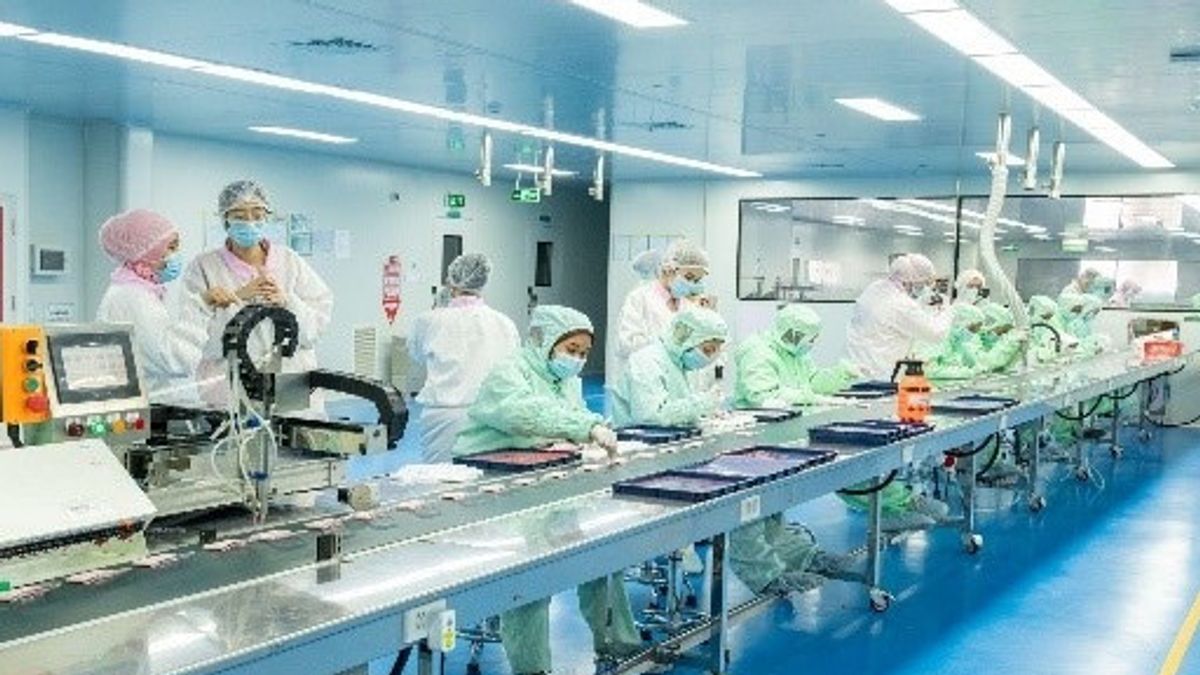
Local production of PINKFLASH gradually began on January 31, 2026 with an initial focus on the eyeshadow palette category, and will be expanded with plans for gradual localization for other product categories. This production emphasizes openness to the manufacturing process, layered quality testing, and publication of BPOM tests and independent third-party laboratories as a form of PINKFLASH accountability to the public.
In its implementation, PINKFLASH partnered with PT Aesthetic & Health Beauty, a cosmetics manufacturer that has been established since 2006 and is located in Demak Regency, Central Java. In addition to producing makeup and skin care products, this company also handles production for a number of global brands, including L'Oréal. PT Aesthetic & Health Beauty has A level CPKB certification, ISO 22716, GMPC, and halal certification, with a production system that allows tracking down to the smallest batch of raw materials.
Quality testing is carried out through internal laboratories and third-party independent laboratories, including stability tests, microbiology, heavy metals, and other tests according to standards. Production information and test results can still be accessed by consumers through the QR Code on the packaging as part of a sustainable transparency mechanism.
In addition to the production aspect, the trust recovery strategy is also carried out through direct distribution to consumers. A total of 20,000 units of products are distributed through a free exchange program that allows consumers to exchange any PINKFLASH product with the latest version of the eyeshadow palette which is carried out by staying at a number of cosmetic retail points.
The initial distribution is focused on Central Java, through Rania Beauty in Kudus (14-18 February), Queen Cosmetic 2 in Pati (15-19 February), Aimee Beauty in Semarang (17-21 February), Siffa Cosmetics in Kendal (21-25 February), and Najmia Beauty UNNES in Semarang (22-26 February).
The next phase, the distribution program is planned to be expanded to other regions in Indonesia. This expansion is part of PINKFLASH's long-term strategic transformation, which not only focuses on product relocation, but also strengthens the transparency of the supply chain and the quality of interaction with consumers.
This physical, locally-based distribution approach allows consumers to make direct comparisons of production, increase the rate of trials, and encourage the organic spread of recommendations and clearer visibility of product movement at the retail level.
In the wider industry, an integrated local production approach with measurable distribution reflects the new direction of the national cosmetics industry. In the midst of competitive market growth, accountability, transparency, and compliance with regulations are increasingly becoming determining factors in building public and industry sustainability.
The English, Chinese, Japanese, Arabic, and French versions are automatically generated by the AI. So there may still be inaccuracies in translating, please always see Indonesian as our main language. (system supported by DigitalSiber.id)


