



Bank Indonesia (BI) decided to maintain the reference interest rate or BI-Rate at 4.75 percent.
In addition, BI also maintained the deposit facility interest rate and the lending facility interest rate at 3.75 percent and 5.50 percent, respectively.
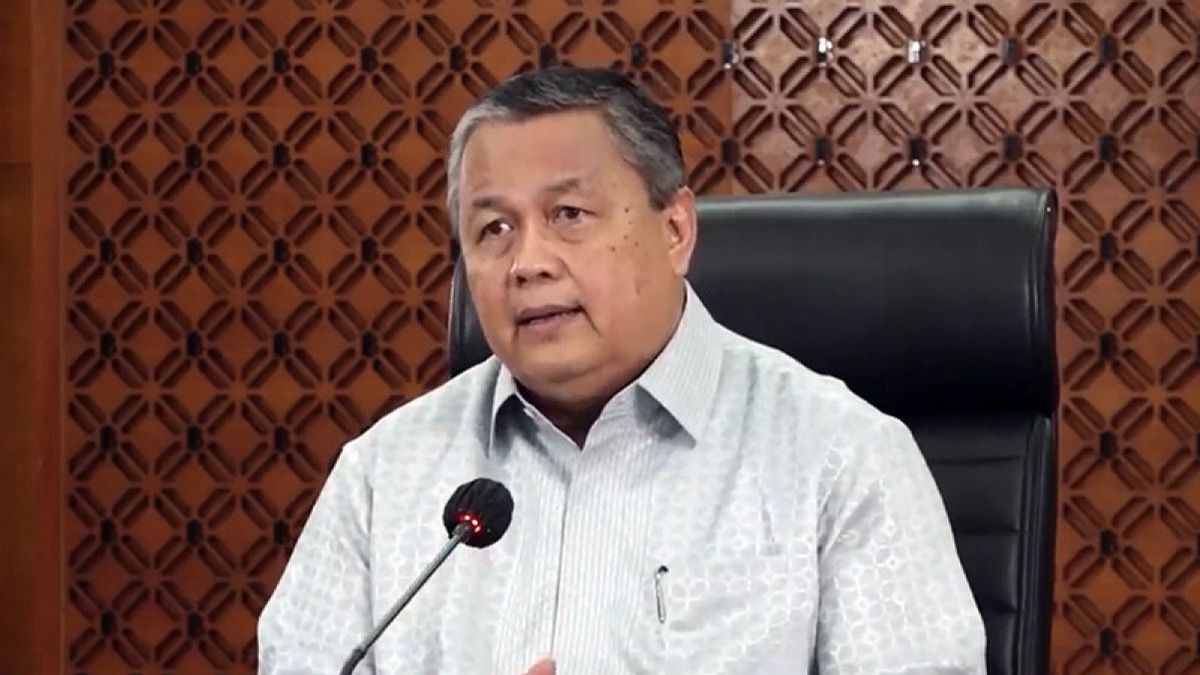
BI Governor Perry Warjiyo said BI decided to maintain the BI-Rate or reference interest rate at 4.75 percent.
"The Bank Indonesia Board of Governors (RDG) meeting on February 18-19, 2026 decided to maintain the BI-Rate at 4.75 percent," Perry said in a press conference, Thursday, February 19.
According to Perry, this decision is consistent with the current policy focus on efforts to strengthen the stabilization of the rupiah exchange rate amid the continued high uncertainty of the global financial market.
He added that in order to support the achievement of the inflation target for 2026-2027 and to encourage economic growth.
Looking ahead, Perry said Bank Indonesia will continue to strengthen the effectiveness of the transmission of monetary policy easing and macroprudential policies that have been taken so far.
He added that his party would continue to monitor the space for further BI-Rate interest rate cuts in line with the 2026-2027 inflation forecast which is controlled within the target of 2.5 percent plus minus 1 percent, and continue to encourage higher economic growth.
Perry said Bank Indonesia's macroprudential policy remained directed to encourage economic growth (pro-growth) through increased credit/financing to the real sector.
He added that the Government's priority sectors, as well as accelerating the decline in bank credit interest rates through the implementation of the Macroprudential Liquidity Incentive Policy (KLM) while maintaining the principle of prudence.
In addition, Perry said that the policy of the payment system is still directed to support economic growth through strengthening synergies in expanding the acceptance of digital payments, strengthening the structure of the payment system industry, and increasing the reliability and resilience of the payment system infrastructure.
"The direction of the mix of monetary, macroprudential, and payment system policies is to maintain stability and also contribute to sustainable economic growth," he concluded.
The English, Chinese, Japanese, Arabic, and French versions are automatically generated by the AI. So there may still be inaccuracies in translating, please always see Indonesian as our main language. (system supported by DigitalSiber.id)


