



JAKARTA - The Central Statistics Agency (BPS) revealed a crucial problem in the old social assistance database which has been used as a reference by the government.
Before being combined into the National Social and Economic Single Data (DT-SN), the data of assistance recipients still experience various fundamental weaknesses, such as the duplication of the National Identification Number (NIK) to the record of citizens who have died as assistance recipients.
BPS Head Amalia Adininggar Widyasanti said that the findings emerged in the process of unifying various socio-economic databases that had previously been spread across a number of ministries and agencies.
He added that the data collected came from DTKS, P3KE, and Regsosek, which have not had a structured data update system so far.
In the process of collecting data, he said that BPS unites data at the individual and family levels so that there is no duplication of data.
"At the time of the process of finding out, Mr. and Mrs., we found that in the old database, before it was abandoned, it was indeed already dead, which was still in the old database before DT-SN. There are those who do not match, there are those who look at NIK-nya also double-double," he said in a meeting with Commission V of the Indonesian House of Representatives, Monday, February 9.
He explained that the condition explains why the distribution of social assistance often receives public scrutiny.
Amalia said that inaccurate and overlapping data risked causing the wrong target assistance, where the wrong parties received it, while the poor community was missed.
To fix the problem, he said BPS is working with the Ministry of Home Affairs to ensure the validity of population data and the process of registration is carried out by ensuring that each individual and family has a unique NIK and Family Card without duplication.
Through this cooperation, BPS emphasized that all data listed in the DT-SN had undergone an update process so that each NIK, family card, and individual were recorded uniquely and there was no longer any duplication of data.
DT-SN itself was formed based on Presidential Instruction Number 4 of 2025 which tasked BPS to compile a national socio-economic database and the initial version of DT-SN was submitted to four ministers in February 2025 and continues to be updated until now.
As of January 23, 2026, DT-SN has reached the fifth version with coverage of approximately 289 million individuals and approximately 95 million families.
However, BPS admitted that the process of refining data is still ongoing and has not yet fully reached the maximum level of accuracy.
Amalia emphasized that DT-SN is still in a transitional phase and although it is not yet perfect, the improvement in data quality is considered to have shown significant progress.
"Even though this was a transition process, Mr. and Mrs., it means that maybe perfection is not 100 percent perfect, of course not, but we have seen improvements," he said.
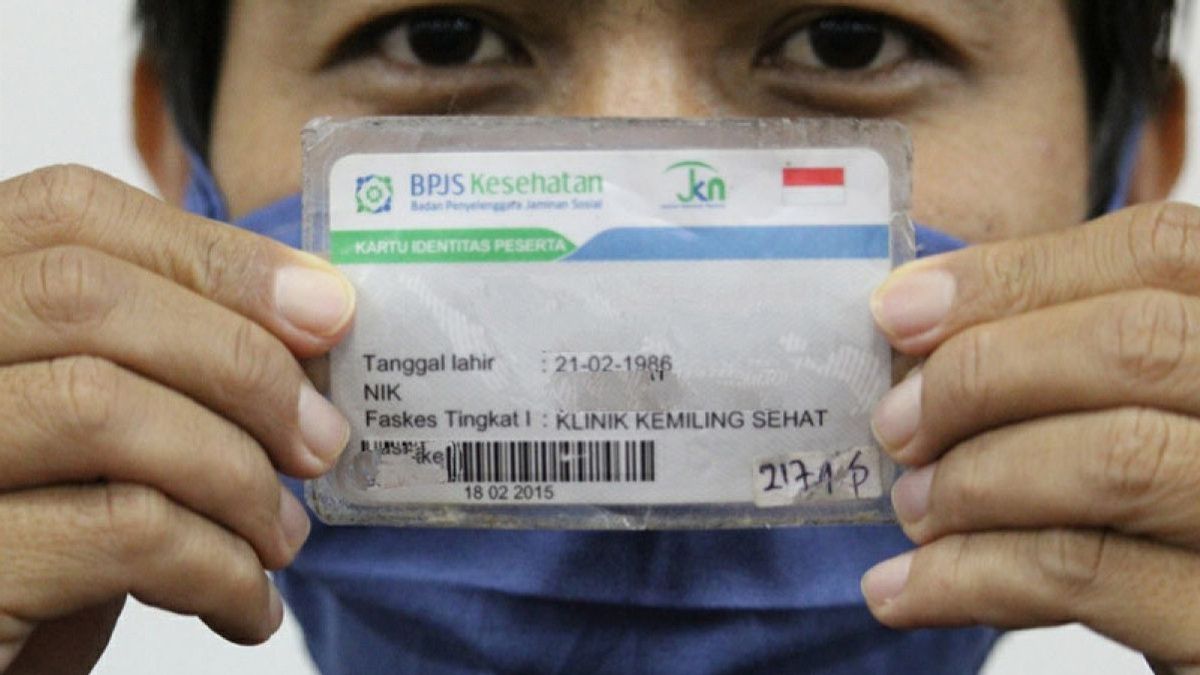
In addition to revealing old data issues, BPS also explained the benefits of using DT-SN in the distribution of social assistance and the participation of BPJS Health Contribution Assistance Recipients (PBI).
After DT-SN was implemented, the government began to carry out field verification and validation processes before distributing assistance every quarter.
This activity is carried out through cooperation between the regional BPS, local governments, and the Family Hope Program (PKH) companion.
The goal is to ensure that recipients who no longer meet the requirements can be removed from the list, as well as include poor groups who have not been recorded previously.
The results, continued Amalia, the accuracy of PBI recipients of BPJS Kesehatan showed improvement and BPS noted a shift in PBI recipients to the lower economic desil group, while participants from the upper economic group continued to decrease.
"This means that this strengthens the reallocation of PBI participants from those who were previously desilated to receive PBI, we allocate it to those who are more entitled to receive PBI," he said.
With the use of DT-SN, he assessed that the level of error in the distribution of social assistance and PBI BPJS Kesehatan continued to decrease in line with the periodic updating of data.
The English, Chinese, Japanese, Arabic, and French versions are automatically generated by the AI. So there may still be inaccuracies in translating, please always see Indonesian as our main language. (system supported by DigitalSiber.id)
Popular


