



JAKARTA - The Ministry of Marine Affairs and Fisheries (KKP) appreciates the WWF Indonesia Foundation for conducting an expedition to the Romang and Damer Islands conservation area in West Maluku Regency, Maluku Province, in 2025.
The researchers involved in the activity were able to prove that the waters of West Maluku are the last defense for the world's marine biodiversity in the face of the threat of global climate change.
The reason is that the scientific expedition held on October 3-November 3, 2025 managed to uncover the largest dugong habitat in Indonesia.
In one area, the researchers' team found as many as 32 dugongs.
Based on the researcher's notes, a large population of dugongs is a rare finding, even for the world's size.
The Director General of Marine Management of the KKP, Koswara, admitted that the two islands in Maluku had received less attention, although they contained high biodiversity.
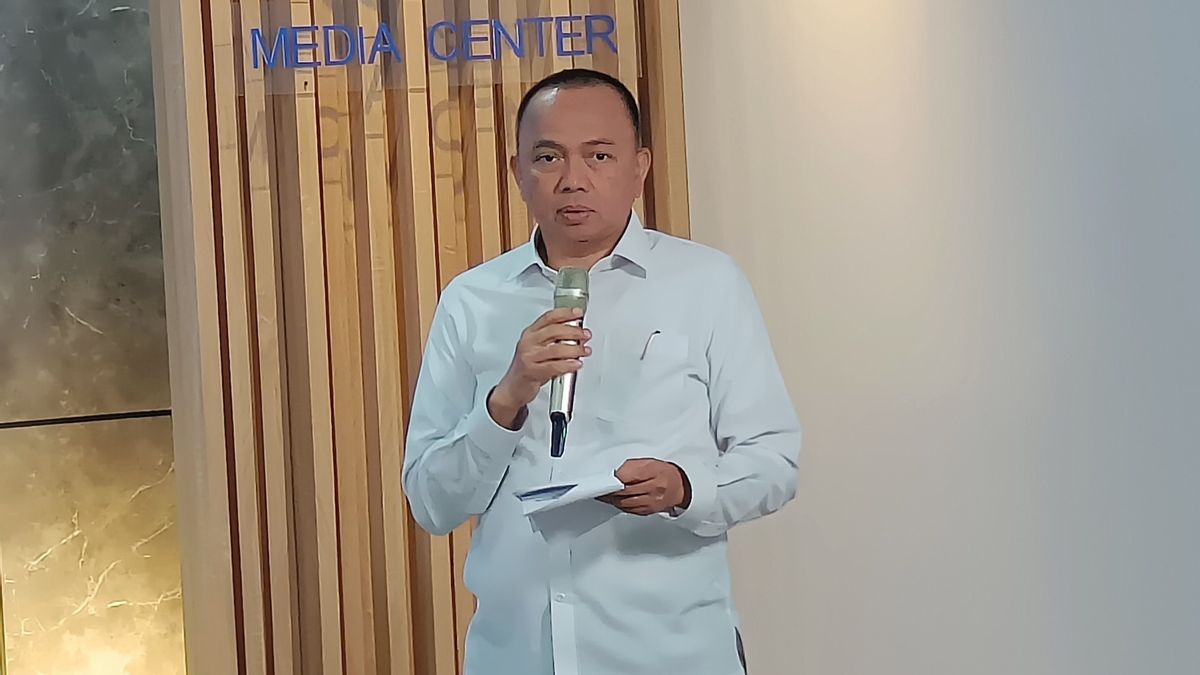
"Romang and Damer Islands are often referred to as 'The Forgotten Island' with high biodiversity and very important ecological functions, but so far they have not received much attention," said Director General of Marine Management of the Ministry of Maritime Affairs and Fisheries Koswara at a press conference at his office, Thursday, February 5.
In fact, said Koswara, the area has a strategic role in maintaining the resilience of the marine ecosystem as well as supporting the lives of coastal communities.
"As a form of government commitment, the area in the waters of Romang & Damer has been designated as a conservation area based on the Decree of the Minister of Marine Affairs and Fisheries Number 4 and 6 of 2022, there are two Ministerial Decrees," he said.
The Romang-Damer 2025 expedition managed to document more than 30 individual dugongs and recorded the appearance of orcas and identified the existence of coral reef structures that are estimated to be hundreds of years old.
According to Koswara, the findings certainly have very high scientific value and emphasize the importance of Romang & Damer as an area with a very strategic ecological function.
"In this context, the Romang & Damer 2025 expedition is an important contribution to supporting decision-making both at the center and at the regional level. In the future, the synergy between the center and the region, development partners, academics and local communities is the key to ensuring that conservation areas really provide ecological and socio-economic benefits," he explained.
Meanwhile, the Acting Director of the Marine and Fisheries Program of the WWF Indonesia Foundation, Candhika Yusuf, said that the results of the expedition were able to show that West Maluku has small islands surrounded by waters that are still maintained since ancient times.
His party admitted that he was amazed by the presence of coral reefs there which remained healthy and resilient at a time when many areas were experiencing bleaching.
"We found the largest habitat of dugongs. However, this miracle is at risk from the real threat of destructive fishing practices by outsiders as well as being inseparable from the issue of plastic waste and ghost nets," he said.
He assessed that the sustainability of natural wealth in South West Maluku is now facing a major challenge that requires immediate collective action.
The real threat of fishing practices using explosives and poisons, turtle hunting to plastic waste pollution has begun to penetrate remote coastal areas.
It is believed that this can damage the resilience of the ecosystem that has been maintained for centuries.
"We must collaborate to strengthen community-based supervision through Pokmaswas so that this wealth does not disappear," he explained.
As for the Romang & Damer 2025 expedition, researchers have noted that the seagrass ecosystem that is home to dugongs is in very good condition with a coverage of more than 50 percent.
The expedition team managed to find two-thirds of the types of seagrasses recorded in Indonesia (9 types out of a total of 14 types of seagrasses).
Other expedition data showed that the coral reef ecosystem in the waters of the Romang and Damer Islands was in a moderate to good condition.
This is reflected in the highest average coral reef coverage of 51.4 percent, higher than the regional average of 34 percent.
In an advanced analysis, researchers also found that some coral colonies in the waters were about 100-200 years old.
This fact shows that the shallow water ecosystem in the Romang & Damer area has survived for a long time.
The old ecosystem is believed to be able to provide high ecological benefits, such as coastal area protection, important and economically valuable marine animal spawning areas.
The English, Chinese, Japanese, Arabic, and French versions are automatically generated by the AI. So there may still be inaccuracies in translating, please always see Indonesian as our main language. (system supported by DigitalSiber.id)


