

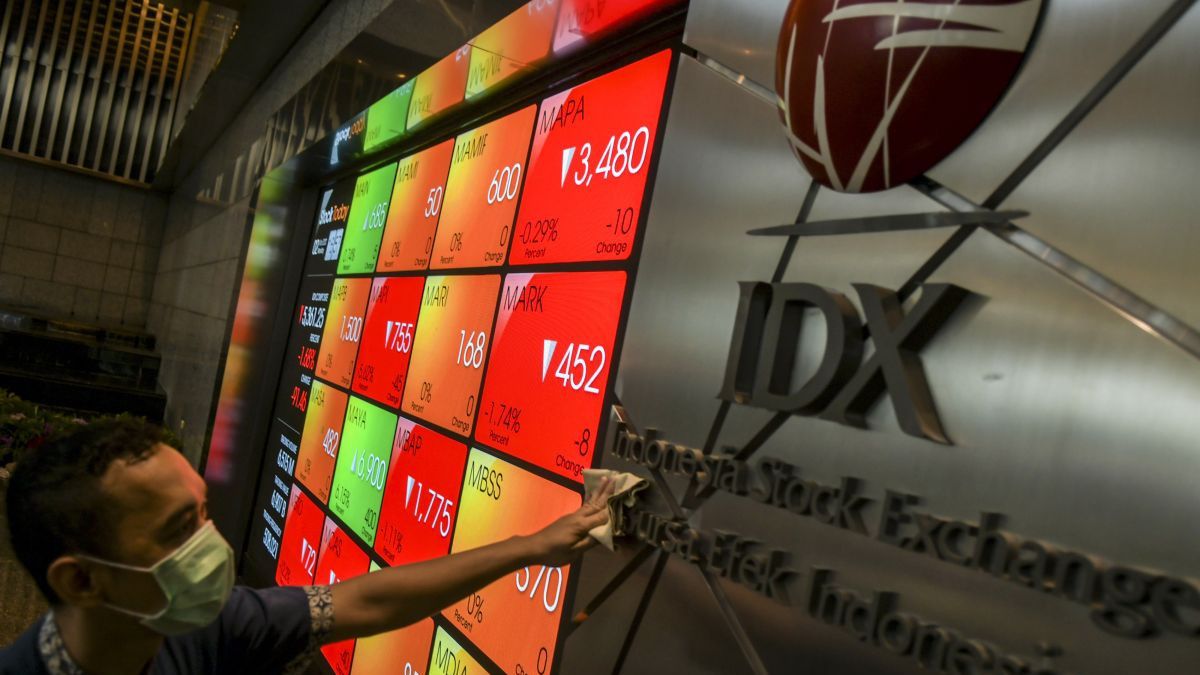


JAKARTA - The government is accelerating structural reforms of the capital market after developments related to MSCI and the assessment of other global institutions triggered turmoil on the exchange. Coordinating Minister for the Economy Airlangga Hartarto emphasized that Indonesia's economic fundamentals remain strong and fiscal-monetary coordination is going well.
"Indonesia's fundamentals remain strong economically. Fiscal and monetary coordination is going well," said Airlangga when giving an explanation to reporters at the Indonesia Stock Exchange (IDX), Friday, January 30.
The first step is to accelerate the demutualization of the IDX, namely a change in the structure of the exchange so that it is no longer owned by exchange members. The goal is to reduce conflicts of interest between managers and exchange members and prevent unhealthy market practices. The stages are regulated in the P2SK Law (Law on the Development and Strengthening of the Financial Sector).
Airlangga also emphasized that OJK and BI would increase the free float - the portion of shares that are actually in circulation in the public - from 7.5 percent to 15 percent.
"Compare Malaysia 25 percent, Hong Kong 25 percent, Japan 25 percent, Thailand 15 percent, Singapore 10 percent, the Philippines 10 percent, the UK 10 percent. We take a relatively more open figure," he said.
According to Airlangga, the increase in free float actually attracts investment. "If the free float goes up, investment will come in. Liquidity increases," he said.
In addition, the investment limit of pension and insurance funds in the capital market will be raised from 8 percent to 20 percent so that the market is deeper and more stable.
On the other hand, BPI Danantara CEO Rosan Roeslani stated that his party had a major interest in the health of the capital market because many SOEs were listed on the exchange. He said that almost 30 percent of the BEI market capitalization came from SOEs.
Rosan emphasized that Danantara supports reforms in governance and market transparency. Demutualization, he said, is a positive step that opens up wider investment opportunities, including participation from Danantara and other institutions.
The government considers this reform to be a strong signal to global investors that Indonesia maintains market transparency, governance, and stability, while maintaining its position as a developing market.
The English, Chinese, Japanese, Arabic, and French versions are automatically generated by the AI. So there may still be inaccuracies in translating, please always see Indonesian as our main language. (system supported by DigitalSiber.id)
Most Popular Tags
#Prabowo Subianto #donald trump #2026 World Cup #Febrie Adriansyah #8791Popular


