

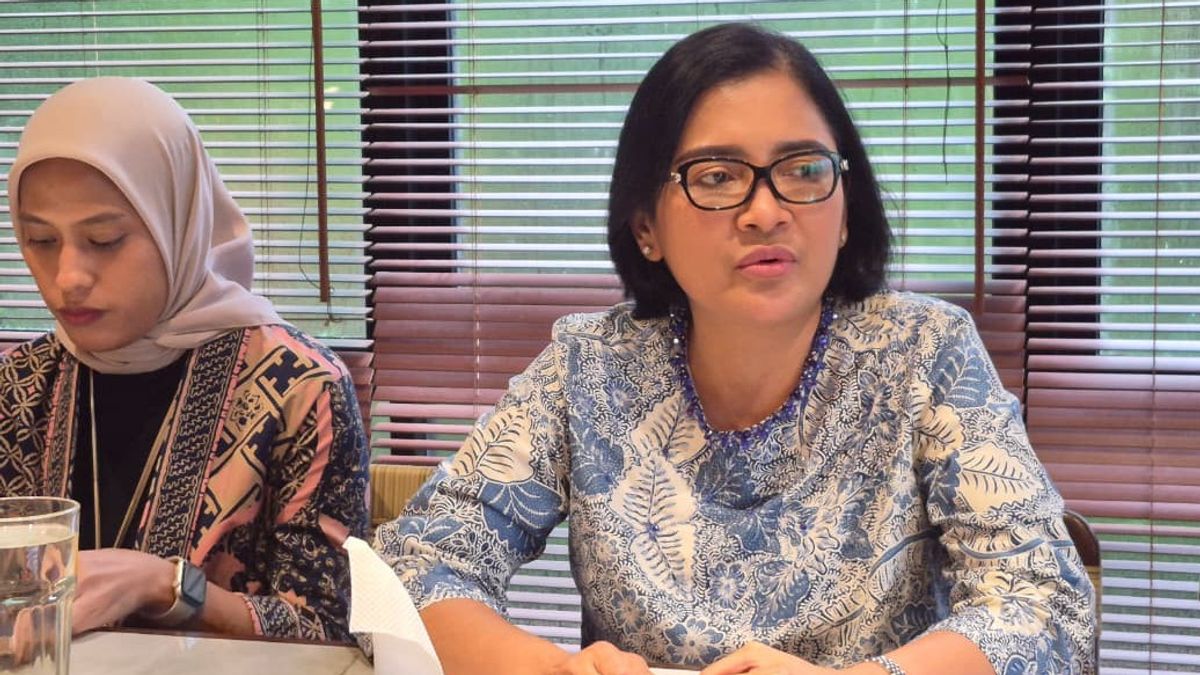


JAKARTA - PT Pelayaran Nasional Indonesia (Persero) or Pelni is focusing on the readiness of the fleet and ports to face the peak of the Lebaran homecoming and return flow amid the potential for extreme weather.
Pelni President Director Tri Andayani said that weather conditions were natural factors that could not be intervened.
Therefore, Pelni chose to focus on aspects that were under the company's control, ranging from the readiness of piers, ports, to the condition of the ship.
"If the weather is bad, it is clearly a natural factor that we cannot intervene in, then what we can intervene in is what is the condition of the pier, we are the condition of the port, and the condition of the ship itself. That's what's controllable," said Tri Andayani in a media discussion event, written on Friday, January 23.
The woman, who is familiarly called Anda, emphasized the importance of synergy and collaboration between ship operators and port managers to ensure the smooth operation during the Lebaran transportation period.
According to you, the intensity of coordination needs to be increased to anticipate various dynamics in the field.
"If the condition of the port is certainly controllable, port management friends, this means that the synergy of collaboration between us as ship operators and these port managers must be more intensive," he said.
In general, continued you, the preparation of Lebaran transportation is carried out with a relatively similar pattern every year.
However, the main challenge still lies in the limited number of ships amid a significant passenger surge, as the public is enthusiastic about returning home.
"Overall, of course, our preparations are more or less the same. That is, what is our focus is that because our number of ships is limited, especially during Eid, it is because our country is also majority Muslim, so of course those who want to go home to their hometowns are also in large numbers," said Anda.
To anticipate this condition, you ensure that all fleets are ready to operate, without any ships being held in the shipyard. He also said that all annual maintenance had been completed well before the Lebaran period.
"Well, this is certainly because of the limitations of our ships, we don't want any of our ships to be in the shipyard for maintenance or maintenance, so we have anticipated that by doing annual maintenance of the ship, which we have done all yesterday in October," he said.
Pelni scheduled follow-up maintenance after the Lebaran period was completed. You said that throughout January to February, the company also carried out minor repairs to ensure that service readiness remained optimal.
"The results of the evaluation of the Nataru transportation yesterday then became our review that we do it in a running repair," he said.
In addition, Pelni also repaired passenger facilities to increase comfort during long sea journeys.
"You said that the facilities that were not suitable were also immediately repaired or replaced.
"We also immediately fixed it from Nataru yesterday, then for example there is also a name for sailing for days, which means that we, for example, check the toilets again, there are faucets, there are showers that are broken, we immediately replace them," he said.
You also said that your party would replace cabin equipment such as mattresses that were no longer usable.
He said that all these steps were targeted to be completed in January to February so that Lebaran transportation services could run optimally.
"So we really want to make sure that we are really ready to serve the Lebaran transportation," he explained.
The English, Chinese, Japanese, Arabic, and French versions are automatically generated by the AI. So there may still be inaccuracies in translating, please always see Indonesian as our main language. (system supported by DigitalSiber.id)


