


JAKARTA - The Executive Director of the Indodata Research Center, Danis Saputra, argues that the plan of the Minister of Finance Purbaya Yudhi Sadewa to add a tariff layer in the cheap segment or Sigaret Kretek Mesin (SKM) layer 3 is a policy that is full of paradoxes because it legalizes illegal cigarettes.
According to Danis, this has the potential to cause a complex trade-off in cigarette trade as an impact of adding a layer (a layer of low-middle price segment equivalent or class) in the existing multi-layer system.
Danis emphasized that the plan was part of the fiscal target which was contrary to market reality.
"Although it aims to increase revenue, this policy actually risks triggering consumption to the illegal market and falling classes, which in the end can undermine the tax base itself," said Danis, quoted Friday, January 23.
According to Danis, public health is opposite to local economic health. On the one hand, the government wants to reduce consumption, but on the other hand, the plan of the Minister of Finance Purbaya threatens thousands of jobs in the formal sector and its supply chain.
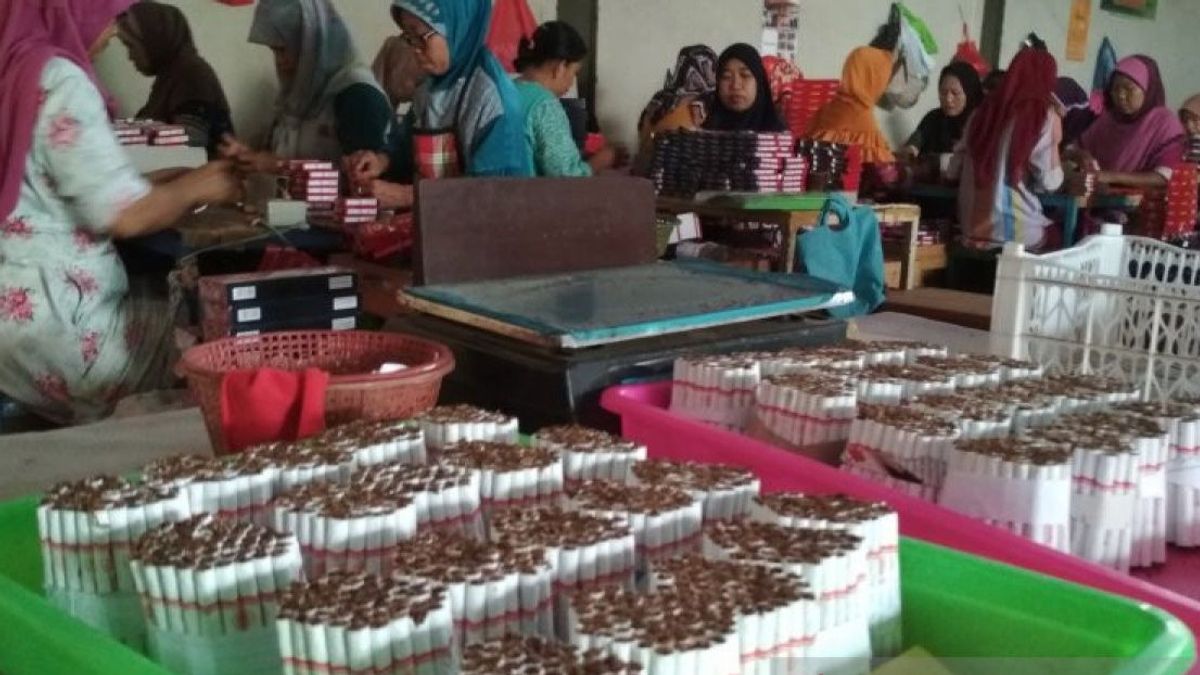
"If the plan is realized, then the policy tends to marginalize small and medium players, namely the Sigaret Kretek Tangan (SKT) group which often becomes a labor absorber (solid work) in the region, and has the potential to create an unhealthy oligopoly," said Danis.
In this context, Indodata recommends 4 important things for the Minister of Finance Purbaya. First, if the layer is added in the cheap segment, there must be compensation in the form of a reduction in effective tariffs in layers 1 and 2 to provide a safe path for consumers who want to remain legal. However, this is contrary to the health goal.
"Second, law enforcement against illegal cigarettes must be strengthened before the new tariff policy is implemented, to ensure consumers do not have an easy illegal choice," said Danis.
Third, economic transition programs for affected workers and farmers must be prepared, such as business diversification training or capital assistance.
Fourth, the approach to evaluating policies must be holistic, not only looking at tax revenue figures, but also public health indicators, the level of illegal circulation, and the level of labor absorption in the tobacco industry sector.
"The addition of layers in the cheap segment is a risky policy that requires very careful (prudent), gradual implementation, and supported by a comprehensive package of accompanying policies. Without it, this policy could backfire on the country's finances, legal industry, and even the public health goal itself," concluded Danis.
The English, Chinese, Japanese, Arabic, and French versions are automatically generated by the AI. So there may still be inaccuracies in translating, please always see Indonesian as our main language. (system supported by DigitalSiber.id)


