

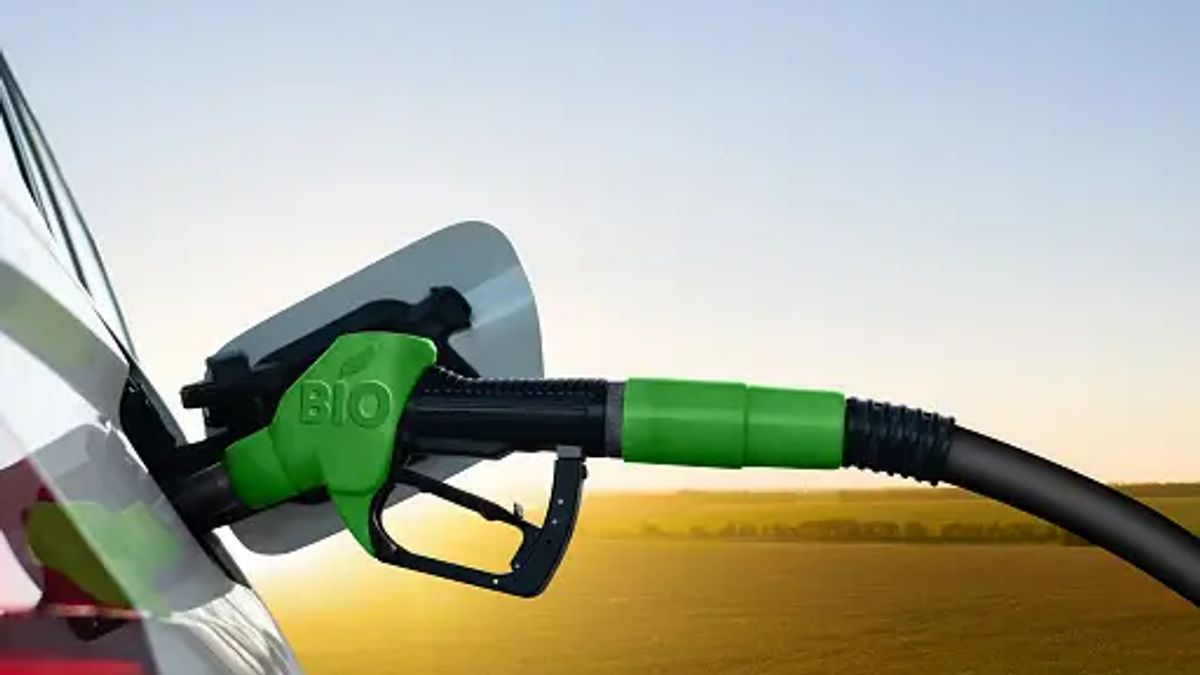


JAKARTA - The Ministry of Energy and Mineral Resources (ESDM) has officially set the allocation of the volume of Biofuel (BBN) type biodiesel for 2026 at 15,646.372 kiloliters (kL).
This decision is contained in the Decree of the Minister of Energy and Mineral Resources Number 439.K/EK.01/MEM.E/2025 concerning the Determination of Oil Fuel Business Entities (BU BBM) and Vegetable Fuel Business Entities (BU BBN) of Biodiesel Type and Allocation of BBN Volume of Biodiesel Type for Blending of Oil Fuel Type Solar Oil in 2026.
Director General of New and Renewable Energy and Energy Conservation (EBTKE) Eniya Listyani said that of the total allocation of biofuel, it was divided into two main categories, namely the allocation of Public Service Obligation (PSO) of 7,454,600 kL and the allocation of non-PSO of 8,191,772 kL.
"The implementation of the mandatory biodiesel program in 2026 will be supported by the synergy of 32 BU BBM and 26 BU BBN that have been appointed by the Government, while maintaining the incentive scheme for the PSO sector as provided for in the previous year," said Eniya, Tuesday, December 23.
Furthermore, Eniya emphasized that the allocation determination is a strategic step in reducing dependence on fuel imports (solar), strengthening national energy resilience and independence, increasing the utilization of domestic energy resources, and supporting the achievement of greenhouse gas emission reduction targets.
From the calculations of the Ministry of Energy and Mineral Resources, the biodiesel program for 2026 is estimated to drive the growth of downstream industries and national chains with an increase in CPO value to biodiesel of IDR 21.8 trillion, saving foreign exchange from solar imports of IDR 139 trillion, absorbing labor up to more than 1.9 million workers, and reducing greenhouse gas emissions of around 41.5 million tons of CO2e.
To ensure effectiveness and accountability in the field, Eniya ensures that the government is committed to continuing to strengthen governance, supervision, and transparency through the determination of measurable allocations based on capacity and performance.
"This step includes monitoring the quality standards of biodiesel strictly, supervising distribution at the handover point, to involving independent surveyors to verify the volume and quality of biodiesel that is distributed," he said.
Eniya said that this supervision is aimed at ensuring that the 40 percent biodiesel program (B40) runs optimally and provides maximum benefits for all stakeholders.
"In addition, the Government also opens space for adjustments to mandatory provisions if in the future there are changes in the allocation target volume in accordance with national strategic needs and policies," he said.
The English, Chinese, Japanese, Arabic, and French versions are automatically generated by the AI. So there may still be inaccuracies in translating, please always see Indonesian as our main language. (system supported by DigitalSiber.id)
Popular


