



JAKARTA - Climate change is considered to have exacerbated the massive flooding that killed more than 1,600 people in several areas of South Asia and Southeast Asia. The conclusion was delivered in a recent research that examined a series of tropical storms and extreme rainfall that hit the region in November 2025.
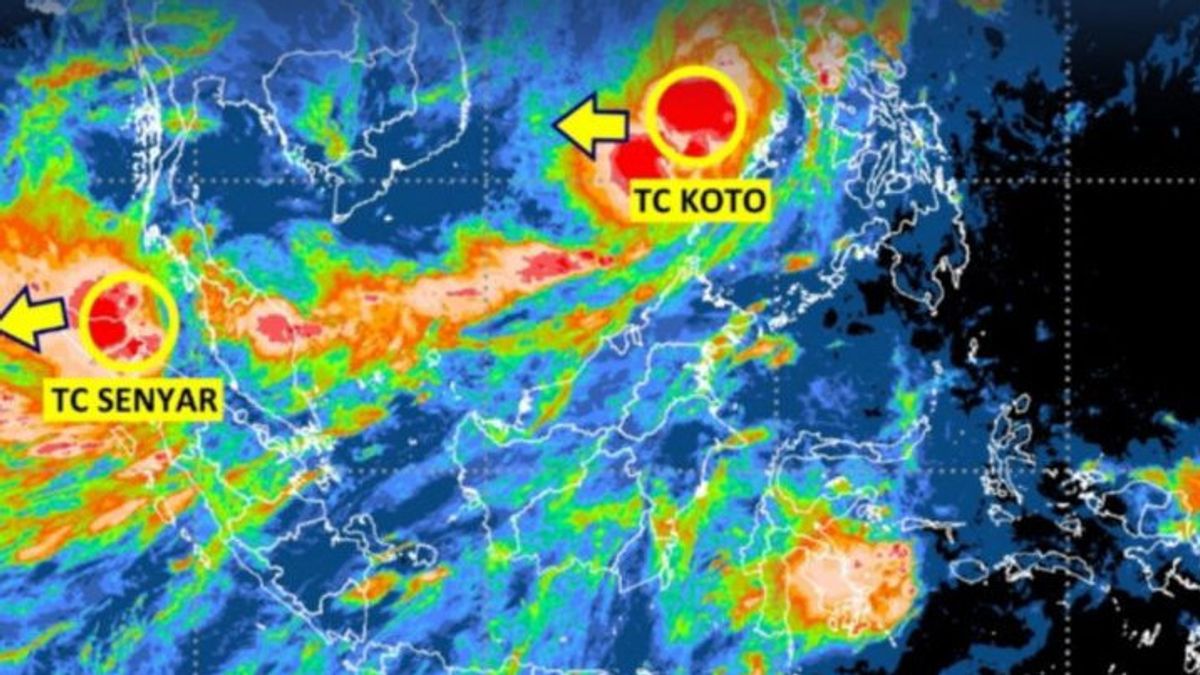
Quoted from the Japan Times, Saturday, December 13, during that period at least three tropical cyclones hit a wide area ranging from Sri Lanka to Indonesia. The disaster caused economic losses estimated at at least 20 billion US dollars or around Rp. 330.7 trillion. Prolonged heavy rain and flash floods destroyed residential areas, businesses, tourist areas, and vital infrastructure.
Floods also damaged road and railway networks, destroyed farmland, and paralyzed industrial activity. A number of areas were reported to be completely paralyzed due to high water levels and strong currents that were difficult to control.
Scientists noted that the warmer surface temperature of the Indian Ocean by about 0.2 degrees Celsius above the long-term seasonal average was one of the main factors that strengthened the storm. This condition is suspected to provide additional heat and water vapor that increases the strength of Ditwah Cyclone and Senyar Cyclone, the two most powerful storms in the series.
In a rapid analysis of World Weather Attribution released Thursday, December 11, 2025, researchers explained that without global warming due to human activities, sea temperatures would likely be about 1 degree Celsius lower. They also found that climate change increased the intensity of extreme rainfall periods during the hurricane series.
The impact is exacerbated by other factors, such as seasonal weather cycles and the timing of storms that coincide with the monsoon season. Rapid urbanization and extensive deforestation in a number of regions have also worsened the situation by reducing the ability of the soil to absorb rainwater.
"During the monsoon season, flooding is common, but usually only about one to two feet high," said Lalith Rajapakse of the University of Moratuwa, Sri Lanka. "In some areas, water levels even reach 14 to 15 feet," he said.
However, the research team has not been able to determine with certainty how much climate change contributes to the increase in rainfall from the two cyclones. The main climate models show inconsistent results, allegedly due to the difficulty of capturing regional dynamics and the influence of global patterns such as La Nina, according to one of the research authors, Mariam Zachariah from Imperial College London.
Matt Sechovsky, Head of State ESG Research at BMI, a unit of Fitch Solutions, assessed the Asian extreme weather in November as an extraordinary event. He said it was not surprising that current climate models have not been able to fully explain it, given that many models tend to underestimate the rate of climate change since around 2022.
This uncertainty also has an impact on the economic and financial sectors. Frederic Neumann, Head of Asian Economics at HSBC Holdings, said many insurance companies and financial institutions use climate models as the basis for risk assessment, so that model inaccuracies can magnify economic challenges in regions that are increasingly hit by extreme weather.
"Although it is difficult to measure the impact on growth and livelihoods, it is clear that this condition is a burden on economic and community activities," he said.
Other research also found indications of the influence of climate change in the floods that hit Indonesia last November. The ClimaMeter climate attribution group from the Pierre-Simon Laplace Institute, France, estimates that the meteorological conditions at that time increased daily rainfall by 7 millimeters or about 15 percent higher than past conditions.
However, ClimaMeter warns that the level of confidence in the findings is still low because similar events are rare and not always recorded in historical data. They concluded that natural climate variability, including La Nina which tends to bring wetter conditions, is likely to play only a small role.
A number of previous studies have also shown an increase in the intensity of extreme rainfall in Southeast Asia in recent decades. Scientists assess these findings as a strong signal that the impact of climate change in the region is becoming more real and can no longer be ignored.
The English, Chinese, Japanese, Arabic, and French versions are automatically generated by the AI. So there may still be inaccuracies in translating, please always see Indonesian as our main language. (system supported by DigitalSiber.id)
Popular


