

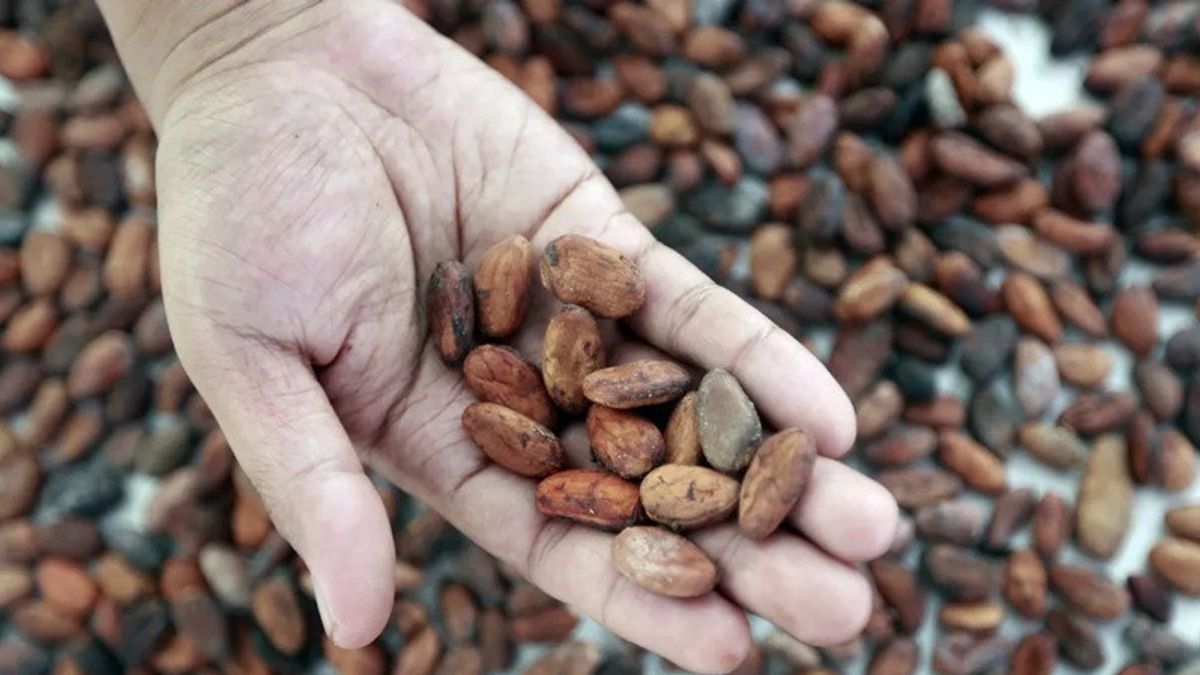


BALI - National Cocoa Council Chairman Soetanto Abdoellah noted an increase in cocoa imports from 2020 to 2024, primarily due to increased cocoa bean imports.
"This is to meet the needs of Indonesian factories," he said at the Cocoa Contribution to the State Budget & National Economy forum on Monday, November 24.
Soetanto explained that domestic chocolate consumption continued to increase from 2015 to 2024. However, this growth in consumption was not matched by an increase in cocoa production from local plantations, resulting in a surge in cocoa bean imports.
According to data from the Central Statistics Agency (BPS), cocoa imports reached 243,334 tons in 2020, then increased to 304,359 tons in 2021 and 313,493 tons in 2022. In 2023, import volume increased again to 340,451 tons, before finally declining to 236,142 tons in 2024.
Although import volume decreased in 2024, Soetanto added that cocoa prices actually increased, particularly the price of cocoa beans.
In 2024, cocoa bean imports reached 157,394 thousand tons. This figure decreased compared to 2023, which reached 276,682 thousand tons, but the import value increased. The total value of cocoa bean imports in 2023 was recorded at USD 732.2 million, and will increase to USD 1.06 billion in 2024.
"If the price of cocoa beans rises, all prices rise. Because everything comes from beans," he said.
The issue of cocoa bean productivity is indeed a major challenge for Indonesia's cocoa plantation sector.
Nurlaidi, an expert analyst at the Directorate of Non-Tax State Revenue (PNBP) Strategy, Directorate General of Economic and Fiscal Strategy (DJSEF), Ministry of Finance, stated that with a total land area of 1.47 million hectares, Indonesia can only produce around 210,000 tons of cocoa beans per year, or an average of 0.2 tons per hectare.
Nurlaidi stated that Indonesia's cocoa plantation area is not comparable to its production. For comparison, Brazil has 590,000 hectares of land but is able to produce the same volume of cocoa beans as Indonesia, namely 210,000 tons.
Meanwhile, Ecuador, with 509,000 hectares of land, can produce up to 480,000 tons per year, or around 0.9 tons per hectare.
Nurlaidi believes the decline in Indonesian cocoa production is driven by declining plant quality. "According to sources, 67 percent of the (cocoa) plants are aging," she said.
She added that plant aging leads to decreased productivity and, consequently, the quality of the cocoa beans produced.
The English, Chinese, Japanese, Arabic, and French versions are automatically generated by the AI. So there may still be inaccuracies in translating, please always see Indonesian as our main language. (system supported by DigitalSiber.id)
Most Popular Tags
#Prabowo Subianto #donald trump #2026 World Cup #Febrie Adriansyah #8791Popular


