

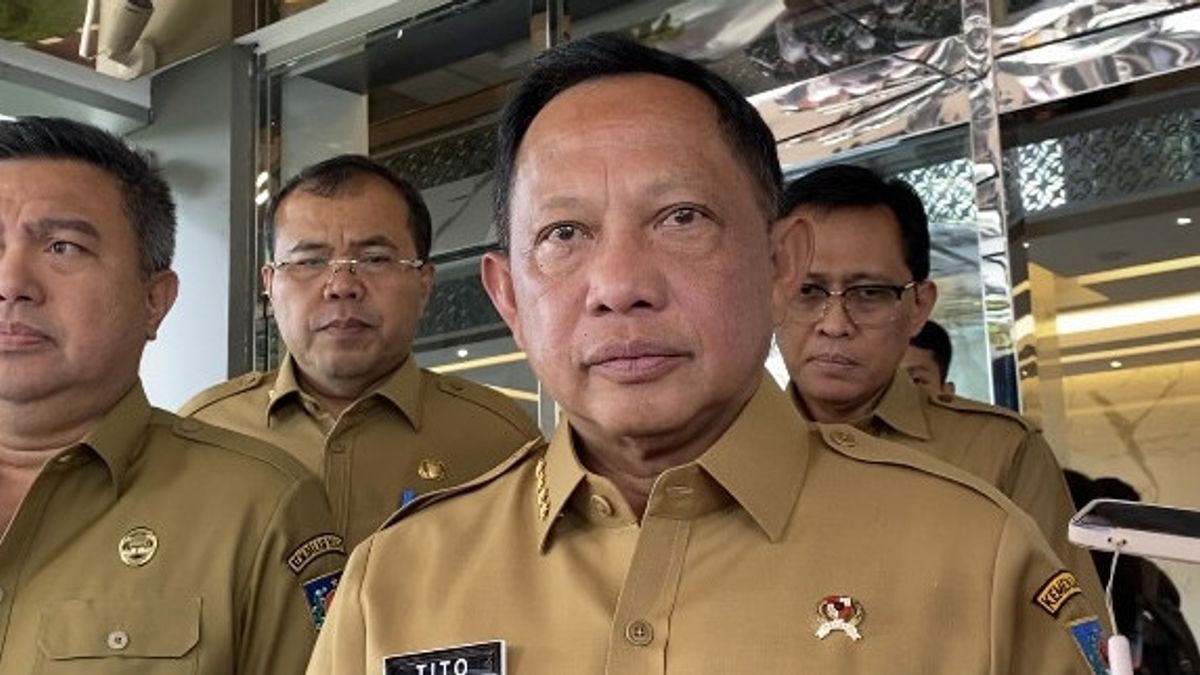


JAKARTA - Minister of Home Affairs (Mendagri) Tito Karnavian revealed that the Waste to Energy program or waste processing program into electricity through the waste power plant (PLTSa) project can reduce the burden of the Regional Revenue and Expenditure Budget (APBD).
Tito said, so far the local government must issue a tipping fee or the cost of sending waste to the Final Disposal Site (TPA). With this program, the costs can be eliminated. Just so you know, so far, the tipping fee comes from the APBD.
With this program, later the local government's waste will be distributed directly to the PLTSa to be built. Thus, the cost or tipping fee is eliminated so as to save the APBD.
"What is clear is that the regions are no longer given the name Tipping fee. So far, after being placed in the final disposal, the TPA manager must be paid for managing waste, it was previously paid by the regional government," said Tito, Tuesday, September 30.
Through Presidential Decree Waste to Energy, Tito continued, this budget will not rely on the state budget but on costs from Danantara and PT PLN (Persero).
"So far, if you are from the regions collecting garbage from your environment, you have brought the cleaning service to the TPA. For example, from Jakarta, you have to pay to the Bekasi City Government or managers in Bantargebang," he explained.
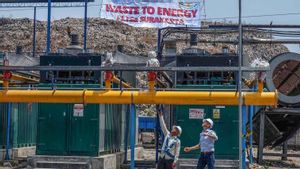
On the same occasion, the CEO of the Anagata Nusantara Power Management Agency (BPI Danantara), Rosan Roeslani, said that Indonesia has now entered a waste emergency period. Not without reason, Rosan said, every year Indonesia produces 35 million tons of waste or the equivalent of 16,500 football fields.
SEE ALSO:
-
 | EKONOMI
Menko Zulhas Sebut Izin PTLSa Segera Rampung, Pembangunan Ditargetkan Selesai Setahun
04 September 2025, 23:56
"We see an emergency. Not only in Jakarta, but many in other big cities," said Rosan.
Rosan said the same amount is said to be able to cover all areas of Jakarta with a 27 cm2 thick waste layer.
"So you can imagine that there is so much garbage that we produce every year in Indonesia," explained Rosan,
Meanwhile, continued Rosan, as much as 61 percent of the waste cannot be managed properly, is thrown away carelessly and enters the Final Disposal Site (TPA) and does not comply with the procedure. This unmanaged waste then causes various problems ranging from health to the environment.
"This garbage disposal site now accounts for approximately 2-3 percent of national greenhouse gas emissions," he said.
The English, Chinese, Japanese, Arabic, and French versions are automatically generated by the AI. So there may still be inaccuracies in translating, please always see Indonesian as our main language. (system supported by DigitalSiber.id)
Most Popular Tags
#Prabowo Subianto #donald trump #2026 World Cup #bgn #konflik timur tengahPopular


