

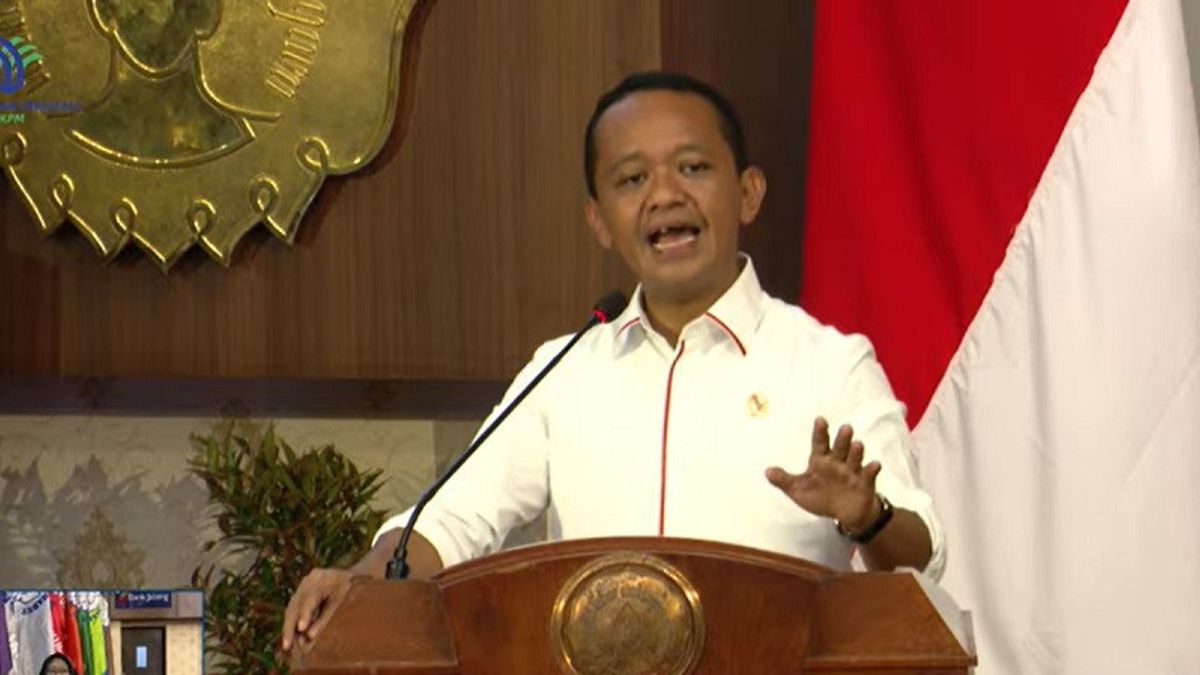


JAKARTA - Minister of Energy and Mineral Resources (ESDM) Bahlil Lahadalia revealed that private gas station provider business entities have opened up the possibility of building oil refineries in Indonesia.
This was revealed by Bahlil after holding meetings with gas station operators such as Shell Indonesia, Vivo, BP AKR and ExxonMobil regarding the supply of fuel in recent weeks.
"That's the second step, I'm sure fellow entrepreneurs have started thinking about building a refinery other than Pertamina," Bahlil said, quoted on Saturday, September 20.
To fill the current fuel vacancy, Public Oil Fuel Filling Stations (SPBU), both PT Pertamina (Persero) and the private sector, have agreed on a scheme to regulate fuel imports with Pertamina's remaining import quota.
"They agreed to collaborate with Pertamina, the condition is that it must be based on base fuel, meaning that it has not mixed. So the products will be mixed in each, the tanks at each gas station," explained Bahlil.
Regarding the quality of fuel, it has also been approved to conduct a joint survey before the delivery of fuel. Regarding the purchase price of fuel, the Government requested that it be carried out transparently and no party was harmed. Bahlil also encouraged that in the next seven days, the imported fuel has arrived in Indonesia and is ready to be distributed to the public.
SEE ALSO:
-
 | EKONOMI
Soal BBM Tambahan ke Shell Cs, Bos Pertamina Usahakan dalam Sepekan Terpenuhi
20 September 2025, 07:43

"And when asked when this will start, starting today it has been discussed. After this, it will be followed up with a technical meeting of the stock. And then God willing, the goods can enter Indonesia no later than 7 days," he explained.
The regulation of fuel imports is the middle road to maintain national trade stability by reducing deficit pressures due to oil and gas imports, while ensuring the availability of domestic fuel supply remains safe.
This policy refers to Article 14 paragraph (1) of Presidential Decree Number 61 of 2024 concerning Commodity Balance. The regulation gives the authority to the Minister or Head of Institutions as sector supervisors to determine commodity needs plans.
The English, Chinese, Japanese, Arabic, and French versions are automatically generated by the AI. So there may still be inaccuracies in translating, please always see Indonesian as our main language. (system supported by DigitalSiber.id)
Most Popular Tags
#Prabowo Subianto #donald trump #2026 World Cup #bgn #konflik timur tengahPopular


