


JAKARTA - All media gave positive comments to our new Minister of Finance, "said Syahganda Nainggolan, chairman of the Board of Directors of the GREAT Institute, when opening the Great Lecture entitled National Economic Transformation: Inclusive Growth Towards 8 Percent at the Bidakara Hotel Birawa Hall, Jakarta, Thursday 11 September. The new Minister of Finance, of course Purbaya Yudhi Sadive, who was already present at the event that afternoon.
Syahganda's statement that afternoon slid like a signal. He wanted to emphasize that the public was putting new hope in the figure of Minister of Finance Purbaya Yudhi Sadives. "We haven't really had an economist Minister for a long time. This is the first time that the Minister of Finance has learned directly from Paul Romer, the winner of the Nobel Economy," he said.
Syahganda said that Purbaya's first steps were different. On the first day at the Ministry of Finance's office, instead of being busy with protocols, he immediately talked about having to open a dialogue with the public and come down to absorb aspirations. "He followed the President's direction so that officials heard the people. That's a good start," he said.
Furthermore, he believes that Indonesia's industrialization will return to the rails. But he reminded: growth alone is not enough. "Good growth is not enough. What is more important is how growth is directly felt by the community. That is the need for growth through equity," he said.
Syahganda's optimism does not stop in rhetoric. He brings concrete calculations. The Red and White Cooperative, if going well, can contribute 0.5 to 1.2 percent economic growth. The Free Nutrition Food Program, in fact, can add about 0.5 to 1 percent. 8 percent growth is not a wishful thinking," he said.
Purbaya And Double Machines
When it arrived it was his turn, Minister of Finance Purbaya Yudhi Sadive appeared in a realistic but optimistic tone. He reviewed the long journey of the Indonesian economy since the 1998 Reformation. "It's been more than two decades, our growth has been difficult to get out of the trap by about 5 percent," he said. There is a phenomenon of middle income trap, something that usually happens to countries that want to advance to become developed countries.
However, Purbaya emphasized, Indonesia has a distinctive strength: domestic consumption which reaches 90 percent of GDP. "With such a domestic demand, actually the growth rate of 6 to 6.5 percent is not impossible," he said.
Then he offered a simple but firm comparison. In the SBY era, when only private machines moved, growth reached 6 percent. In the Jokowi era, when only the country's engines moved, growth lasted 5 percent. In the future, if both machines were moved together state and private sector', we are optimistic that we can reach 8 percent," he said.
He also explained the technical steps. Budget absorption is immediately accelerated to flow into the real sector. Together with the DPR RI, the government will also provide leeway for transfers to the regions. That way, the regions can breathe more freely," said Purbaya.
SEE ALSO:
-
 | EKONOMI
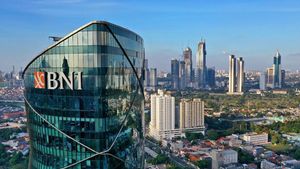
BNI Bakal Salurkan Dana Rp55 Triliun dari Pemerintah untuk Sektor Produktif
14 September 2025, 17:45


LPS: Maintaining Trust
Acting Chairman of the LPS Board of Commissioners, Didik Madiyono, sees this event as strategic. "This activity is positive, raising public awareness of the national economy, including LPS's duties," he said.
Didik conveyed a performance record that, according to him, was encouraging. "As of July 2025, LPS guarantees 643.5 million accounts, or 99.94 percent of personal accounts in Indonesia, as well as 15.7 million BPR-BPRRS accounts," he said. The data is proof that financial system stability is maintained amidst the boisterous political-economic dynamics.
Shadow Middle Income Trap
Behind Syahganda, Purbaya, and Didik's beliefs, they still share the classic threat: the trap of middle-income countries. The World Bank has long warned that many countries fail to penetrate the status of developed countries because they only rely on consumption, not industrialization.
The Brazilian case is often called: it climbed, but then stagnant. Likewise South Africa. On the other hand, South Korea and Taiwan managed to jump out of the trap thanks to an aggressive industrialization strategy, technological innovation, and massive investment in human resources.
Indonesia is still at an intersection. Will it stagnate like Brazil, or will it climb like South Korea? The answer is, some are on the shoulders of the new Minister of Finance.
Growth and Justice
In Bidakara's courtroom that day, discussions seemed to be circulating in one conclusion: growth of 8 percent was not just a dream, but an agenda that demands political courage and technocratic consistency.
Syahganda reminded again, growth will only be meaningful if it is accompanied by justice. "Good growth is not enough. The important thing is that the people can feel it," he said.
Purbaya gave a dual engine formula: the state and the private sector must be moved simultaneously. Didik Madiyono offered guarantees of financial system stability. Of the three directions, "optimism, strategy, and trust" was formed by a large narrative towards 8 percent.
Economic growth in the end is not just a matter of numbers, but the face of people's daily lives. As Amartya Sen said, Development is about explaining the real freedoms that people enjoy. And as Franklin D. Roosevelt once said, The test of our progress is not whether we add more to the abuse of those who have much, it is better we provide enough for those who have little.
So, if the state and private machines will really move together, that success only deserves to be called progress if it adds to the people's freedom space, frees poverty, minimizes inequality, and restores social justice.
The English, Chinese, Japanese, Arabic, and French versions are automatically generated by the AI. So there may still be inaccuracies in translating, please always see Indonesian as our main language. (system supported by DigitalSiber.id)


