



JAKARTA - Indonesia is one of the countries that is in the largest marine waste accumulation zone in the world (Great Pacific Garbage Patch) and ranks 5th largest waste producer globally, after China, the United States, India, and Brazil.
Meanwhile, based on data from the National Waste Management Information System (SIPSN), the emergence of national waste is estimated at 50,062,054 tons this year, with a potential of around 20,024,821 tons of garbage entering the sea through rivers, coasts, small islands, ports and marine activities.
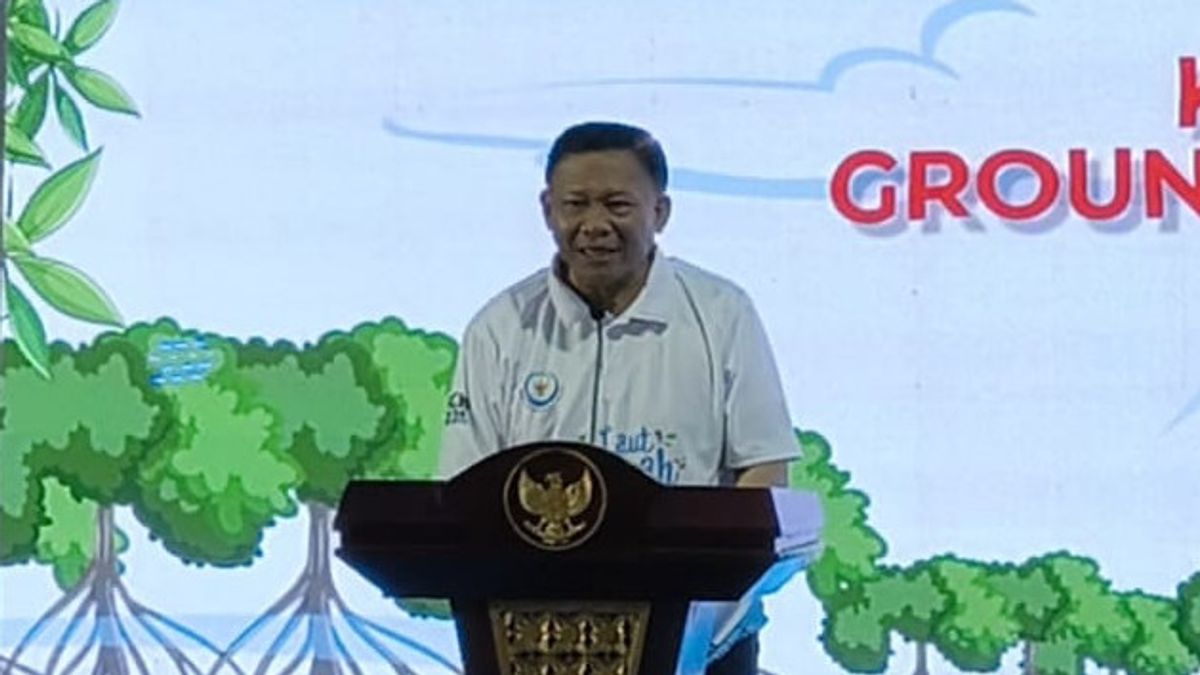
"We certainly feel that marine waste is still one of the problems in Indonesia and this is a major problem," said Deputy Minister of Marine Affairs and Fisheries (KP) Didit Herdiawan in the Kick-off of the Garbage-Free Healthy Sea Program (Sewet Sea Sea) and Kamal Muara National Mangrove Area Development Groundbreaking at Kamal Muara Sports Center, Penjaringan, North Jakarta, Wednesday, August 6.
Garbage that enters the sea is believed to have a negative impact on coastal ecosystems and marine biota.
One of the impacts is eutrophication, namely closed water conditions due to excess nutrients that cause decreased oxygen levels and threaten the survival of marine biota.
In addition, indecomposable plastic waste will become microplastic that is easily consumed by fish and other marine organisms.
Accumulated microplastics in the body of a biota can cause death and indirectly endanger human health.
coastal ecosystems such as mangroves, seagrasses and coral reefs are also seriously affected if waste problems are not addressed immediately.
According to Didit, the implementation of the Sewet Sea Program Kick-off today is one part of saving the ecosystem.
"We all know that the kick-off activity this morning is part of saving the ecosystem. Of course, if it is withdrawn, there will be coasts, remote islands and rivers as well as estuaries and so on related to marine activities," he said.
Didit assessed that his party continues to strive to reduce marine debris.
In 2022 '2024, the KKP has initiated the National Movement for the Month of Cinta Laut aimed at building awareness of fishermen and the public of the importance of maintaining the cleanliness of the sea.
SEE ALSO:
-
 | EKONOMI
Kemendag Sita Barang Impor Ilegal Senilai Rp26,4 Miliar dari China hingga Prancis
06 Agustus 2025, 13:05 -
 | EKONOMI
Pertumbuhan Ekonomi Kuartal II 2025 Jadi Kejutan di Tengah Tekanan Konsumsi
06 Agustus 2025, 12:47

Seiring waktu, komitmen itu diperkuat melalui peluncuran program Laut Sehat Bebas Sampah (Laut Sebasah) yang mengedepankan kolaborasi multipihak untuk pengelolaan sampah laut secara menyeluruh dari hulu hingga hilir.
"Kami harus kolaborasi bersama-sama kementerian/lembaga sampai dengan tingkat daerah dan perorangan untuk saling mendukung Program Sebasah yang kami laksanakan pada pagi hari ini," terang Didit.
"Penyelesaian isu sampah terutama di laut ini wajib kami teruskan dan lestarikan bersama," pungkasnya.
SEE ALSO:
-
| EKONOMI
Kemendag Sita Barang Impor Ilegal Senilai Rp26,4 Miliar dari China hingga Prancis
06 Agustus 2025, 13:05 -
| EKONOMI
Pertumbuhan Ekonomi Kuartal II 2025 Jadi Kejutan di Tengah Tekanan Konsumsi
06 Agustus 2025, 12:47
Over time, this commitment was strengthened through the launch of the Sea Healthy Waste-Free (Sewet Sea) program which prioritized multi-party collaboration for overall marine waste management from upstream to downstream.
"We have to collaborate together with ministries/agencies up to the regional and individual levels to support each other. Wet Programs that we carried out this morning," explained Didit.
"We must continue to resolve the waste issue, especially at sea and preserve it together," he concluded.
The English, Chinese, Japanese, Arabic, and French versions are automatically generated by the AI. So there may still be inaccuracies in translating, please always see Indonesian as our main language. (system supported by DigitalSiber.id)
Most Popular Tags
#Prabowo Subianto #donald trump #2026 World Cup #bgn #konflik timur tengahPopular


