


JAKARTA - Bank Indonesia (BI) revealed that Indonesia's projected economic growth in 2025 is in the range of 4.6 percent to 5.4 percent.
Head of the BI's Department of Economic Policy and Monetary, Firman Mochtar, explained that this figure is based on a number of macroeconomic assumptions that continue to be observed regularly.
"And that assumption puts our projection at the level of 4.6 to 5.4. We encourage as much as possible through various easing efforts from monetary policy. We do support for macrogenential liquidity policies," said Firman in a Media Taklimat entitled 'Keep Stability, Encourage Economic Growth', Thursday, July 24.
He added that these measures are part of BI's efforts to encourage domestic demand, especially in the midst of a global economic slowdown, where world GDP growth is estimated to be only around 3 percent.
Firman added that in encouraging national economic growth, there are several main factors that form the basis of policy, namely inflation and exchange rates.
"How do we see inflation? There is a target for inflation, right? The target is 1.5 to 3.5. Now we believe inflation in the future will fall below 2.5. Then the exchange rate will also be stable," he said.
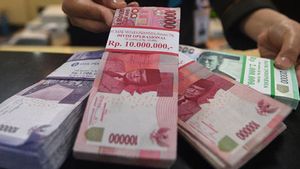
Firman also emphasized that Bank Indonesia's main mandate is to maintain stability in the value of the rupiah, which includes controlling inflation and exchange rates.
He added, as long as inflation remains low and the exchange rate is maintained, there is room for BI to continue to encourage economic growth, including through the possibility of lowering the benchmark interest rate.
SEE ALSO:

"Now the mandate of Bank Indonesia is to maintain the value of the rupiah. What is the value of the rupiah? Inflation and exchange rates. In order to encourage economic growth. There is room for us to continue to encourage economic growth without disrupting the stability of the rupiah value, for what reason? The inflation is low, the exchange rate is maintained", he explained.
He emphasized that BI will continue to pay close attention to global and domestic conditions in order to determine further policy steps.
"It's low because it's also below 2.5. If we push it again by lowering interest and higher economic growth, the inflation is still in the corridor. It means that there is room for us to continue to encourage economic growth without disrupting stability. Without disturbing or maintaining economic stability," he concluded.
The English, Chinese, Japanese, Arabic, and French versions are automatically generated by the AI. So there may still be inaccuracies in translating, please always see Indonesian as our main language. (system supported by DigitalSiber.id)


