


JAKARTA - Indef Economist Didik J Rachbini expressed his views regarding the red and white cooperative.
According to him, digital transportation cooperatives are better than red and white cooperatives.
Referring to Gojek's success as a big digital business, Didik assessed that behind its success, it turns out that the Gojek business model only benefits the company and leaves behind the fate and future of the driver as its main stakeholders.
According to Didik, the current business model of Gojek, the driver will always be poor and will never move up the vertical grade up.
"In the current government ideology, which runs the market socialism system, Gojek will be better built and transformed into a cooperative. The drivers will later become owners of its business entity, namely cooperatives. The platform and application are run by cooperative administrators," he said in an official statement, Tuesday, June 10.
In addition, Didik assessed that the government through the Anagata Nusantara Power Investment Management Agency (BPI Danantara) can also provide digital transportation with a cooperative model business. Later, it will be owned by hundreds of thousands or millions of motor and car drivers.
A real example of this idea, continued Didik, is the co-op Ride, a cooperative-based ride-sharing platform. This digital transportation cooperative is located in New York City, United States.
He explained the company is owned and managed by drivers, not big digital technology companies like Uber and Lyft.
"This is more in accordance with the current government ideology," he said.
Digital Transporation Cooperatives Are Much More Eligible
According to Didik, the idea of a digital transportation cooperative is far more appropriate to apply than the idea of a red and white cooperative currently being run by the government.
"Compared to the idea of a red and white cooperative, the idea of digital transformation is much more feasible," he said.
Even so, Didik did not deny that the presence of red and white cooperatives is still important to advance rural areas.
"But this digital transportation cooperative will be more feasible economically and in business because urban communities are also more in number than rural communities today," he explained.
SEE ALSO:

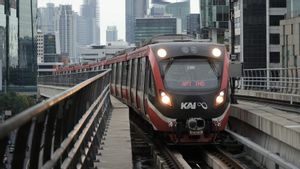
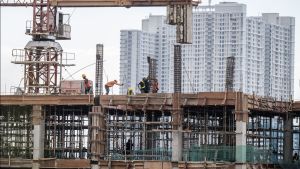
Didik said that his idea departed from the increasing number of urban residents.
By 2025, Indonesia's population will already live in cities reaching 59 percent. This means, as many as 167 million Indonesians live in cities.
The trend of increasing urban population will be even greater with a fairly rapid increase in urbanization growth. Even in 2045, urban population urban areas can reach 70 percent," he said.
The English, Chinese, Japanese, Arabic, and French versions are automatically generated by the AI. So there may still be inaccuracies in translating, please always see Indonesian as our main language. (system supported by DigitalSiber.id)
Most Popular Tags
#Prabowo Subianto #donald trump #2026 World Cup #Febrie Adriansyah #8791Popular


