

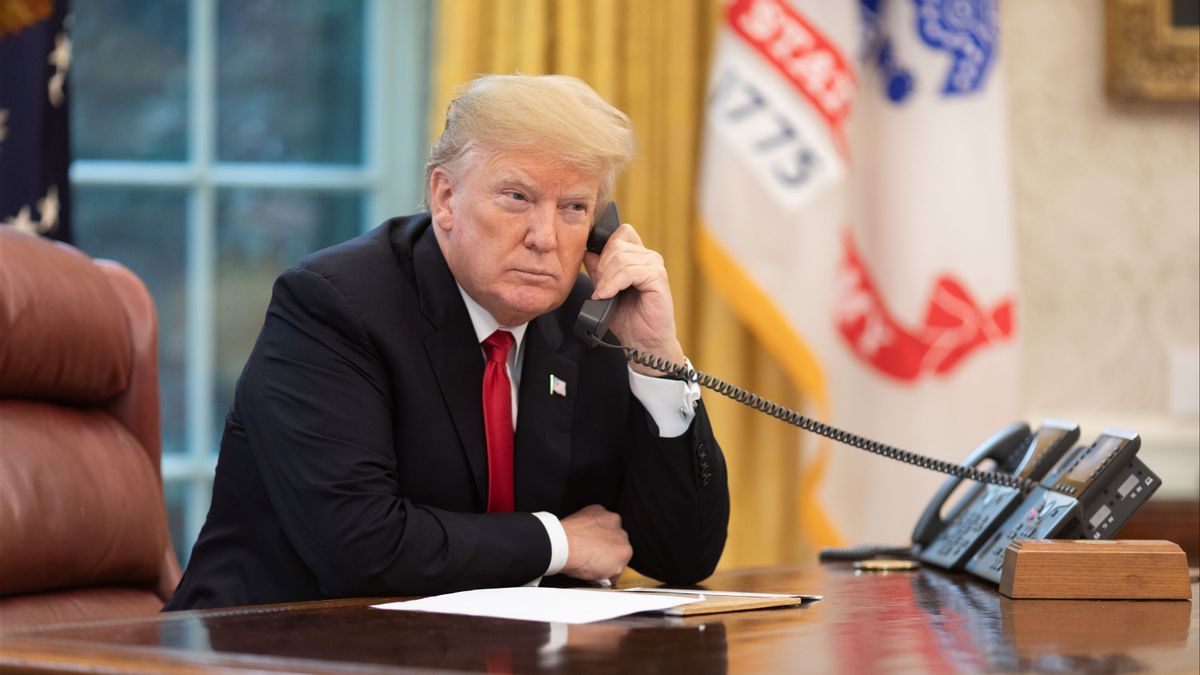


JAKARTA - President of the United States (US) Donald Trump has just announced tariffs for importing steel to the US from 25% to 50%. Trump called the policy a step to protect the domestic steel industry and sector workers from the onslaught of imported steel.
"We will increase it from 25% to 50%, tariffs for steel entering the United States, which will further secure our steel industry," Trump told US Steel employees.
Trump said he initially considered a tariff of 40%, but industry players urged him to set tariffs of up to 50%.
"With a fare of 25%, they can still jump through the fence a little. However, if it's 50%, no one can pass it," Trump said.
Shortly after the speech, Trump confirmed via Truth Social social media that a new 50% tariff would take effect on Wednesday, June 4, 2025.
"It is a great honor for me to increase the tariffs of steel and aluminum from 25% to 50%, effective from Wednesday, June 4. Our steel and aluminum industries have revived as never before. This will be a big boost for our outstanding workers in this sector," he wrote.
Trump has previously imposed a tariff of 25% for all steel and aluminum imports on March 12, 2025. This policy sparked a quick reply from Canada as well as a strong complaint from the US automotive industry. The European Union also threatened to make a similar reply, although it later canceled it.
Trump praised his policy because he was considered successful in saving the national steel industry. He claims that without this tariff, all steel production will be controlled by foreign producers and domestic factories will be closed.
SEE ALSO:



However, while this tariff provides an impetus to the US steel industry, analysts warn that the policy has the potential to raise the prices of raw materials for the construction and manufacturing sectors, two industries that Trump previously wanted to push.
Since the announcement of the 25% tariff in March, domestic steel prices have increased due to reduced competition from imported products. However, a similar experience in 2018 showed that steel tariffs also led to an increase in car prices, work equipment, and machinery, as well as reducing the output of related industries by more than US$ 3 billion in 2021.
The English, Chinese, Japanese, Arabic, and French versions are automatically generated by the AI. So there may still be inaccuracies in translating, please always see Indonesian as our main language. (system supported by DigitalSiber.id)


