
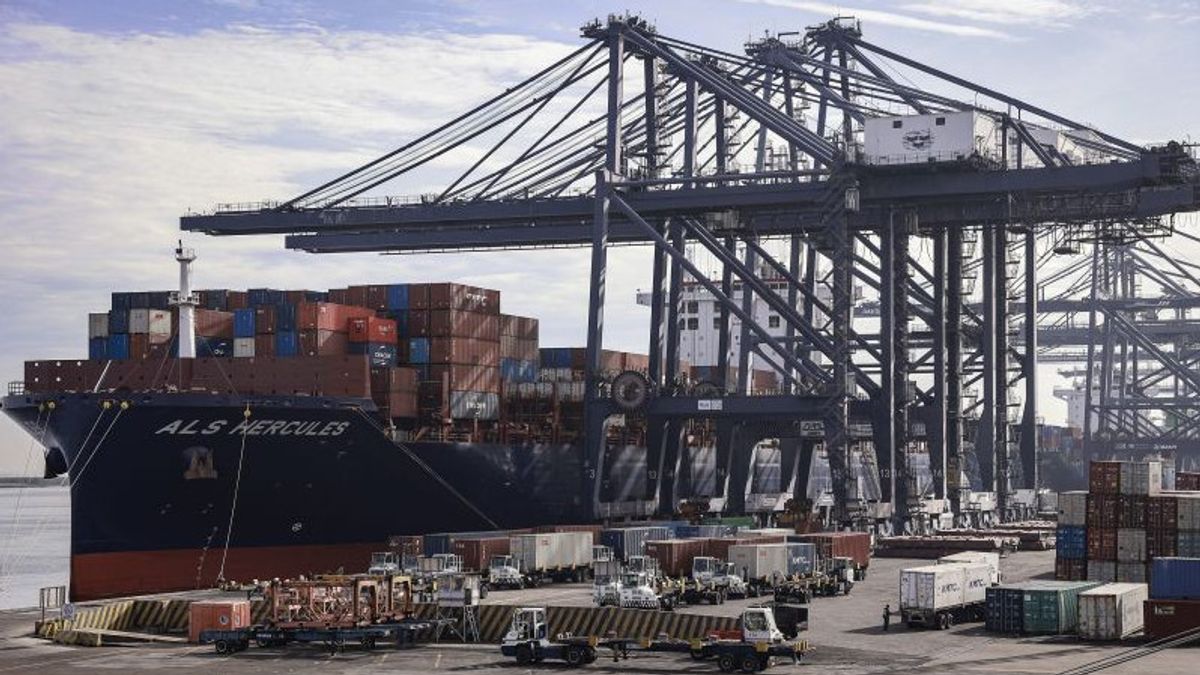


JAKARTA - US President Donald Trump on Wednesday, April 2, announced the imposition of import rates to nearly all countries that export their products to the US, including their trading partner countries so far.
Trump decided that Indonesia would be subject to a 'residual pariff' of 32 percent of the tariff base of 10 percent that the US collects to all countries in this latest tariff rule. AS accused Indonesia of collecting tariffs on its products by 64 percent.
The 10 percent base rate goes into effect on April 5. Meanwhile, the US 'reciprocal rate' will take effect on April 9.
Indonesia admits that the imposition of US t's 'resipprocal pariff' will have a significant impact on the competitiveness of Indonesia's exports to the US, which has been dominated by electronic products, textiles and textile products, footwear, palm oil, rubber, furniture, shrimp, and marine fishery products.
Indonesia will take strategic steps to mitigate the negative impact of the imposition of US import rates on products made in Indonesia and will immediately review the potential impacts that arise.
"The Indonesian government will take strategic steps to mitigate the negative impact on the Indonesian national economy," said the Indonesian Ministry of Foreign Affairs (Kemlu) in a press statement received in Jakarta, Thursday, April 3.
"The Indonesian government will soon calculate the impact of imposing US tariffs on these sectors and the Indonesian economy as a whole," he said.
According to the statement, the Indonesian government since the beginning of this year has prepared various steps to deal with the implementation of US reciprocal rates and continue to negotiate with the US side.
Cross-ministerial and institutional teams, representatives of the Republic of Indonesia in the US, and national business actors also continue to coordinate intensively to prepare for this US import rate.
SEE ALSO:
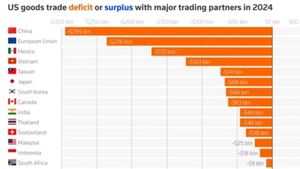



President Prabowo Subianto has also instructed the Red and White Cabinet to take strategic steps and structural improvements, as well as policies for deregulation and the removal of regulations that hinder, particularly those related to non-tariff barriers.
This is in order to increase the confidence of business actors and maintain investment.
In the midst of the increasingly dynamic global financial market turmoil following the announcement of the US reciprocal rate by President Donald Trump, Indonesia is committed to maintaining the stability of the Government Securities (SBN) yield.
Indonesia will also continue to maintain the stability of the rupiah exchange rate and ensure that the liquidity of foreign currency is maintained so that it can continue to support the needs of national business actors and maintain overall economic stability, according to a press statement from the Indonesian Ministry of Foreign Affairs.
The English, Chinese, Japanese, Arabic, and French versions are automatically generated by the AI. So there may still be inaccuracies in translating, please always see Indonesian as our main language. (system supported by DigitalSiber.id)


